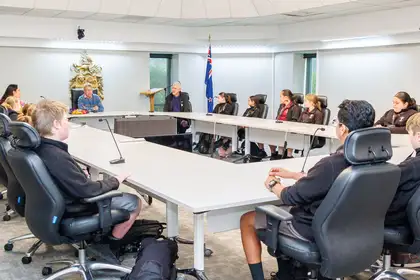
Ākonga gather at the Manawatu District Council chambers.
Thirty ākonga, teachers and parent helpers from Awahou School and St Joseph’s School Feilding explored Manawatū District Council offices, chambers and local council sites as part of a Civic Quest event for Te Wānanga Nohinohi Te Kunenga Children’s University Massey.
Upon arrival at the Manawatū District Council offices in Feilding, the primary aged learners were welcomed by councillors Bridget Bell and Colin Dyer, along with Deputy Mayor Grant Hadfield. Here, they learned more about what a councillor does and how they support the community.
St Joseph’s teacher Miss Anna Tate reflected on how exciting the children were when they walked into the council chambers.
“Seeing the space where so many important discussions happen, being able to sit in the large chairs and being able to speak into the table microphones so everyone could hear them was definitely a memorable experience for our learners,” Miss Tate said.
Councillor Bell says the welcome was one of the highlights for her.
“You could see their posture change as they took in the crest, the mayor’s taonga and the formality of the room. Spaces send messages, and our tamariki instinctively understood they were in a special place.”
The councillors showed ākonga the council chambers, where they tried out the seats and microphones. When the children asked why the seats are so comfortable, they learnt that it’s because council meetings can go for long periods of time. They also got to admire and touch the sparkly mayoral chains.
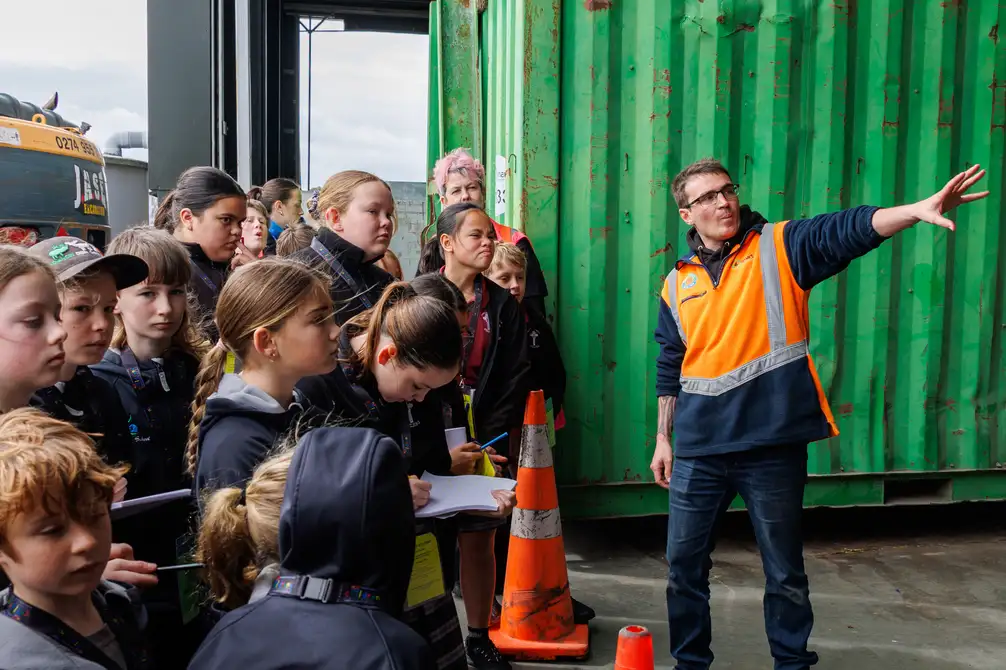
The next segment of the day was a council services safari, where children were guided by Councillor Bell and Dyer, along with Deputy Hadfield around various council sites. This included the Resource Recovery Park, the Kawakawa nursery and the Awahuri ngahere.
At the Resource Recovery Park, ākonga learnt about what happens to the district’s rubbish, including how food scraps travel to a place near Rotorua and are turned into biogas, a renewable fuel.
They also got to admire a range of plants at Kawakawa Nursery. Councillor Dyer showed plants at every stage of their life cycle, from seed collection to growing natives. This process was familiar to the ākonga, as they already take part in planting days at local reserves.
“For many of our visiting tamariki, our Kawakawa Nursery and forest clicked because they already care for trees and bush reserves through school. Their planting mahi in places like Almadale and Totara Reserve meant this visit wasn’t theoretical – it felt like an extension of what they already do as kaitiaki, thinking about how to look after this place as well as their own,” Councillor Bell says.
For the final stop at the Awahuri ngahere, ākonga went on a bush walk while Councillor Bell spoke about her personal connection to the area. She challenged the children to spot the kaitiaki manu flying around the forest, which kept them looking upwards for most of the walk.
Kura Coordinator and parent from Awahou School, Judy Swanney, says she found this portion of the tour special, especially Councillor Bell’s reflections on her connection to the land.
“The story that Bridget told about Kitchener Park and the Whio was personal and felt like a special touch. It was engaging and gave the kids something to look for on the walk, and her knowledge on the bush and trees was fabulous.”
After a lunch stop in the forest, ākonga visited Tū te Manawa whare, toured key council services including Makino Pool and Feilding Library, and met teams across the council offices — including IT, health and safety, communications and planning — to learn about the many roles that help serve the community.
Ākonga, Millie, from St Joseph’s school reflected on her highlights of the day.
“I learned there are a lot of different jobs in the council. The Crest at the front of the room was interesting. It contained different parts to tell the story of the area and Manawatu District Council,” Millie said.
Civic Quest reflects the kaupapa of Te Wānanga Nohinohi Te Kunenga Children’s University Massey: working with schools and community partners to open up learning beyond the classroom. By welcoming ākonga into their spaces, Manawatū District Council helped them see local government as something they are part of, while building curiosity, confidence and a stronger sense of their role in the community.
As Programme Coordinator Bettina Anderson says, “The heart of our kaupapa is giving young people opportunities to try new experiences, learn new skills, and imagine the many pathways open to them.”
Through partnerships like this, young people gain a deeper understanding of how their communities work and the role they can play in shaping them now and in the future.
Related news
Ākonga explore future opportunities at Te Matapihipihi Discovery Days across Massey campuses
More than 350 ākonga (students) from 18 kura explored future learning opportunities at Te Matapihipihi Discovery Days across Te Kunenga ki Pūrehuroa Massey University’s three campuses, taking part in a range of fun, interactive activities.
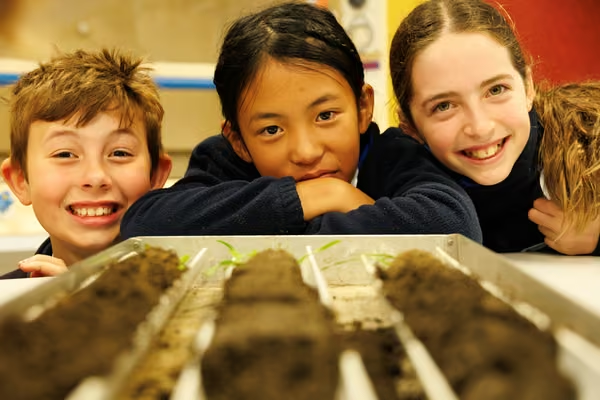
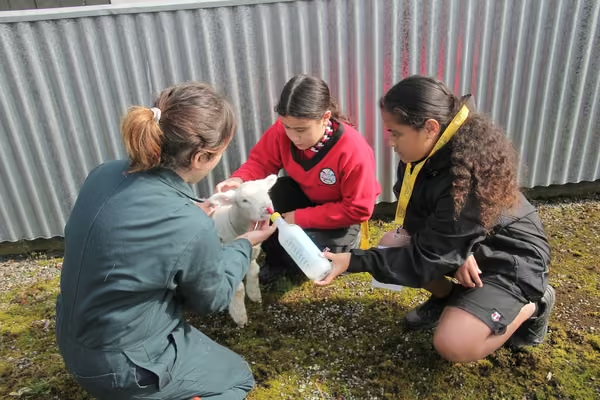
Springtime learning: tamariki explore science and farms during Children’s University events
As part of a pilot looking at ways to expand on-campus and outreach experiences, Wānanga Nohinohi te Kunenga Children’s University had two member schools take part in special spring events.
A year of discovery and celebration for Children’s University graduates
This year, Te Wānanga Nohinohi ki Te Kunenga, Massey’s Children’s University programme marked another milestone with their highest number of participants registered to seek learning beyond the classroom.