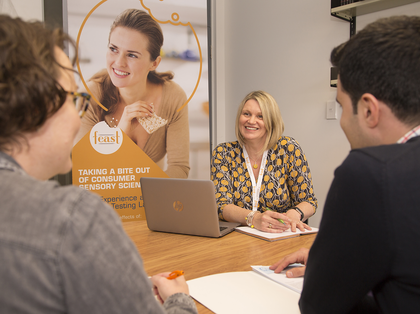
At Feast, we drive consumer and sensory science forward by challenging traditional thinking. Our innovative research and expertise are renowned worldwide.
Located on Massey University’s Manawatū campus in Palmerston North, our facility has New Zealand’s only wall-to-wall projected immersive space for consumer sensory product testing. Using this technology, Feast can study human behaviour and perceptions in various settings, including a café, supermarket, and more.
Whether you want to understand how changes in your product formula affect your product, or to evaluate the impact of your packaging and labelling, Feast is the go-to facility for sensory and consumer science. Our laboratory can provide comprehensive insights into consumer behaviour and help your business become more competitive.
TasteBench
TasteBench is a practical alternative to consumer testing without the cost of a standalone study, with feedback from 50-70 consumers on:
- how much they like it
- likelihood of purchase and why
- areas for improvement.
We open our sensory facility 2 days each month. Book up to 5 products into each session.
- Basic: $3300 + GST per product
- Discriminate: $2000 + GST per product pairing.
Māori and Te Tiriti engagement
Feast is proud to be part of Māori Consumer and Sensory Science research. We are committed to upholding the mana of Māori data and ensuring our research practices reflect tikanga and our responsibilities under Te Tiriti o Waitangi.
We are proud to support and contribute to Māori Consumer and Sensory Science research.
Work or study with us
Join our team as a postgraduate, master’s or doctoral student, or enrol in one of our short courses.
Introduction to Sensory Evaluation
This is an interactive course with a mix of theory and practical lessons. The course focuses on measuring the sensory attributes of food and introduces sensory evaluation techniques for the food industry.

Evaluating Consumer Response
This is an interactive course with a mix of theory and practical lessons. The course looks at the why, who, what, where and when of consumer product testing.
Quality Assurance & Control
This interactive course is a mix of theory and practical lessons. It is an introduction to how to apply sensory evaluation in the context of quality assurance for the food industry.
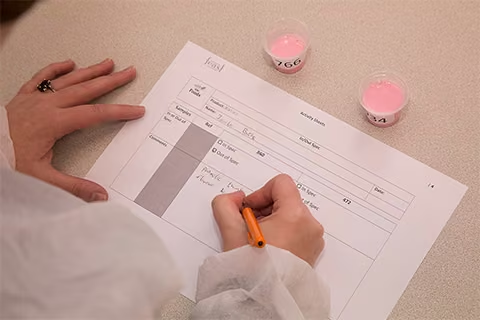
If you are studying towards a master's degree or PhD at another university but are interested in a 6-month internship with Feast, we would love to hear from you. Email your application/expression of interest to feast@massey.ac.nz.
Research, collaborate and learn
Learn how you can collaborate with Feast to conduct consumer sensory science research, consultancy or upskill with our training courses.
Our facilities
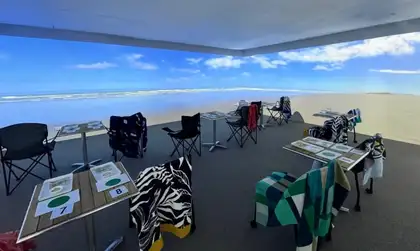
Mixed Reality - Immersive Space
We have the only immersive room in a consumer testing lab in Aotearoa New Zealand.
Where you eat and how it feels changes how you feel about what you eat.
Our immersive room can mimic different eating places such as a café, hospital ward, a home or a supermarket – all scientifically controlled. You could even test food in space or in the mountains!
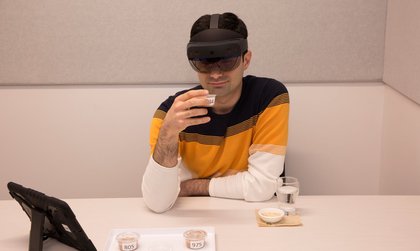
Mixed Reality - HoloLens
Our HoloLens is another way we change the environment in which panellists test products.
The HoloLens is a pair of mixed reality glasses. Holographic digital content blends seamlessly with the real world. The consumer is immersed in the environment relevant to the study’s focus. This helps us get responses that are similar to responses consumers would have in real life.
Watch on Youtube: Mixed-reality: bringing a slice of the café to the lab
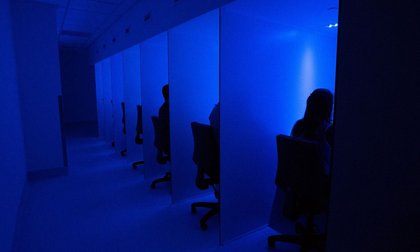
Sensory booths
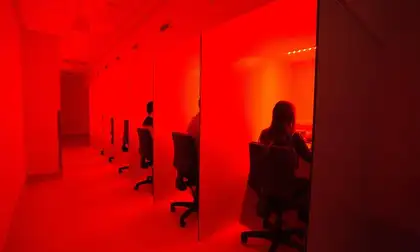
Our 12 sensory booths have been designed to ISO-standard. The booths have a communication system for researchers and panellists to speak easily, are temperature controlled and can also accommodate any colour of lighting. This helps to mask appearance differences if required by the study.
One booth is wheelchair accessible.
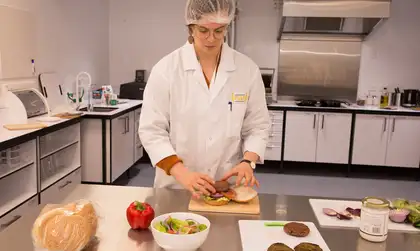
Laboratory kitchen
We can easily serve our panellists from our spacious laboratory-kitchen. Its arrangement is quite flexible and includes state of the art equipment for preparing samples and cooking a wide range of food products.
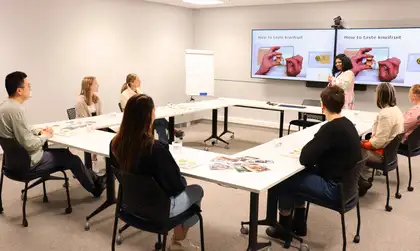
Focus group rooms
No sensory facility would be complete without spaces that can be used to train panels or for focus group sessions. These rooms have video conferencing and recording for clients to observe our research in action.
Who we are
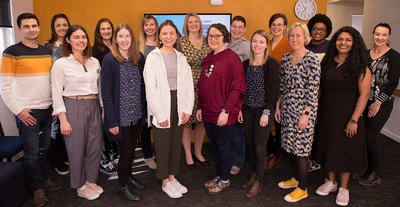
The Food Experience and Sensory Testing (Feast) laboratory was established 22 June 2018.
We believe that:
- our science contributes to human and the planet's wellbeing
- our innovative thinking moves sensory and consumer science forward by challenging traditional thinking
- we make a difference to people through quality consumer food experiences.
At Feast, we conduct state-of-the-art consumer and sensory research. We test products and provide solutions for business growth, collaborate with industry, and build sensory science capability.
Our team ethos is inclusive, supportive and collaborative. We aim to develop top talent through passionate leadership – working internationally across disciplines and sharing our expertise through research, education and partnership.
Professor Joanne Hort currently leads a team of two administrators, two research officers, three post-doctoral fellows, and two technicians.
Feast researchers
Meet our team of food, sensory and consumer science researchers.
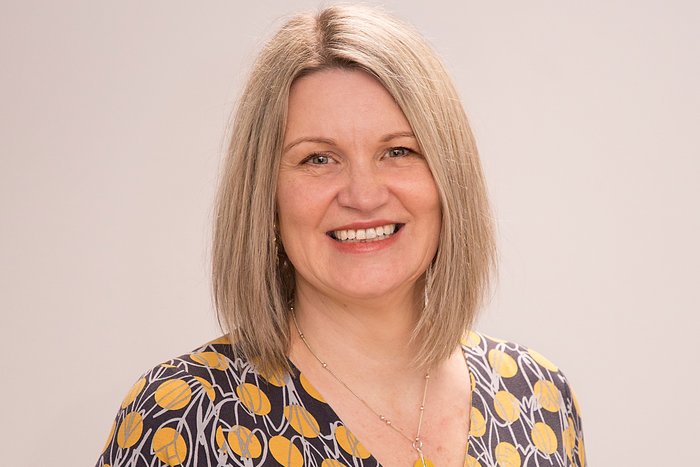
Professor Joanne Hort
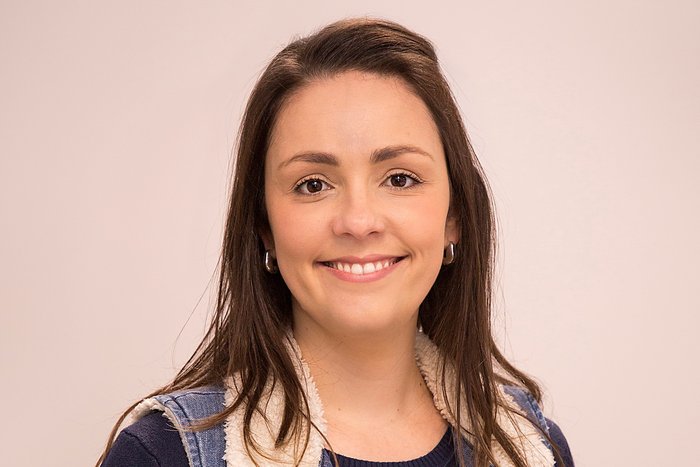
Dr Amanda Dupas de Matos
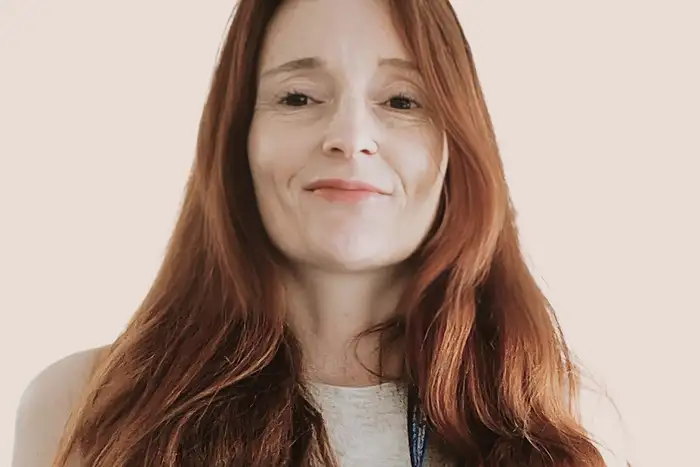
Dr Jennifer Wagner
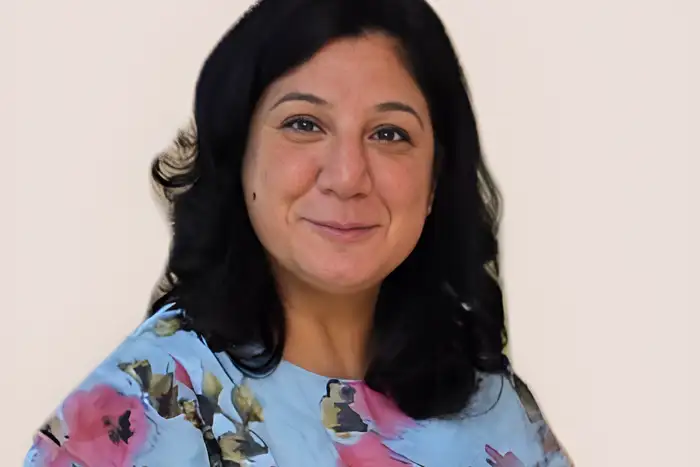
Feast research
Our research focuses on the sensory properties of food, how consumers perceive them and how they interact with other factors affecting consumer food choice behaviour.
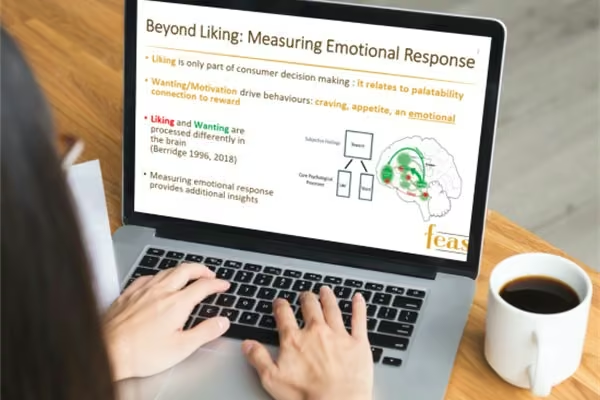
We look at how people respond emotionally to food and the importance of where and when people are consuming food. We’re developing consumer and sensory methodologies, including the role of mixed reality in consumer testing, individual taste and multimodal sensory perception.
Mixed reality
We're bringing a café atmosphere to Feast laboratories to determine how our environment affects how we feel about the food we eat.
Consumers eat and drink in real places, not in sensory booths. Using our HoloLens virtual reality headset, we were able to immerse consumers in a video of a real café.
We then compared consumer responses in sensory booths with those from a real café and those from a mixed reality environment. Our research showed that sensory booths do not provide accurate consumer data.
Mixed reality offers data comparable to the real café and is a valid tool for collecting consumer data.
Future Foods Catalyst (FCC)
The FCC programme is a New Zealand-Singapore collaboration, aiming to understand consumers':
- motivations and barriers around engaging with alternative proteins
- attitudes to plant-based foods, including sensory criteria, how satiated they feel, and satisfaction compared to traditional proteins.
FCC will help primary industries in New Zealand and Singapore respond to global environmental trends.
NZ Milks mean more (NZ3M)
NZ3M is funded by MBIE's Endeavour Fund.
Industry partners like Fonterra, the a2 Milk Company and Synlait collaborate with Massey's Riddet Institute to explore how different types of milk from cows, goats, sheep and deer affect our health and wellbeing.
The ultimate goal is to promote New Zealand milk as part of a consistently healthy diet that appeals to consumers in North America and Asia.
Cross-cultural research
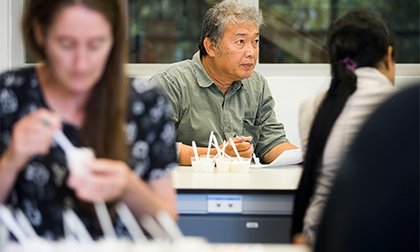
We investigate cultural differences in the acceptability of fermented foods between Chinese and New Zealand-European cultures. We aim to understand the sensory drivers of food choice behaviours in Chinese consumers and how living in a different culture can change food preferences.
This research is key for the New Zealand industry developing products for overseas markets.
Individual variation in perception
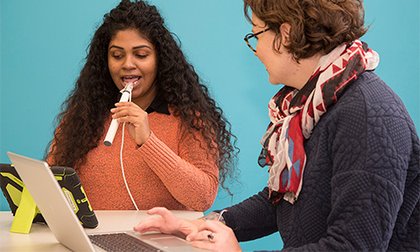
We investigate how different phenotypes impact sensory perception, emotional response and food choice behaviours. Not all consumers are alike. In addition to cultural influences, physiology and genetics also impact sensory perception.
Several Feast projects investigate the impact of independent taste phenotypes, such as:
- Prop Taster Status.
- Sweet Liker Status.
- Thermal Taster Status.
Temporal multiple-intake methodologies
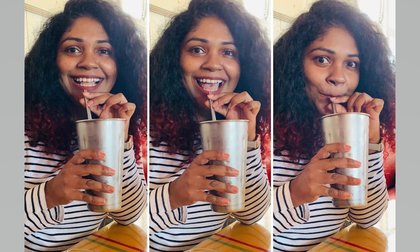
How does sensory perception and emotional response change when you try a product multiple times? Traditional sensory and consumer methods are based on one or two bites/sips of a product. But we don't normally take just one sip or bite unless it tastes bad.
We're adapting temporal methods to measure changes in your sensory perception and emotional response when you try a product multiple times.
Research technicians
Our team would not be complete without our research technicians.
Feast Consumer and Sensory Science Consultancy
It’s a challenge to successfully develop product concepts that consumers want in terms of cost, nutritional and sustainability. On top of that, they must meet expectations of appearance, flavour and texture to win repeat purchase.
During development it’s important to understand the impact of formulation or process on a product's sensory quality and shelf life.
Our experts have years of experience at the cutting edge of sensory and consumer science. Feast has supported companies across the globe with these sensory questions.
Tap into our expertise. Explore the services we offer or connect with the Feast team to discuss how we can support your business needs.
Prices quoted are indicative only and exclude GST.
Our most popular choice: The Bespoke Project
Whether you have specific sensory and/or consumer testing in mind, are unsure what you need, or what the most effective or value for money approach to take is then get in touch and we will work with you to determine the best approach and pricing.
What do consumers want? Online surveys with impact
What do consumers want? Online surveys with impact
Work with Feast to gather insights directly from potential consumers. Our targeted surveys (like 12 key questions) deliver results in a clear, easy to follow presentation — giving you the evidence you need to guide product development.
From $4025, depending on number of questions.
Online product concept testing
Online product concept testing
We’ll present your product concept ideas to consumers through our survey platform to measure ranking of concepts, purchase intent, likely purchase frequency and fit to brand. We'll make recommendations so you can move confidently forward.
From $5,750, depending on number of products.
Can consumers perceive the difference?
Can consumers perceive the difference?
Can consumers detect changes in ingredients, processing, animal feeding or growing practices? We conduct sensory discrimination testing like paired comparison, triangle or tetrad tests to help you to claim improved flavours or textures. It can also help you swap practices for cost, nutritional or sustainability advantages with confidence that consumers won’t notice a drop in product quality.
From $6325, depending on the test objective as well as nature and number of products.
Consumer acceptance and drivers of liking and emotional response
Consumer acceptance and drivers of liking and emotional response
Using sensory testing, we evaluate products or prototypes with target consumers for overall liking and attribute liking. We identify which prototypes or products to move forward with to gain market share. Discover which attributes drive liking and dislike by including penalty analysis.
From $16,100 depending on number of products or prototypes.
Rapid sensory mapping
Rapid sensory mapping
Using our in-house expertise, gain feedback on product sensory differences within the competitive sensory space or based on ingredient and process changes in your own products. Learn the best vocabulary to describe sensory properties of your product category and visualise how products position within the sensory space.
From $10,000, depending on number of products and attributes.
Sensory shelf life determination
Sensory shelf life determination
Ensuring a product is as delicious at the end of its shelf life as when first made is critical to product quality.
We can help determine an appropriate shelf life for your product so it is exactly as intended throughout its life. We’ll compare your fresh product to the same product at different ages to determine when consumers can detect an unacceptable difference in taste experience.
Cost depends on the nature of the approach. Please contact us to discuss.
Focus groups, including product tasting
Focus groups, including product tasting
Through focused conversations with your target consumer groups, we will reveal what people think should be the key target characteristics for your products. Gain solid insights into your product category, concept, product and packaging to boost your ideas and please the widest range of consumers.
From $10,923 depending on number of products, questions and groups.
Rapid prototype adaptive focus group testing
Rapid prototype adaptive focus group testing
Using qualitative and quantitative techniques, we can schedule consumer groups to allow ideas to flow from one evaluation to the next. Any suggested product changes will guide which prototypes they evaluate next. This approach is ideal for products where bench scale prototypes get made quickly and can be adapted in time for the next evaluation. It enables fast, real-time feedback to help you design an optimised product, directed by your consumers.
From $16,675 depending on the number of groups and prototypes.
Measuring dynamic changes product sensory perception
Measuring dynamic changes product sensory perception
Encounters with consumer products are dynamic. We can measure product characteristics over time to provide delicious product descriptions and identify unique selling points. Specially trained panellists or target consumers will identify the product characteristics they experience over time. Product characteristics can range from the intensity of a single attribute over time, the dominant flavours and textures experienced from start to finish, or which attributes are perceived when.
From $12,825 depending on number of samples.
In home or testing in realistic product consumption environments
In home or testing in realistic product consumption environments
We’ll place your product in a home, café, restaurant or even at the beach with our digital immersive environment to evaluate its performance with target consumers.
Ready to explore how Feast can support your product development? Contact our team today to discuss your goals and receive a tailored quote.
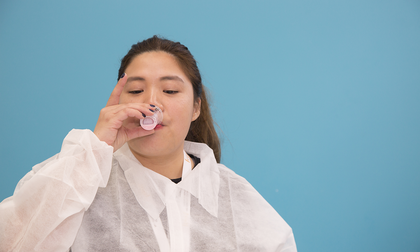
Love all things food? Be a Feast Taster!
Help us make a difference! As a Feast Taster you will get to participate in our important sensory research and will be invited to attend various sensory studies throughout the year, such as virtual reality, discussion groups and lots of product testing.
Read our newsletter
If you would like to request backdated copies of our newsletter, contact j.larking@massey.ac.nz
Ever wondered how your senses work?
Watch Professor Joanne Hort's inaugural lecture – It's all a matter of taste
Contact us

Professor Joanne Hort
Joanne Hort is a food science academic specialising in sensory science. Joanne's research focuses on understanding factors affecting consumer perception of food and beverages, and consequent choice behaviour. She is the Fonterra-Riddet Chair of Consumer and Sensory Science.

Who we're working with

Fonterra
Fonterra is a co-operative owned and supplied by about 9,000 farming families in Aotearoa New Zealand. Through the spirit of co-operation and a can-do attitude, Fonterra’s farmers and employees share the goodness of our milk through innovative consumer, foodservice and ingredients brands.

A*STAR
The Agency for Science, Technology and Research (A*STAR) is a global leader in science, technology and open innovation. We advance science and develop innovative technology to further economic growth and improve lives.
Zespri International Limited
Zespri challenges conventional healthy living beliefs to reawaken the connection between nature, food and well-being. We want to help consumers around the world to live healthy for themselves and their loved ones.

Riddet Institute
The Riddet Institute produces world class research in food innovation and nutritional sciences through extensive national and international research collaborations. It is committed to outstanding research, world-class education for future leaders and to future-proofing New Zealand’s food industries.