Celebrate our 20th anniversary
Join us to celebrate the history, achievements and milestones of the Joint Centre for Disaster Research (JCDR) over the past 20 years. To mark this milestone, we are hosting a 2-day anniversary event in Wellington, 2 and 3 November 2026.
Legacy, change and leadership – towards a more collaborative emergency management
Register to receive anniversary event updates and planned activities.
What we do
JCDR provides a state-of-the-art, high-quality, graduate teaching and contemporary research programme to Aotearoa New Zealand and people worldwide.
We develop community disaster resilience by leading and delivering risk identification, communications, reduction and readiness programmes in communities and organisations across the nation and beyond.
World-class teaching by world-class faculty
We are Aotearoa New Zealand's longest-serving accredited educator in this field, offering one of the broadest ranges of emergency management education and research.
From professional development short courses, undergraduate certificates and bachelor's degrees to postgraduate diplomas, certificates, master's and PhD degrees.
As one of the pioneers in Australasia to offer a doctorate in emergency management (Doctor of Philosophy in Emergency Management), we are a world-leading institution that underpins our teaching with rich and contemporary research.
Research
We conduct multidisciplinary applied research to understand the impacts of natural, man-made and environmental disasters on communities.
We work with our partners to improve how societies manage disaster reduction, readiness, response and recovery.
Research areas
We cover a broad range of topics across emergency management, tackling real-world situations and solutions.
Disaster risk and science communication
Disaster risk and science communication
Disaster risk and science communication is the communication of science advice for individual and organisational decision-making during natural hazard events.
Topic areas include:
- communication of probability forecasts and uncertain science advice
- hypothetical scenarios to explore effective communication
- public response to aftershock information
Education, outreach and social networking tool
Education, outreach and social networking tool
We measure community understanding of, and preparedness for, natural hazards including volcanic eruptions. We specialise in participatory methods and risk perception research.
Our results are used to develop scenarios, training tools and educational strategies for communities, businesses and schools.
We also specialise in the use and impact of social networking tools in a disaster context. Our team focuses on people's interactions with information and communication technologies, and how this can contribute to a resilient culture.
Our key area is public information-seeking activities and the self-organising capabilities of disaster-affected communities.
Māori and Indigenous risk reduction and disaster management
Māori and Indigenous risk reduction and disaster management
The Indigenous Disaster Risk Management team engages with Māori communities and other Indigenous peoples.
Topic areas include:
- the role culture plays in facilitating disaster preparedness
- risk mitigation
- emergency management
We also look at disaster recovery and community resilience in the context of humanitarian, health and natural hazard events.
Psychosocial support and community resilience
Psychosocial support and community resilience
We research the psychosocial impact of disasters on health care and social welfare professionals. We advise agencies including the Ministry of Social Development and the Ministry of Health.
We also develop tools and guidelines to empower communities to become resilient to natural hazard events.
Our research focuses on understanding the factors that enable a community to withstand the consequences of natural hazards. We also research local, regional and national factors that influence communities.
Multi-hazard warning systems
Multi-hazard warning systems
Warnings comprise an important component of responding to emergencies. We undertake research on different aspects of warnings systems.
Topic areas include:
- the technological components of warnings systems
- preparedness and planning for effective warning
- best-practice warning communication
- understanding human behaviour in warning situations.
We investigate warnings across a range of perils including
- earthquakes
- tsunami
- weather and flood events
- volcanoes
- landslides in both short-fuse and longer term warning contexts
Disaster response and recovery management and leadership
Disaster response and recovery management and leadership
The coordination and leadership of organisations and communities in preparing for, responding to, and recovering from emergency situations is a crucial area of research.
Understanding how response and recovery capabilities are most effectively developed, maintained, and learned from is an essential area of emergency management research.
Topic areas include:
- emergency response
- management, planning and response
- recovery management and leadership
- incident command and management
- system development and application
- centre design and operation
- intelligence delivery
- capability development
People-centred technologies and systems for disaster management
People-centred technologies and systems for disaster management
Our research looks into enhancing disaster resilience through understanding technology and systems and their intersection with human behaviour especially in the context of crises. Our team investigates both the technical feasibility and social acceptability of technological systems.
Topic areas include:
- artificial intelligence
- big data analytics
- decision support systems
- early warning systems
- technology acceptance
- usability, user perceptions and behaviour
We welcome research ideas that use methodologies such as design science and participatory design.
Study emergency management
Learn from our world-class lecturers and researchers. We're New Zealand’s leading provider of emergency management education to students worldwide.
Study emergency management
Interested in helping New Zealand — or other countries — through civil defence emergencies and disasters? Get your start with Massey.
Emergency Management Institute short course
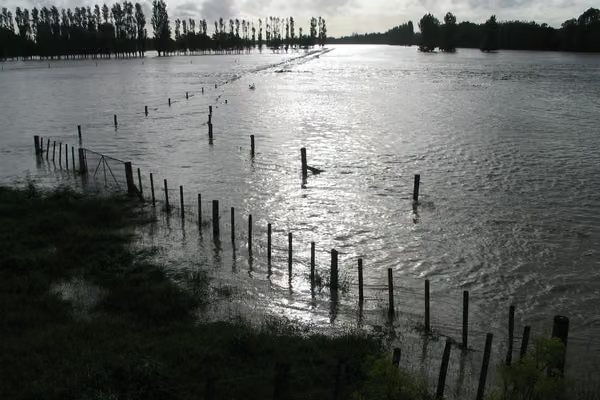
Learn about emergency management in this 5-day course held every March in Wellington. Explore the theory and practice of dealing with emergencies in New Zealand and around the world.
Response and Recovery Leadership short courses
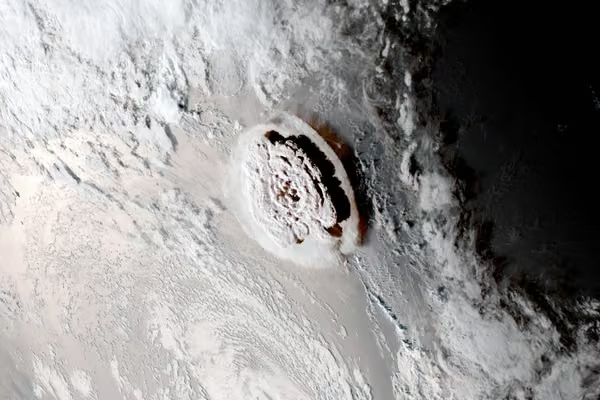
These courses provide professional training for response and recovery leaders across the all-hazards National Security System working at local, regional and national levels.
Watch what our students say about studying emergency management with JCDR
Disaster Risk Management Officer Luisa from Tonga
Find out why Luise chose to study emergency management with JCDR and what she learned from our team of experts.
GP, Doctor Blanchard from the Democratic Republic of Congo
Learn why Dr Blanchard chose to study emergency management with JCDR and what he learned during his studies.
Social Worker Amandine from Paris, France
Learn why Amandine chose to study emergency management with JCDR and how she applies what she learned in her role with the New Zealand Red Cross.
Our team
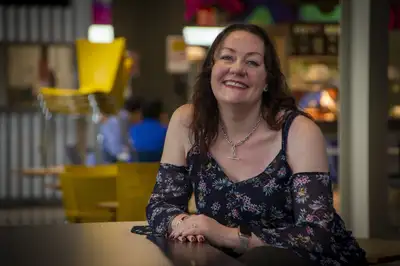
Professor Kirsty Ross
Deputy directors

Professor Julia Becker

Associate Professor Raj Prasanna
Staff
The JCDR team consists of teaching and research experts across the field of disaster risk and emergency management.

Associate Professor Carol Stewart
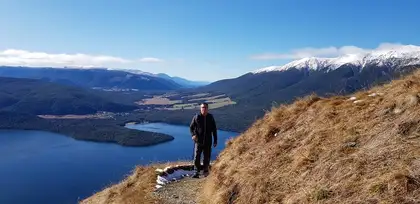
Distinguished Professor David Johnston
The late Distinguished Professor David Johnston established the JCDR in 2006. His tireless work in natural hazards research and community resilience has left an enduring mark nationally and internationally.
David had a deep understanding of the power of building relationships and working with and for communities – always willing and eager to go where the needs were.
Ngā mihi nui ki a koe, David
Collaboration
The centre collaborates actively with many organisations, government agencies, industry, the community and other researchers. We have formally signed Articulation Pathway Programmes, MoUs and MoAs with:
- United States Geological Survey (USGS)
- World Meteorological Organisation (WMO)
- New Zealand Red Cross
- Natural Hazards Commission Toka Tū Ake (formerly EQC)
- National Emergency Management Agency (NEMA)
- Earth Sciences New Zealand (formerly GNS Science and NIWA)
- MetService
- Integrated Research on Disaster Reduction (IRDR)
- Natural Hazards Inc. Business Cluster
- Kothalawala Defence University, Sri Lanka
- Sri Lanka Institute of Information Technology., Sri Lanka
- Tata Institute of Social Sciences, India.
CRISiSLab
The Crisis Response and Integrated Simulation Science Laboratory (CRISiSLab) is a research and learning laboratory based out of the JCDR providing a platform to conduct transdisciplinary socio-technical research at the human-technology interface.
ICoE:CR
The International Centre of Excellence in Community Resilience (ICoE:CR) conducts research into and provides advice about community resilience to disasters in the Wellington region.
Publications and reports
Staff and students at the centre publish internationally recognised research through a variety of channels – including journals, books, conference papers and disaster publications.
2026
2026
Potter, S.H.; Charlton, D.H.; Doyle, E.E.H. (2026) Guidance for communicating landslide information. Horetireti Whenua Sliding Lands Endeavour Programme resource. Lower Hutt, NZ.: Earth Sciences New Zealand. Hazard and Risk Data Guidance 2026/01. 13 p.; doi: 10.21420/SW07-KM24 http://dx.doi.org/10.21420/SW07-KM24
Rostami, K., Becker, J. S., Prasanna, R., Vinnell, L. J. (2026, in preparation). Earthquake Early Warning Systems Across Countries: A Comparative Literature Review of Technology and Public Response.
2025
2025
Barsotti, S., Pfeffer, M., Calvari, S., Van Eaton, A., Stewart, C., Freret-Lorgeril, V., Diefenbach, A.K., Carn, S. (2025) Syn-eruptive observations for volcanic hazard quantification. Chapter 3.1 in The Encyclopedia of Volcanoes, 3rd Edition, Elsevier.
Chandrakumar, C., Stephens, M. T., & Prasanna, R. (2025). Installation methods for ground motion sensors in a community-engaged earthquake early warning system. Bulletin of the New Zealand Society for Earthquake Engineering, 58(3), 212–218.
Chandrakumar, C., Tan, M.L., Holden, C., Stephens, MT., & Prasanna, R. (2025) Performance Evaluation of a Community‐Engaged Low‐Cost Earthquake Early Warning System for Aotearoa New Zealand. Seismological Research Letters. https://doi.org/10.1785/0220240364
Chandrakumar, C., Tan, M.L., Holden, C., Stephens, MT., & Prasanna, R. (2025). Evaluating P-Wave detection algorithms for earthquake early warning: insights from GeoNet data in Canterbury, Aotearoa New Zealand. Earth Science Informatics. https://doi.org/10.1007/s12145-024-01519-9
Chandrakumar, C., Tan, M. L., Holden, C., Stephens, M. T., & Prasanna, R. (2025). Performance analysis of P-wave detection algorithms for a community-engaged earthquake early warning system: A case study of the 2022 M5.8 Cook Strait earthquake. New Zealand Journal of Geology and Geophysics. https://doi.org/xxxxx
Charlton, DH; Clive, MA; Bretherton, E; Lawson, R; Becker, J; Hudson-Doyle, E; Das, M. (2025) How to communicate scientific uncertainty with visuals. Hazard and risk data guidance. 2025/01. Doi:10.21420/JANB-XE44. http://dx.doi.org/0.21420/JANB-XE44
Curd, A.; Vinnell, L.; & Johnston, D. (2025). Exploring the role of search and rescue non-government organisations in emergency events: a systematic review in Aotearoa New Zealand. Australian Journal of Emergency Management. https://doi.org/10.47389/40.1.23
Das, M., Becker, J., & Doyle, E. E. (2025). ‘One big team working together’ - Shifting narratives to encourage civic participation and collective action in disaster preparedness. International Journal of Disaster Risk Reduction. https://doi.org/10.1016/j.ijdrr.2025.105218
Das, M., Becker, J., & Doyle, E. E. (2025b). Exploring communication practices that promote community participation and collective action for reducing disaster risks in New Zealand. Disasters. https://doi.org/10.1111/disa.12690
Das, M., Becker, J. S., Doyle, E. E. H., Charlton, D., Clive, M. A., Krippner, J., Vinnell, L. J., Miller, C., Stewart, C., Gabrielsen, H., Potter, S. H., Leonard, G. S., Johnston, D. M., Tapuke, K., Fournier, N., & McBride, S. K. (2025). The communication of volcano information in New Zealand – a narrative review. New Zealand Journal of Geology and Geophysics. https://doi.org/10.1080/00288306.2025.2454558
Das, M., Doyle E.E.H., Potter, S.H., Charlton D.C., Becker J.S., Vinnell, L., Leonard, G.S., Johnston D.M., (2025) Guidelines for communicating likelihood and probability of natural hazards. Lower Hutt (NZ): Earth Sciences New Zealand. 39p. (GNS Science Report; 2025/29). https://doi.org/10.21420/5B4D-Y883
Dhungana, A., Doyle, E. H., Mcdonald, G., & Prasanna, R. (2025). Navigating scientific modelling and uncertainty: Insights from hazard, risk, and impact scientists in disaster risk management (DRM). International Journal of Disaster Risk Reduction.
Dhungana, A., Doyle, E. E., Prasanna, R., & McDonald, G. (2025). From scientific models to decisions: exploring uncertainty communication gaps between scientists and decision-makers. Environment Systems and Decisions.
Doyle, E. E., Thompson, J., Hill, S., Williams, M., Paton, D., Harrison, S., ... & Becker, J. (2025). Communicating natural hazards science advice: Understanding scientists’, decision-makers’, and the public’s perceptions of the scientific process. International Journal of Disaster Risk Reduction, 105731.
Gardner, D., Schauer, B., & Benschop, J. (2025). A review of the Vets on Farm programme: Report prepared by the Massey University Joint Centre for Disaster Research and School of Veterinary Science for the Veterinary Council of New Zealand (VCNZ) and the Ministry for Primary Industries (MPI). Wellington, New Zealand: Massey University Joint Centre for Disaster Research and School of Veterinary Science.
Goltz, J.; Nakayachi, K.; & Vinnell, L. (2025). Individual user-derived assessments of earthquake early warning systems: A social science review of response, perception, and evaluation of usefulness. Natural Hazards Review. https://doi.org/10.1061/NHREFO.NHENG-2462
Gordon, S. J., Janicke, H., Weston, J. F., Bolwell, C. F., Benschop, J., Parkinson, T. J., & Gardner, D. H. (2025a). Final-year veterinary students' perspectives on key attributes for career success in clinical practice and on the teaching of professionalism – findings from focus group discussions. Veterinary Record., e5668, e1-e11. 10.1002/vetr.566
Gordon, S. J., Janicke, H., Weston, J. F., Bolwell, C. F., Benschop, J., Parkinson, T. J., & Gardner, D. H. (2025b). Final-year veterinary students' views on essential professionalism attributes and their critique of its teaching. Veterinary Record., e5921 10.1002/vetr.5921
Hameed, S. N., Ranathunga, S., Prasanna, R., Stock, K., & Jones, C. B. (2025). Extracting disaster impacts and impact-related locations in social media posts using large language models. arXiv. https://arxiv.org/abs/2511.21753
Harrison, S. E., Lawson, R. V., Kaiser, L., Potter, S. H., & Johnston, D. (2025). Understanding mariners’ tsunami information needs and decision-making contexts: A post-event case study of the 2022 Tonga eruption and tsunami. iScience, 28(2).
Hayes, J., Kaufman, J., Elissondo, M., Stewart, C. and Magill, C. (2025) Post-eruption clean-up operations and sustainable disaster waste management. Chapter 4.1 in the The Encyclopedia of Volcanoes, 3rd Edition, Elsevier.
Hughes, B., Illsley-Kemp, F., Mestel, E., Townend, J., Chandrakumar, C., & Prasanna, R. (2025). Using citizen science Raspberry Shake seismometers to enhance earthquake location and characterization: A case study from Wellington, New Zealand. Seismica, 4(1).
Kaiser, L. H., & Kenney, C. M. (2025a). Emergency managers' perspectives on Māori response and recovery approaches: managing catastrophic hazard events in Aotearoa New Zealand. Australian Journal of Emergency Management, 40(2), 30–38.
Kaiser, L. H., & Kenney, C. (2025b). Media Representations of Indigenous Disaster Risk Management. In Oxford Research Encyclopedia of Natural Hazard Science.
Kaiser, L. H., Kenney, C. M., & Phibbs, S. R. (2025a). Indigeneity and emergency management: an emic “gaze” on the role of traditional knowledges and cultural practices in emergency management contexts. AlterNative: An International Journal of Indigenous Peoples, 21(2), 285-297.
Kaiser, L. H., Kenney, C. M., Phibbs, S. R., Saunders, W. S., & Becker, J. S. (2025b). Te Kahu Huruhuru o Kohikohi: Weaving a Kaupapa Māori methodology for climate change research. MAI Journal, 14(1), Article 9.
Lee, M. C. C., & Gardner, D. (2025). Inclusivity and work meaningfulness as mediators between leader’s cultural intelligence and work engagement: A two-wave multilevel study. Psychological Reports, 1-25. 10.1177/00332941251363481
Loh, M. Y., Lee, M. C. C., Dollard, M., Gardner, D., Kikunaga, K., Tondokoro, T., . . . Forsyth, D. (2025). The Generality of Psychosocial Safety Climate Theory—A Fundamental Element for Global Worker Well‐Being: Evidence From Four Nations. Stress and Health, 41, e70070. 10.1002/smi.70070
Mestel, E. R., Smith, B., Tapuke, K., Illsley‐Kemp, F., Kaiser, L., Connon, I., ... & Savage, M. K. (2025). Mahi Tahi‐Rū Whenua: Tangata Whenua & Kairangahau Pūtaiao. Reflective learnings on partnering with Indigenous Māori communities in field‐based scientific research. Community Science, 4(2), e2023CSJ000066.
Miranda, C., Eade, C., Brown, C., Becker, J., & Doyle, E. (2025). Communicating seismic building risk with commercial building tenants. Bulletin of the New Zealand Society for Earthquake Engineering, 58(3), 197-211.
Nakayachi, K., Yokoi, R., & Becker, J. S. (2025). Does statistical evidence change case-based perception of the effectiveness of earthquake early warning?.
Paton, D., Buergelt, P. T., Becker, J. S., Johnston, D., Tedim, F., & Jang, L. J. (2025). Community Engagement Theory: Weaving together emergency management and community development knowledges to reduce disasters and adapt to climate change. In Healthy Environments and Lives (HEAL) Conference 2025.
Porter, H., Wilson, T.M., Weir, A., Stewart, C., Craig, H.M., Wild, A., Paulik, R., Fairclough, R., Buzzella, M., (2025) A new volcanic multi-hazard impact model for water supply systems: Application at Taranaki Mounga, New Zealand. International Journal of Disaster Risk Reduction 116, 105113. https://doi.org/10.1016/j.ijdrr.2024.105113
Power, W.L.; Flores Henriquez, C.; Lukovic, B.; Nilsson, D.; Tan, M.; Hudson-Doyle, E.E.; Kuligowski, E.; Boersen, K.; Leonard, G.S.; Thomas, K-L.; Kaiser, L.H; Wilson, T.M; Khan, H. (2025) Tsunami Evacuation Modelling for Napier, Gisborne, and South New Brighton and Southshore. Lower Hutt, NZ: GNS Science. GNS Science report 2025/020. 75 p.; doi: 10.21420/YSA2-8731 https://doi.org/10.21420/YSA2-8731
Ross, K., Becker, J., & Prasanna, R. (2025). Vale distinguished professor David M. Johnston. Emergency Management Australia.
Rostami, K., Becker, J. S., Prasanna, R., Vinnell, L. J. (2025, under review). From Warnings to Actions: Factors Influencing Response to Earthquake Early Warning – A Systematic Literature Review. Earthquake Spectra.
Schneider, M., Wein, A., McBride, S. K., van der Elst, N., Becker, J. S., Castro, R., ... & Page, M. (2025). Meet the People Where They Are: Assessing User Needs for Aftershock Forecast Products in El Salvador, Mexico and the United States. International Journal of Disaster Risk Reduction, 105450.
Vinnell, L., Johnston, D., Becker, J., Hudson-Doyle, E., Lindsay, J., Orchiston, C., Tapuke, K., (2025) Influences of comparative risk and recent severe weather experience on earthquake preparation in a lower seismic hazard zone. Australian Earthquake Engineering Society National Conference, 20-22 November 2025, Melbourne, Victoria., https://aees.org.au/wp-content/uploads/2025/11/11.-Lauren-Vinnell.pdf
Vivieros, F., Elias, T., Ilyinskaya, E., Balagizi, C., Stewart, C., Ricci, T., Joseph, E.P., Hernandez, P.A. (2025) Chapter 2.4: Volcanic Gas Impacts. In: The Encyclopedia of Volcanoes, 3rd Edition, Elsevier.
Other disaster publications
Other disaster publications
Australasian Journal of Disaster and Trauma Studies
An electronic online journal, edited by the Centre and published by the School of Psychology.
Earth Sciences New Zealand
Natural Hazards Commission Toka Tū Ake
Online Institutional Repository, Disaster Research Center (DRC), University of Delaware
Scholarships
Professor Douglas Paton was a world-class researcher who created an extraordinary body of knowledge and wisdom in Disaster Risk Reduction.
To honour Douglas’s legacy, 3 annual scholarships and awards in his name support postgraduate students, emerging researchers, accomplished scholars and practitioners.
Disaster, defence and security research news
Opinion: The dangerous logic behind ‘no stupid rules of engagement’
By Professor Bethan Greener
Opinion: A cultural double standard in the Defence Force
By Professor Bethan Greener
Opinion: Is it time for regime change…..in the United States?
By Dr John Battersby

Opinion: The US just increased global insecurity, again
By Dr John Battersby
Contact us
Joint Centre for Disaster Research
- Location
Physical address
Massey University
Building T28 - (via Entrance E from Tasman St)
Mt Cook
Wellington
New ZealandPostal address
Joint Centre for Disaster Research
Massey University
PO Box 756
Wellington 6140
New Zealand
Related content