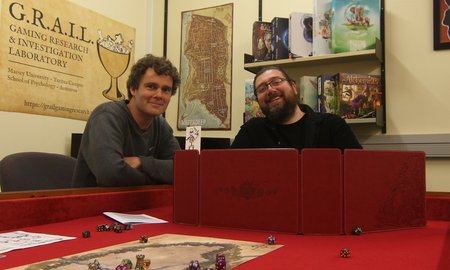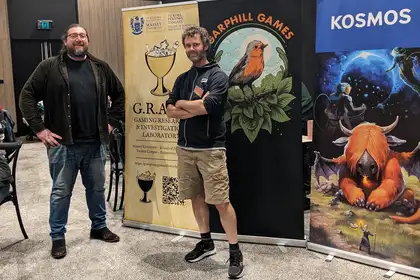
Mr Shaun Garea and Dr Ross Hebden at Wellycon, Aotearoa New Zealand's biggest board game convention.
Manawatū based Games Research and Innovation Lab (GRAIL) researchers, Mr Shaun Garea and Dr Ross Hebden are exploring how boardgames, role-playing games, card games and wargames impact wellbeing, learning and social connection.
The research team, led by Mr Garea, is currently running a nationwide survey of people aged 16 and over who play tabletop games. Dr Hebden says the survey aims to begin building a picture of tabletop gaming habits, play motivations and the personality of players here in Aotearoa.
“From there, we can compare with international findings and dive deeper into specific questions around wellbeing, psychology and education.”
He says boardgames are more than just fun. They can provide cognitive benefits, foster social connection and even offer a sense of accomplishment.
“There’s evidence that tabletop games can be especially valuable for people who struggle with isolation, such as older adults or neurodiverse players. The social interaction that comes from playing is often just as important as the game itself,” he adds.
Tabletop games offer something different from our increasingly digital work and learning environments.
“Boardgames are tactile, face-to-face experiences where you can physically manipulate pieces, interact directly with others and immerse yourself in a shared activity.”
Research also suggests that games can make education more engaging and accessible for school students.
“We’re hearing from teachers and parents who are using boardgame mechanics in classrooms, which is exciting to explore from a research perspective,” Dr Hebden adds.
What about Monopoly and Scrabble?
While classics like Monopoly, Scrabble, and Trivial Pursuit remain household names, Dr Hebden says modern games offer more variety.
“The growth of crowdfunding platforms has opened the door to more diverse game designers, leading to a wider range of themes, mechanics, and perspectives being represented in new games.”
“What makes a ‘good’ game depends on context. Sometimes a quick, luck-based game is perfect, while other times players want a long, strategic challenge. The great thing is that the variety today makes it easier to find something that appeals to everyone.”
Keep an eye out for the GRAIL team in the community at conferences and conventions like the Armageddon Expo where they often run games, give talks and network with the tabletop gaming community. The team will be at Great Games with Pals Gaming Con on 4 and 5 October.
Keen to take part in the survey?
Related news
School of Psychology lecturers open GRAIL gaming lab
Massey lecturers and psychology researchers Shaun Garea and Ross Hebden are developing a gaming laboratory based in the School of Psychology at the Manawatū campus.