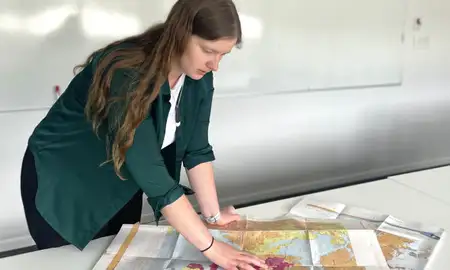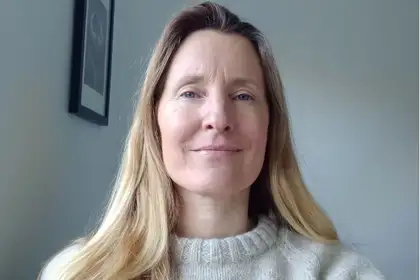
Dr Brakes is a Research Associate with Te Kunenga ki Pūrehuroa Massey University’s School of Food Technology and Natural Sciences, and has extensive experience in animal culture, social learning and marine mammal behaviour. Her research combines theory and observation to explore how whales, dolphins and other animals learn from one another and how this influences their behaviour, conservation and welfare.
Through the Fellowship, which supports Aotearoa New Zealand’s promising future research leaders, Dr Brakes will investigate how knowledge is shared in both animal and human communities, and how the quality of information can make populations stronger or more vulnerable.
“We live in an information-rich world. Social learning allows humans and other animals to transmit information within and between generations. However, the spread of poor-quality information can be unhelpful, causing ‘maladaptive’ behaviour with potentially disastrous consequences,” Dr Brakes explains.
Her project will examine how socially transmitted information, such as risky behaviours in wildlife or false news in human communities, can influence resilience and vulnerability. Using whale strandings in New Zealand and examples from human societies – particularly through the One Health space, which recognises the interconnectedness of human, animal and environmental health – the research aims to identify risks and generate strategies to protect both people and wildlife from harm. Insights from this work could help tackle contemporary challenges, such as managing species’ responses to climate change and mitigating the impacts of misinformation generated by artificial intelligence.
Through developing new computer modelling tools, Dr Brakes will analyse patterns of social learning and the spread of maladaptive behaviours, helping to predict tipping points and critical thresholds in both wildlife and human populations.
Dr Brakes says the Fellowship is an exciting opportunity to combine her expertise in marine mammals with research that bridges different areas of science.
“I’m excited to be working with Massey and the Cetacean Ecology Research Group. This Fellowship gives me the chance to explore fundamental questions about how culture and information shape the world around us, and how we can use that knowledge to support conservation and human communities alike.”
Dr Brakes has served as a Research Fellow at Whale and Dolphin Conservation since 2016 and is an honorary lecturer at the University of Exeter. She also chairs the Expert Group on Animal Culture under the United Nations Environment Programme’s Convention on Migratory Species and co-chairs the newly formed International Union for Conservation of Nature’s Conservation of Animal Cultures Task Force. Her work aims to provide insights that extend from the ocean to human society, highlighting the vital role of information in shaping the resilience of life on Earth.
Related news
Nowhere to hide: "Forever chemicals" unavoidable for dolphins and whales
New research reveals the significant risk New Zealand’s toothed whales and dolphins (odontocetes) face from human-made per- and polyfluoroalkyl substances (PFAS). These are also known as “forever chemicals” because they do not break down naturally in the environment.
New molecular ‘age clock’ for common dolphins a game changer for conservation
Researchers have developed the first DNA-based method to estimate the age of common dolphins (Delphinus delphis) using samples collected from animals that were stranded or accidentally caught.
Natural hazards researcher awarded inaugural Mana Tūāpapa Future Leader Fellowship
Dr Lauren Vinnell has been awarded an inaugural Aotearoa New Zealand Tāwhia te Mana Research Fellowship for her work aimed at enhancing the country’s resilience to future natural hazard events.