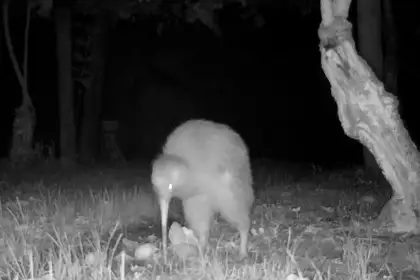
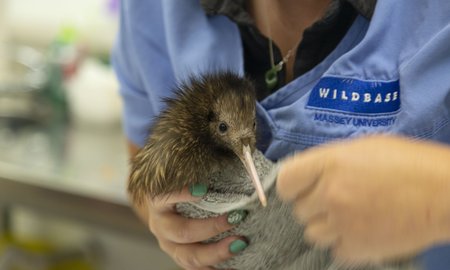
With a population of around 26,000, the North Island brown kiwi has increasingly been observed in orchards and vineyards, prompting an investigation into their potential role as natural pest managers as part of a research collaboration between Te Kunenga ki Pūrehuroa Massey University and the Bioeconomy Science Institute.
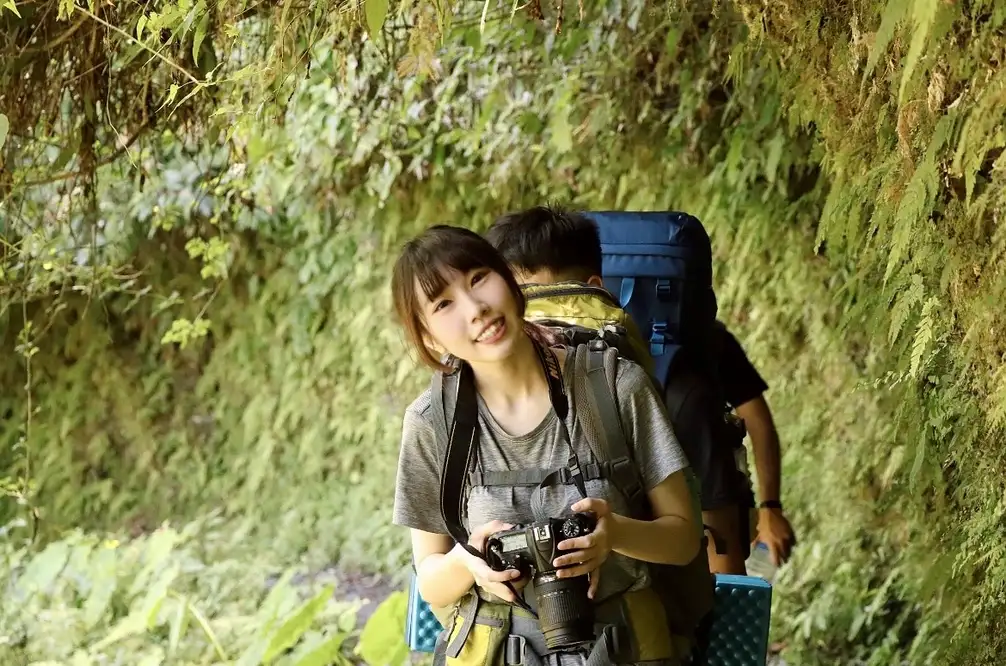
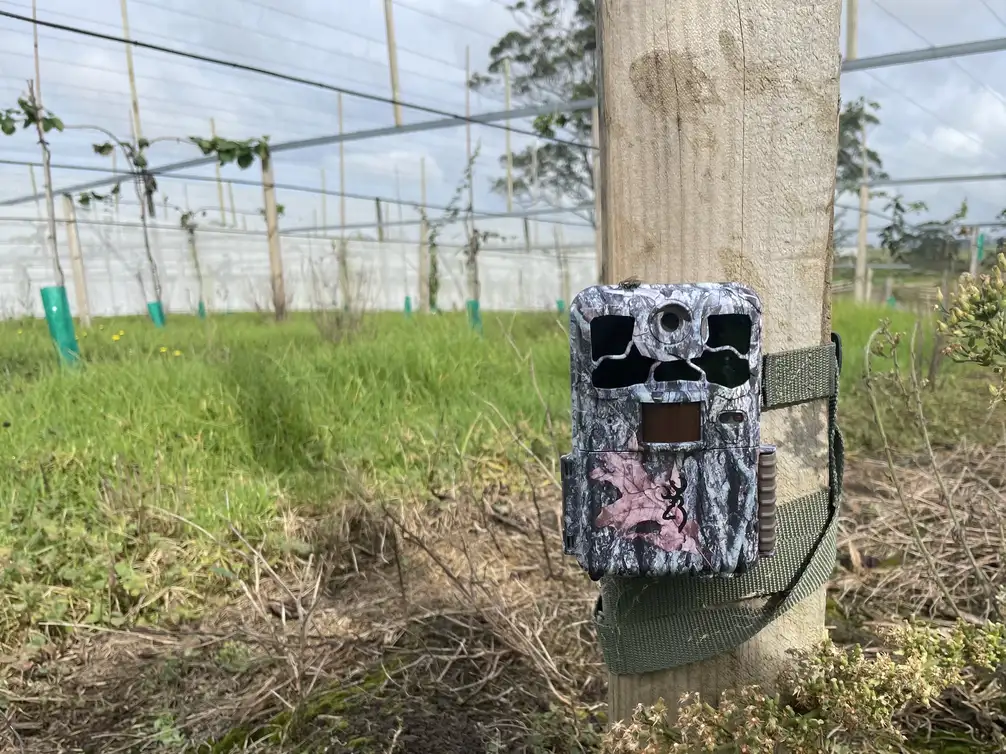
Building on earlier pilot work from the Bioeconomy Science Institute, Massey University Master of Science (Conservation Biology) student Wei (Xosha) Gong spent a year conducting fieldwork across four sites, using camera and acoustic recorders, insect traps and faecal analysis to build a picture of kiwi behaviour, diet and predator presence.
“This research involved a significant amount of biodiversity monitoring. I collected 13,724 videos from camera traps as well as 1,073 audio recordings and used these to identify bird and mammal species,” Xosha says.
Results showed that while kiwi remain most active in surrounding native bush, they also regularly move into and forage in the orchards and vineyards they live alongside. Diet analysis revealed they consume a wide range of invertebrates, including several horticultural pests.
Massey’s Professor in Wildlife Biology and supervisor Professor Isabel Castro says land management practices that retain native vegetation and use under-canopy planting in orchards are likely to encourage greater kiwi presence.
“Across New Zealand, we are losing precious biodiversity due to introduced predators, deforestation and the reshaping of habitats. Yet there is hope: by welcoming kiwi into our orchards and farms, these birds might once again help restore balance, feeding on pests and giving back to the land,” Professor Castro says.
“In Mātauranga Māori, when the forest was suffering from insect pests, Tāne Mahuta asked the birds for help, and it was the kiwi who answered, giving up flight and the light of day to protect the ngahere [forest or bush]. Science tells us this choice is mirrored in evolution: kiwi adapted to New Zealand’s unique environment by becoming nocturnal, ground-dwelling insect hunters. In this way, story and science meet, and perhaps, in this new age of loss, the kiwi’s gift can help us once more.”
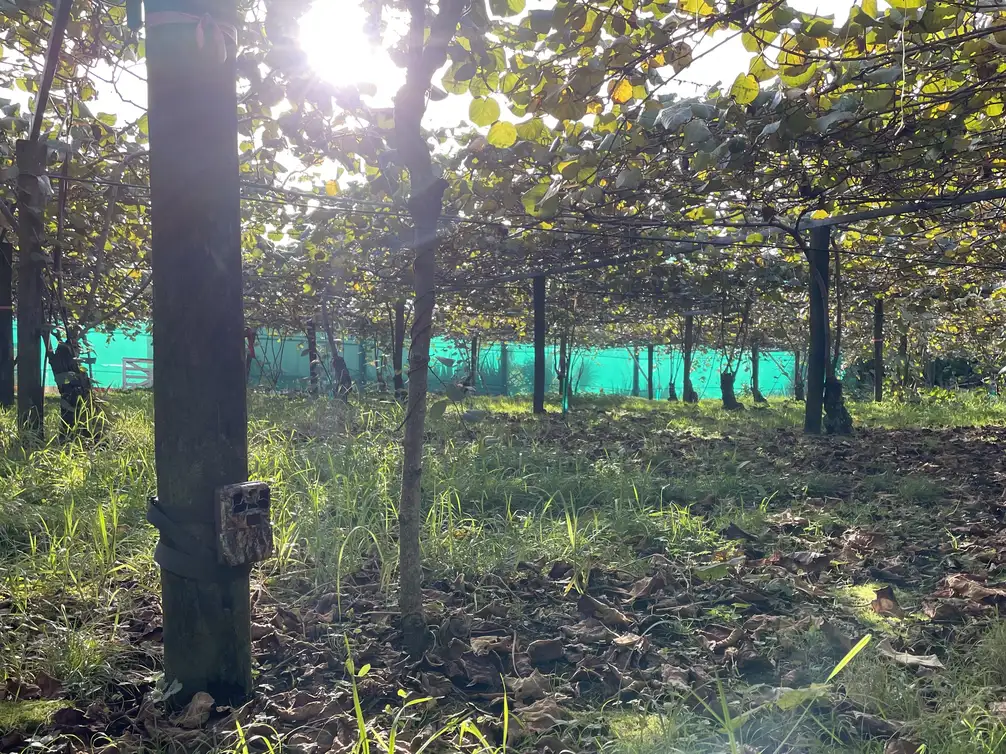
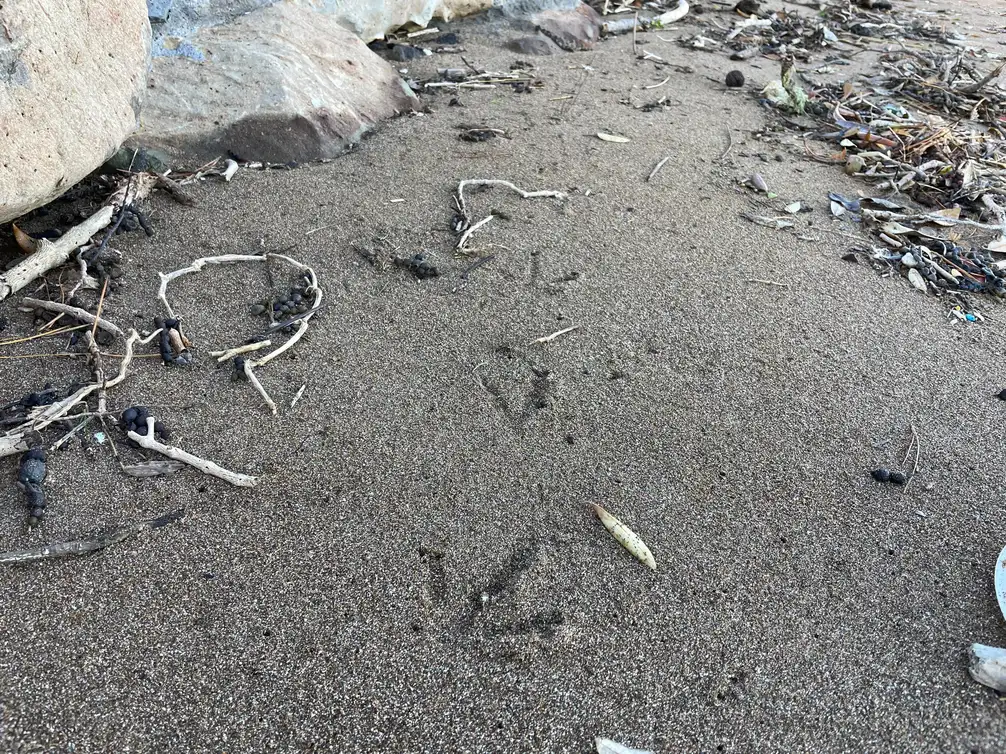
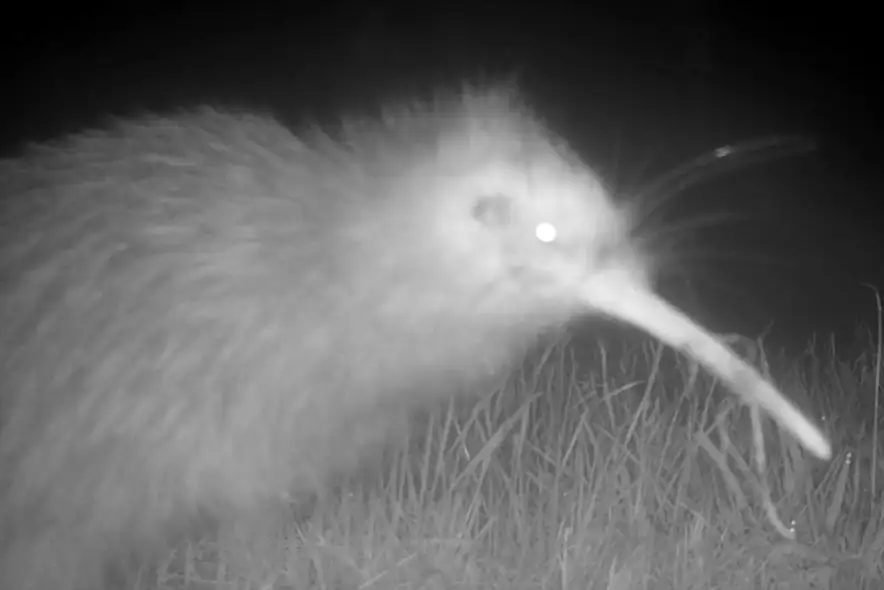
While the findings have revealed valuable insights, the study is still in its preliminary stages and more research is needed to understand how to develop sustainable and meaningful partnerships between kiwi, or other taonga species, and horticulture.
Key recommendations from the study to help this relationship thrive include better predator control, enhancing orchard habitat, testing fenced versus unfenced areas to measure kiwi impacts on pests, soil and biodiversity, and partnering with growers to align kiwi conservation with horticultural management.
Bioeconomy Science Institute scientist and supervisor Karen Mason says these findings highlight a dual opportunity, where horticultural landscapes can provide supplementary habitat for kiwi, and kiwi can help contribute to natural pest regulation.
“Horticulture, and agriculture more broadly, can be more than places where we grow food; they can become habitat and corridors for our wildlife. By understanding how growing systems are interacting with these taonga species, we can design landscapes to support them. It’s a win-win, as increasing biodiversity increases a system’s resilience,” Ms Mason says.
She adds that similar approaches overseas have benefitted growers.
“Research in Colombia shows coffee growers have found that integrating native species into their systems provides valuable ecosystem services and improves crop performance. They then have the marketing bonus of labelling coffee as bird friendly. We could have kiwi friendly kiwifruit and wine here!”
The study was funded by the Rejuvenating Crop Ecosystems programme in Growing Futures – Ngā Pou Rangahau at Plant & Food Research, which is now part of the Bioeconomy Science Institute. It was further supported through the supervision of Massey University Professor in Ecology Alastair Robertson.
Related news
Weaving community engagement with research to conserve the Chatham Island black robin
Backed by a Marsden Fund Fast-Start grant, Zoology and Ecology Research Officer Dr Elizabeth Parlato is championing community engagement as part of her work to help safeguard the future of the Chatham Island black robin | karure | kakaruia.
New research underway to enhance kiwi welfare and conservation
A current PhD research project is endeavouring to identify safe and effective drugs to improve the treatment of coccidiosis in kiwi.
Two Massey projects receive funding from Te Pūnaha Hihiko: Vision Mātauranga Capability Fund
Professor Isabel Castro and Professor Karen Stockin are involved in projects that address conservation and mātauranga Māori, in partnership with Māori collaborators.