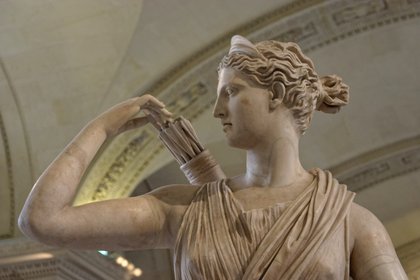
A statue of the Roman goddess Diana.
Senior Lecturer Dr Anastasia Bakogianni was instrumental in developing and coordinating a recent international conference, Challenging the Patriarchy: Reframing Graeco-Roman Women and their Reception, hosted by the University of Newcastle in Australia from 30 June – 1 July.
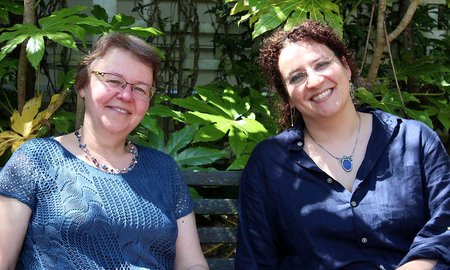
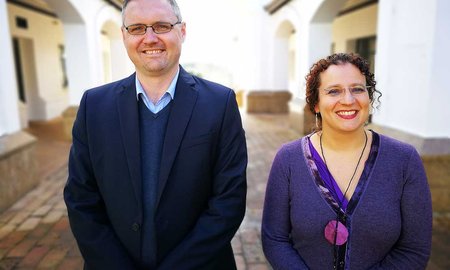
The conference was the result of a close collaboration between Dr Bakogianni and Connie Skibinski (University of Newcastle), who are members of the Australasian Women in Ancient World Studies (AWAWS).
Dr Bakogianni says, “The purpose of the conference was to examine the restrictions placed on women in classical antiquity, and to talk about why these historical and mythical women remain relevant today. In our discussions we asked why gender stereotypes dating back to this period persist and how we can use them to challenge contemporary misogynistic attitudes.”
The conference was sponsored by AWAS, which is devoted to promoting equality and diversity in classical studies.
“Nearly all the participants were also members of AWAWS. We also invited two international speakers, one from Spain and one from the UK, to join in on the fun," Dr Bakogianni says.
Both Dr Bakogianni’s and Ms Skibinski’s research focuses on ancient women and their impact on the modern world. Organising this conference was a project dear to their hearts that made it possible to bring together like-minded researchers to examine this fascinating topic from multiple angles.
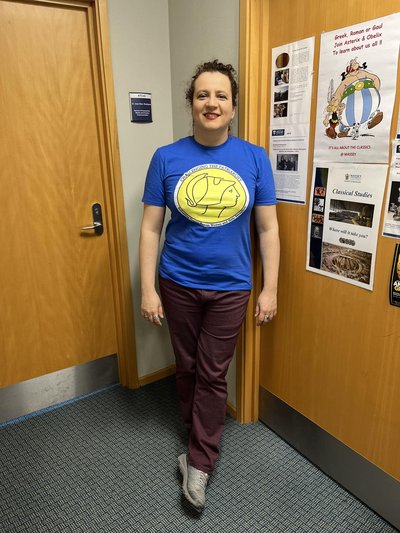
Dr Anastasia Bakogianni.
Dr Bakogianni’s research focuses on the portrayal of ‘bad’ women in Greek tragedy, and in her paper she analysed three examples of modern novels (Henry Treece's Electra (1963), Penelope Haine's Helen had a Sister: A Tale of Ancient Greece (2015) and Jennifer Saint's Elektra (2022)) that finally gave an authentic female voice to such maligned characters as Clytemnestra (who murdered her husband for killing their daughter) and her daughter Electra who sought to avenge her mother’s crime (the subject of Dr Bakogianni’s PhD and her first monograph).
“Connie’s doctoral thesis examines the famous warrior women of antiquity, the Amazons, and their modern versions. The three speakers in the panel she organised demonstrated that Amazons have been transformed into strong women who fight for their causes in a variety of modern media," Dr Bakogianni says.
Famous examples discussed at the conference included the Hollywood blockbuster Wonder Woman (1917), based on the eponymous heroine in comics, and Xena: Warrior Princess (1995-2001), the television show filmed in New Zealand starring Kiwi actress Lucy Lawless.
Other highlights of the conference included a paper on how classicists can help make modern museums more inclusive to women and minority groups, including members of the LGBTQ+ community, many of whom are often written out of history.
Tobias Fulton, a PhD candidate at the University of Newcastle, talked about how the Hellenic Museum in Melbourne has been engaged in a project to re-access the portrayal of ancient women, re-imagined for modern audiences by contemporary artists. In the artist Loretta Lizzio’s installation Well Behaved Women, the ancient Greek idea that women should not be talked about at all until after their death is directly challenged.
“Ultimately, the talks at the conference examined portrayals of ancient women who both challenged the patriarchy and sought to radically subvert male-orientated views of women and their position in society,” Dr Bakogianni says.
Over 70 participants attended the conference and contributed to the discussion in person and online.
“The message we all took away was that much more work needs to be done to both examine and effectively challenge the patriarchy and its roots in classical antiquity."
Related news
Teaching Greek myth through literature, art and a computer game
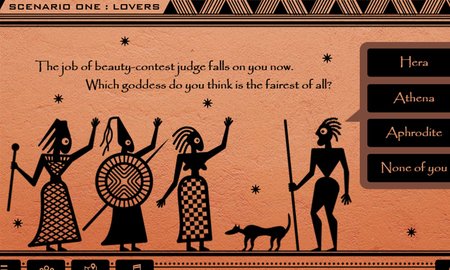
The legendary Trojan War, celebrated in the works of Homer and Virgil, is now the subject of an innovative interactive game produced to mark the 50th anniversary of classical studies at Massey.
What can the Ancients teach us about merging and mixing?
Democracy and citizenship are ancient ideas, still evolving in our time. Massey University Classical Studies specialists will share insights on how outsiders were integrated into Ancient Greek and Roman societies and explore parallels and pointers for today's world.
Sharing Aotearoa and Ancient World connections
Myths and tales of Ancient Greece and Rome - as well as its philosophers, poets and mathematicians - have captured people's imaginations for centuries with sex, violence, dysfunctional families, cruel gods and corrupt politics.