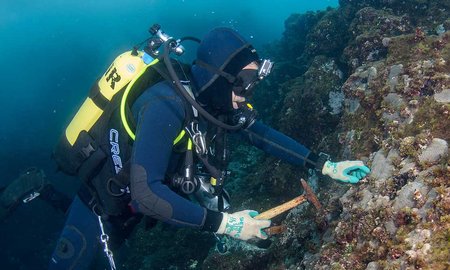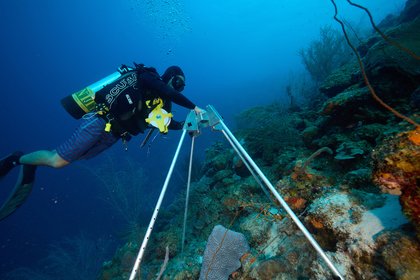
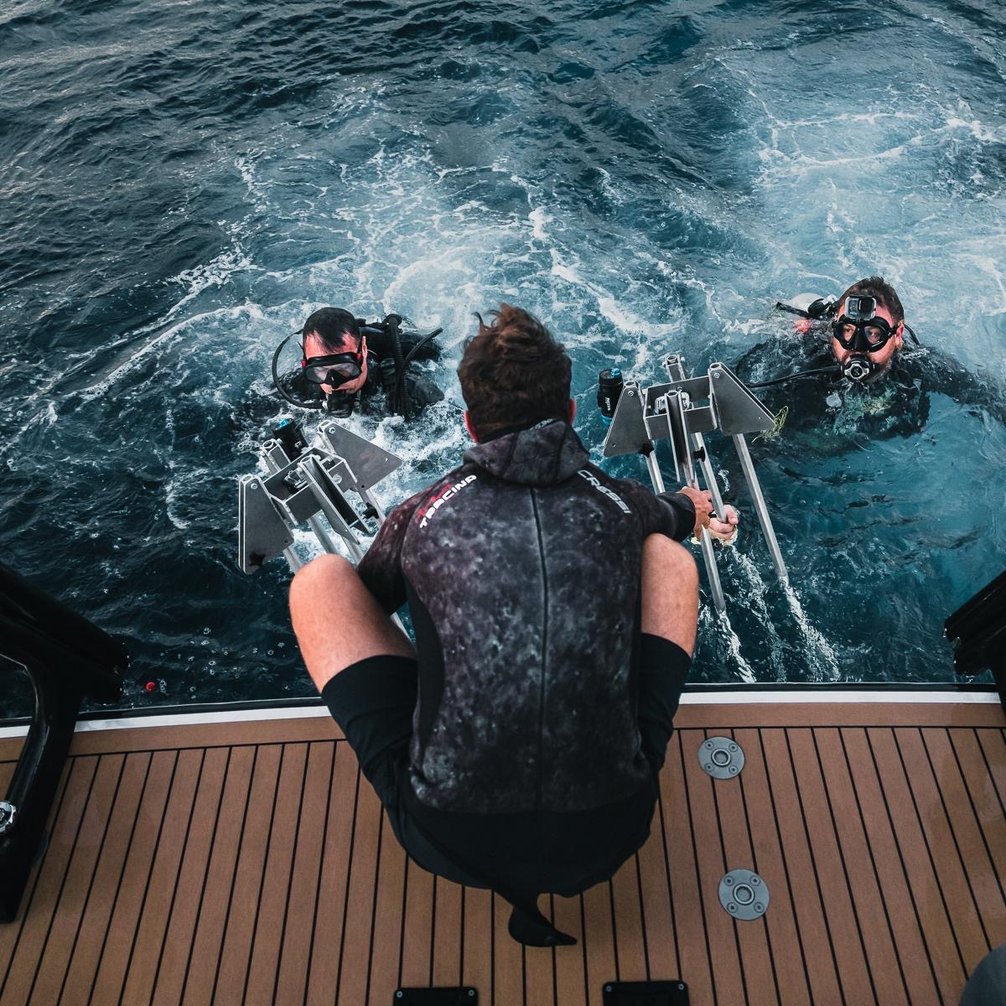
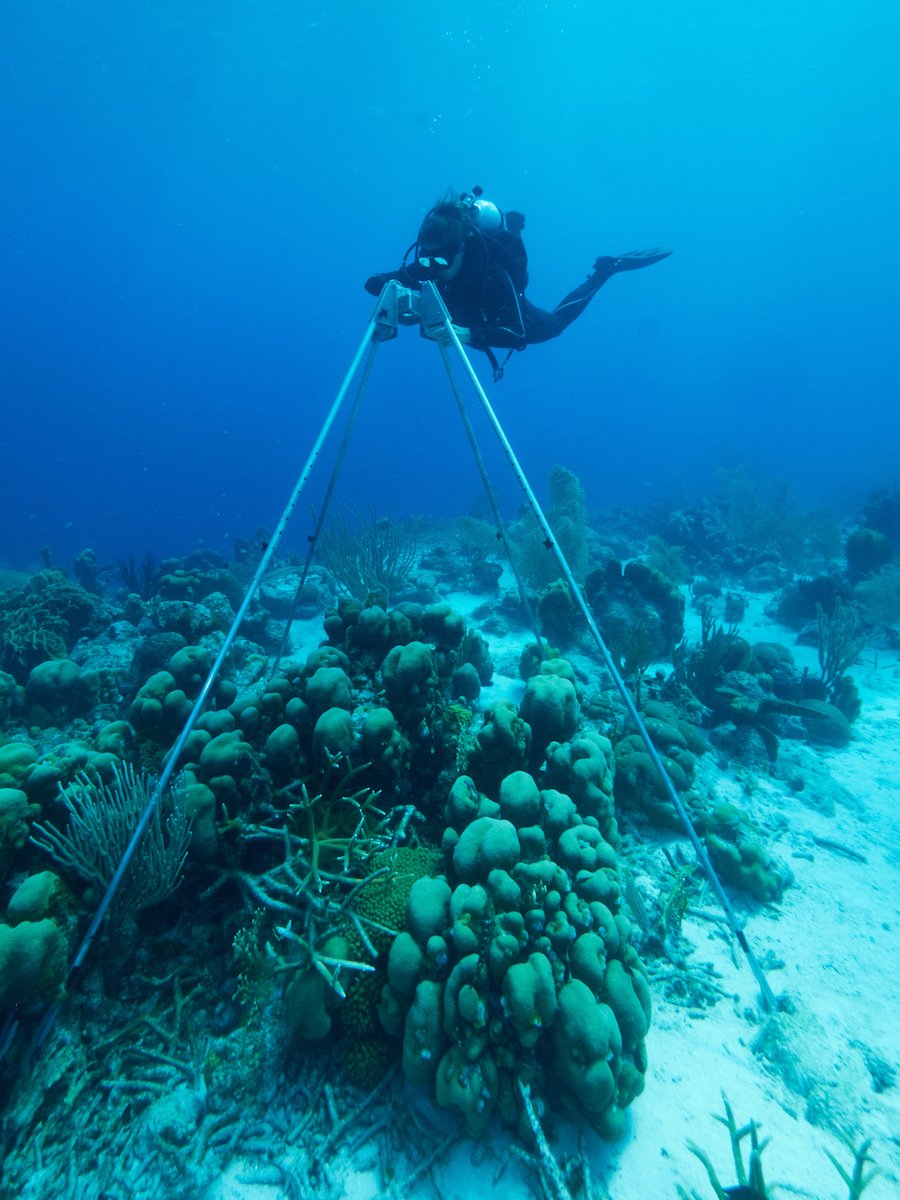
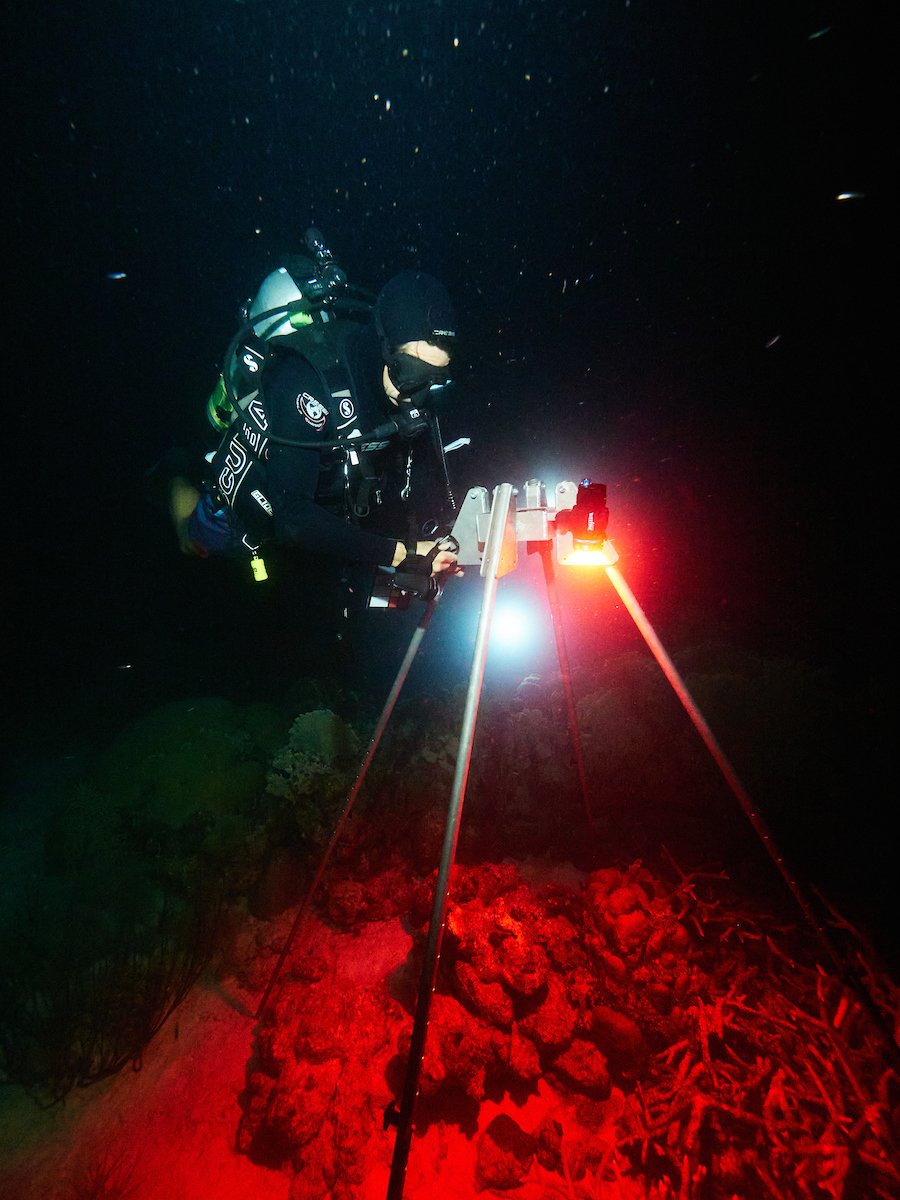
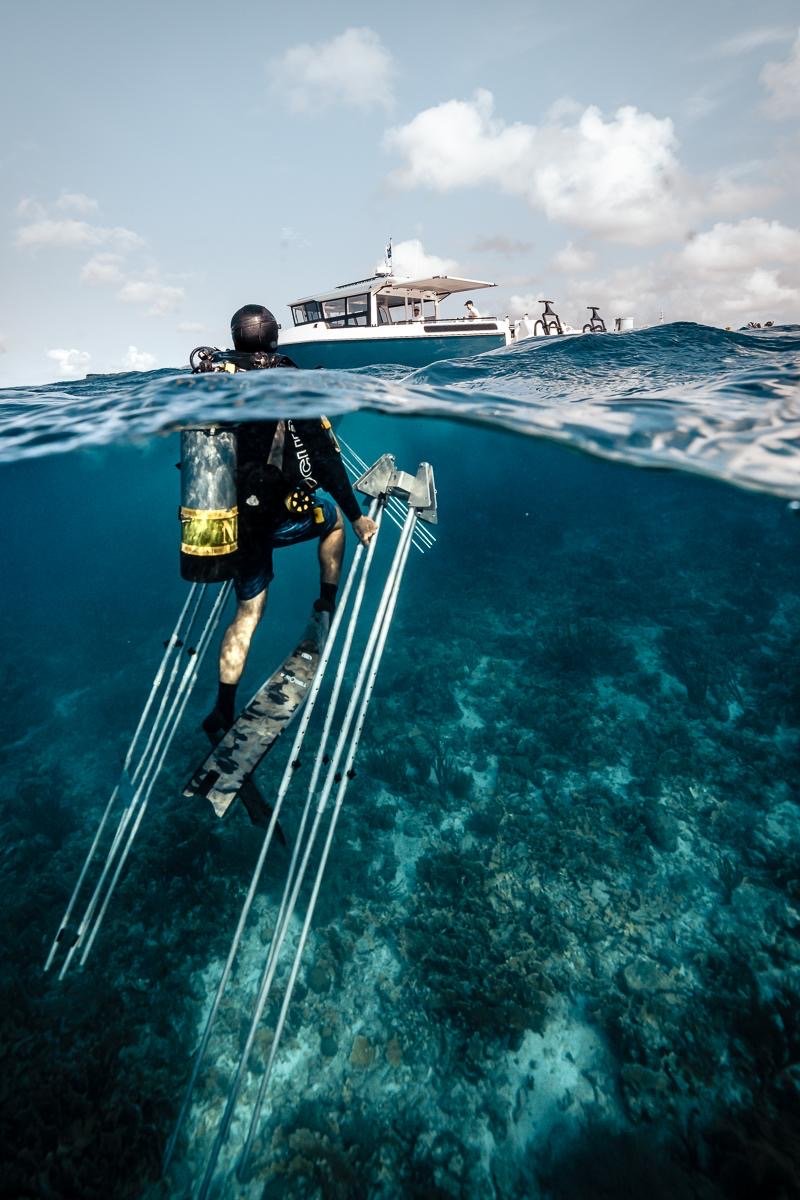
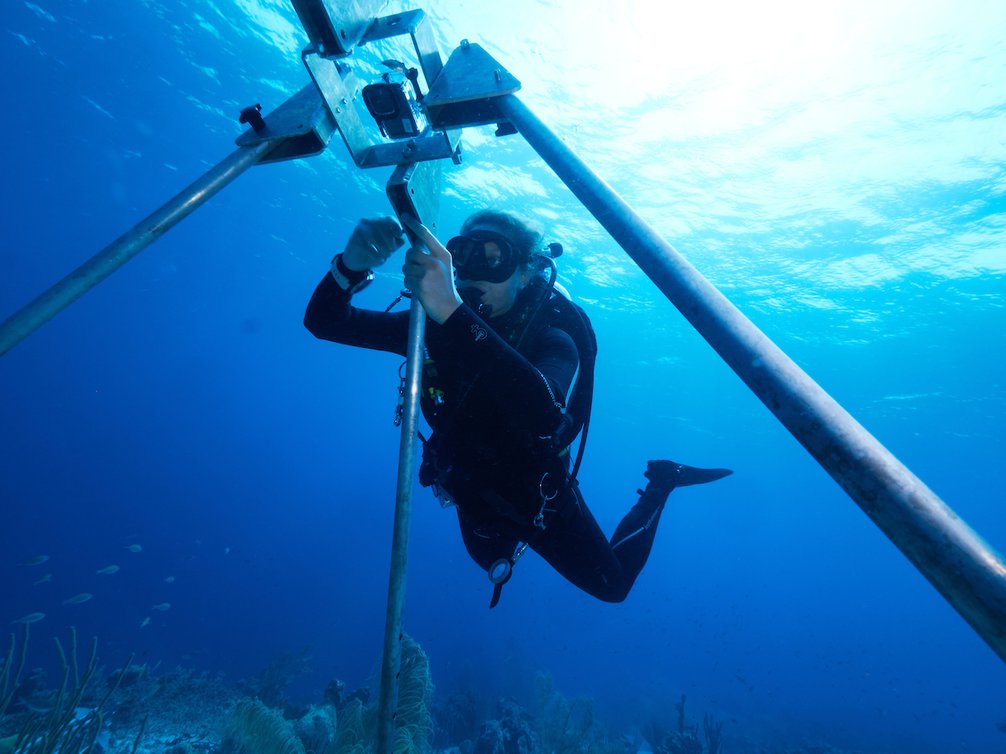
The Massey-made quadpods in action.
Associate Professor David Aguirre and Associate Professor Libby Liggins from the School of Natural Sciences are primary investigators on the Inkfish Coastal Seas research programme. As part of the programme, Dr Aguirre and Dr Liggins took part in a research expedition to Curacao in the Caribbean and wanted to try a new approach to quantifying animal behaviour.
Dr Aguirre identified that to do so, they would need to source quadpods – contraptions that hold a single downward-facing GoPro camera at their apex and are designed to run in timelapse mode to capture abundance and behaviour of reef invertebrates such as urchins, snails and sea stars. Using such pieces of equipment are effective because they enable the surveying of organisms that would prefer to hide from divers.
Quadpods have been used successfully in the past to quantify the abundance and behaviour of kina on Rangitāhua (Kermadec Islands).
To source some quadpods for the expedition, Dr Aguirre reached out to the School of Food and Advanced Technology for help. In discussion with Mechanical Workshop Technicians Gabriel Phang and Blair Dixon, an initial concept design was drawn up and presented. Following a couple of minor edits to the design, the first prototype was built and approved, and all four units were manufactured and delivered after six weeks.
Mr Phang says this was the first time the team had manufactured something for a marine application.
“David requested that the quadpods be light and compact for ease of transportation and be able to be easily deployed once they reached the site. He showed us a photo of a product that was available on the market, but commercially made ones have a hefty price tag.
“We pitched a few concepts to him and once we settled on a design, a prototype was made. Final approval was given and we manufactured another three units which were tried out in the field. The feedback from David after using the quadpods we made was that they could do with a few refinements, but overall, they functioned as required.”
It’s not the first time the technicians have assisted Dr Aguirre and his colleagues. They’ve helped with several projects over the years, many including 3D printing. The team has also done work for the School of Built Environment, School of Food and Advanced Technology and Facilities Management.
Related news
Students and teachers on science voyage to Kermadec Islands
Three Massey staff members are about to embark on a scientific voyage as part of BLAKE's fifth BLAKE Expeditions programme.
Climate-related coral research inspires artwork
Fragments of coral collected by Massey University scientists have inspired a Christchurch artist to create an exhibition of paintings, with the exhibition opening this weekend.
Coral reefs may have refuge in deeper water
A Massey marine ecologist is helping to uncover the ways the world's coral reefs could survive in the face of rising global temperatures.