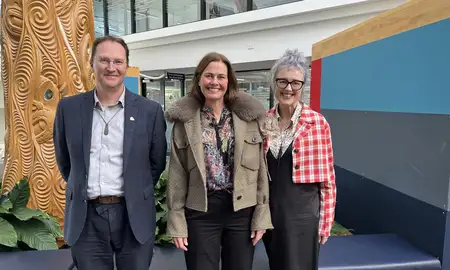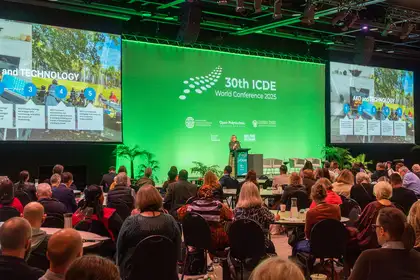
A pledge to advance lifelong learning globally, dubbed the Tākina Accord, emerged from the Education Policy Forum, a pre-conference event at which the Minister for Vocational Education, the Hon Penny Simmonds, gave an opening address. Education leaders, including university presidents and Vice-Chancellors, were united in their commitment to make education more accessible for all – especially for the fast-growing number of older learners globally.
Provost Professor Giselle Byrnes says it was a privilege for Massey to co-host this major international event with Te Kuratini Tuwhera o Aotearoa Open Polytechnic of New Zealand, the other leading provider of open, accessible, flexible and scalable education in this country.
“It was a resounding success and also offered 24 Massey University researchers the chance to present papers,” Professor Byrnes says.
“For more than 60 years, Massey University has been delivering distance learning to students of all ages, backgrounds and locations. Despite the shifts in technology, our commitment has remained the same: to break down barriers and create opportunities for all students.
“The conference affirmed the global trend toward flexible and part-time learning and how this reflects a profound shift towards inclusivity in education. Here in Aotearoa New Zealand, we need to respond to this in ways that mean lifelong learning is genuinely reflected in policy design and supported by our funding mechanisms.”
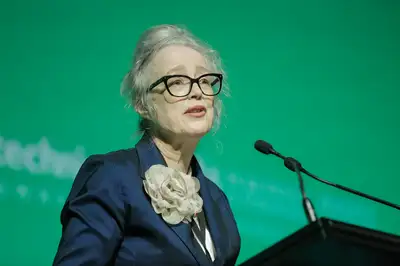
Provost Professor Giselle Byrnes says it was a privilege for Massey to co-host this major international event.
The overarching conference theme drew from the Māori concept of ako – honouring the value of reciprocity and knowledge exchange in the teaching and learning relationship.
Major focus areas that emerged were:
- the importance of lifelong learning and how education providers can best support it as the older age demographic increases globally
- how we can positively harness the disruption of generative artificial intelligence
- the importance of prioritising ‘humanness’ in education systems because a student-centric approach that supports learners holistically is vital to success.
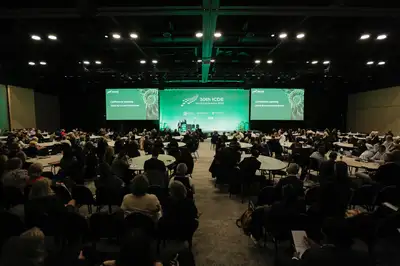
This was the 30th biennial ICDE World Conference – the first to be hosted in New Zealand in 75 years – and Massey University and the Open Polytechnic were instrumental in introducing ‘Indigeneity’ as a theme for presentations and workshops for the first time.
Keynote speaker Distinguished Professor Linda Tuhiwai Smith CNZM, Ngāti Awa, Ngāti Porou, Tūhourangi, offered a powerful reflection on cultural identity and knowledge.
“Because of colonisation, much of our struggle has been to keep our history alive, to revive our history. Not because we want to live back in history, but because to go forward into the future, we need to take our past with us,” Distinguished Professor Tuhiwai Smith says.
“Education needs to be able to build cultural strengths so a learner can feel at one with their identity. Education needs to fuel students’ hunger for language and culture. Education needs to bring joy to whānau, and to do this we need to teach in the right way.”
Learn more about studying online at Massey University
Related news
Going the distance through student representation
Bachelor of Arts student Michelle Matson has recently been elected as the student member of the Massey University Council for a two-year term.

Massey secures Gold in 2024 Times Higher Education Online Learning Rankings
Te Kunenga ki Pūrehuroa Massey University has been awarded a prestigious Gold rating in the inaugural 2024 Times Higher Education (THE) Online Learning Rankings, the highest honour achievable in this year’s global assessment.

Open Polytechnic and Massey University to co-host 30th ICDE World Conference
Open Polytechnic is pleased to be co-hosting the 30th ICDE World Conference with Te Kunenga ki Pūrehuroa Massey University, at the Tākina Wellington Convention and Exhibition Centre, in November 2025.