On a farm, tiny living organisms called microbes, including bacteria and fungi, live in the soil beneath the grass and in the animals grazing on it. These microbes do a lot of work behind the scenes, from breaking down nutrients, building up carbon in the soil and helping keep soil healthy, to supporting the health and performance of grazing ruminants.
With few studies internationally examining soil and gut microbiomes together, PhD candidate Upulika Jayaneththi is using her research to explore a novel and key question: does managing pasture in a more diverse, regenerative way change these hidden microbial worlds for the better, both in the soil and in grazing animals?
By comparing standard pasture, mainly ryegrass and clover, with more diverse pasture containing a wider mix of pasture plants, Upulika has been studying microbial responses across dairy, sheep and beef research farmlets at Te Kunenga ki Pūrehuroa Massey University. Her research also compares contemporary and regenerative management, with the latter focused on building soil health over time.
She says the work looks at microbial changes, including which microbes are present and which genes are active, providing insight into what those microbes are doing.
“These findings will help build a clearer picture of how pasture management affects soil and gut at a microbial level, which could support future decisions around sustainable farming practices in New Zealand and beyond. If diverse, regenerative pasture management does improve soil and animal health and performance, that could be useful for the dairy and sheep sectors in New Zealand as farmers look at ways to farm more sustainably.”
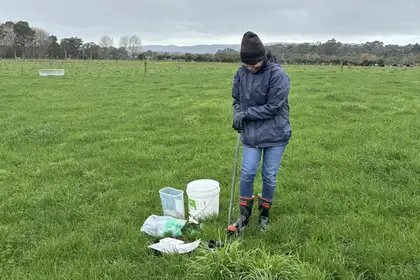
Drawing on data from the first four years of the Whenua Haumanu programme, and through hands-on field and lab work, including transect soil sampling, faecal collection, DNA and RNA extraction and bioinformatics, Upulika says she has found that the gut microbiome appears to respond more clearly to pasture management than the soil microbiome.
“Soil communities were mostly shaped by year-to-year conditions, while gut microbes in cattle and sheep grazing diverse, regeneratively-managed pastures were different from those grazing standard, conventionally-managed pastures at certain times of the year. That does not necessarily mean regenerative, diverse pasture management is not affecting the soil too, it may just take longer to show up.”
She says microbial changes, whether in soil or animals, may not happen quickly or evenly.
“Longer-term research will be important for understanding the full effects of regenerative management and its potential to contribute to more sustainable outcomes.”
Growing up in Gampaha, Sri Lanka, Upulika says her love of soil science developed during her Bachelor of Science and continued through her master’s studies, all of which focused on soil science and soil microbiology.
Following her studies, Upulika worked at the Faculty of Agriculture, Rajarata University of Sri Lanka for a decade, first as a lecturer and later as a senior lecturer. When she decided to explore PhD opportunities, she managed to secure a Whenua Haumanu Research Scholarship.

“New Zealand had long been a country I dreamed of living and studying in for my PhD, and Massey felt like the right fit. My background in soil microbiology gave me a helpful starting point, and the PhD gave me the chance to build new skills in bioinformatics. Animal sampling took a few rounds before I felt comfortable with it.”
She says her experience with the Whenua Haumanu programme has shaped her PhD, not only through the financial support provided by the scholarship, but also through the connections and opportunities to collaborate with other researchers.
“Being part of such a large, multi-year, multidisciplinary project meant I was not working on my research alone. I was part of a wider team looking at soil, pasture, and animal systems from a range of angles. That gave me some exposure to researchers and ideas beyond my own specific focus on microbiomes. Working with my supervisors has been genuinely enjoyable. There is no pressure, just a lot of support, which has made the whole experience much easier for me.”
Upulika’s focus now is to complete her PhD, before seeing where her research and experience will take her next.
Learn more about Whenua Haumanu
Whenua Haumanu is Aotearoa New Zealand’s most comprehensive programme examining the impacts of contemporary and regenerative pastoral farming practices, focusing on soil health, biodiversity and ecosystem outcomes. The seven-year initiative is led by Massey University, supported by the Ministry for Primary Industries, and brings together universities, research institutes and industry partners to assess the suitability and relevance of regenerative agriculture in New Zealand.
Related news
Rediscovering native grasses reveals overlooked history in pastoral systems
New research from the Whenua Haumanu programme is unearthing the historical role of indigenous grass species in farming systems, suggesting they may warrant renewed attention as agriculture responds to a changing climate.
New Whenua Haumanu research shows pasture and lactation influence milk flavour
A recent study has found that consumers can taste differences in milk depending on what cows eat, as well as the stage of lactation at which the milk is produced.
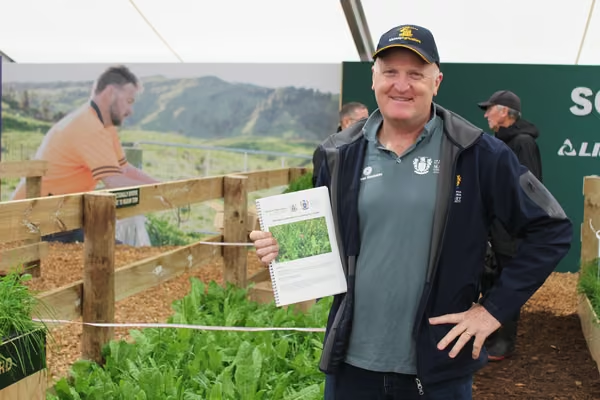
Launch of practical guide to create resilient pastures in a changing climate
A new publication has been launched that offers a comprehensive and up-to-date resource on commercially available grazing pasture species in Aotearoa New Zealand.