When an earthquake strikes, who are usually the first people to respond? Locals.
Community members are often first on the scene providing support to the injured or displaced and in many cases arriving well before official services can arrive, especially in isolated communities.
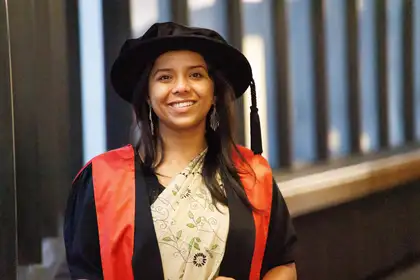
PhD graduate Dr Manomita Das has researched how communication supports these community members to be prepared for natural hazards.
“My study builds knowledge about how disaster communication works at the community level and how it influences collective action. This can inform how we design community engagement strategies, deliver community-centred communication, recruit and retain volunteers, and address communication inequities.”
Dr Das says preparing our communities in advance of an extreme event needs to become a higher priority.
“Local people need to know how to respond to an event and help each other during and after an event. We also need to make sure that people have support systems in place that enable them to collectively achieve this.”
The 2019 National Disaster Resilience Strategy set by the National Emergency Management Agency highlighted the need to work with individuals, whānau and communities to strengthen New Zealand’s natural disaster resilience. Dr Das picked a key theme from the strategy to research and her findings can be used to inform future policies, guidelines and actions to help New Zealand communities become more resilient.

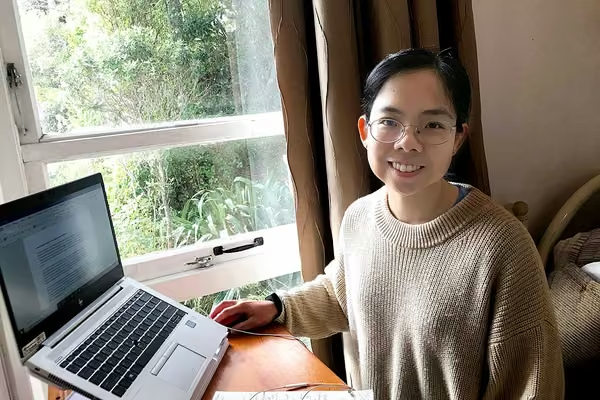
Dr Das on her research trip to remote communities.
Dr Das’ research took her to many remote communities that are improving the safety and wellbeing in their communities.
“I was surprised by their warmth and openness. They welcomed me into their world and shared their time and knowledge. They trusted me as an outsider and a researcher and I am very grateful for the experience.”
Originally from a small township in West Bengal, India, Dr Das selected Te Kunenga ki Pūrehuroa Massey University to complete her doctorate because of the Joint Centre for Disaster Research’s reputation as a world-leading institution that underpins its teaching with rich and contemporary research.
With more hazard events happening in New Zealand recently, Dr Das has advice for those communicating with at risk communities.
“I acknowledge this is an incredibly challenging time we are living in. The communication landscape is changing rapidly and with very limited resources, it’s a massive challenge to deliver. Because of this, we really need to pause, look and listen. I encourage communicators to keep working hard to reach and involve communities.
“We need to look around and learn from what other countries are doing, learn from our history and past mistakes. We need to understand how this knowledge can be adapted in our environment and embed those in practice. And we need to make sure we are really listening. At risk people are facing unprecedented challenges with natural hazard threats, complicated by broader issues of rising living costs, increasing unemployment rates, global tension and so many other things. Communicators need to understand these realities and have honest conversations, which may be uncomfortable and unsettling, but very needed. From here, any communication needs to be designed to acknowledge the reality of the local communities and have them front and centre of anything you are doing.”
Now, Dr Das is working as a lecturer at Massey and hopes to continue contributing to research and teaching in meaningful ways.
“Massey gives an excellent platform to grow as a researcher. It wasn’t just the teaching or research, it was services like health and counselling, the library, the Graduate Research School and the student clubs that made my journey possible and memorable.”
Related news
4 lessons NZ should take from another summer of weather disasters
Co-authored by Professor of Disaster and Emergency Management Julia Becker
Researchers secure funding for pioneering climate and disaster projects
Three projects led by Massey researchers have been awarded funding from the 2024 Ministry of Business, Innovation and Employment Endeavour Fund.
Turning disasters into PhD success
PhD graduate Dr Marion Tan began researching disaster response after Typhoon Haiyan devastated her home country, the Philippines. Now, she says it's "poetic" to be graduating in the middle of a global pandemic.