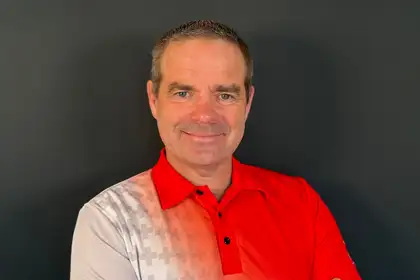
Dr Cameron Lamont.
The article, An Emergent Athlete Development Framework for Swiss Triathlon, authored by Massey alumnus Dr Cameron Lamont, Professor Andy Martin and Associate Professor Geoff Watson, explores how athlete pathways can better support their wellbeing while still achieving high-performance outcomes.
Drawing on his unique perspective as a former professional athlete and current national coach for Swiss Duathlon within Swiss Triathlon, Dr Lamont critically examined traditional pathway models and proposes a new athlete-centred approach: the LEAD framework.
The publication comes at a time when sporting organisations around the world are grappling with concerns around selection, de-selection and non-selection processes. Research has shown that these experiences can have lasting impacts on athlete wellbeing, self-esteem and long-term participation in sport.
"This research was motivated by a desire to create development programmes that recognise the complexity of athletes' journeys. Athletic progression is rarely linear,” Dr Lamont says.
“The LEAD framework acknowledges this reality and provides practical guidance for supporting them through selection, de-selection and non-selection decisions, managing transitions, setbacks and alternative pathways, supporting more effective resource allocation and talent transfer across sporting pathways."
Professor Martin says the research highlights the value of integrating practitioner insights with academic inquiry.
"This project demonstrates how reflective practice can generate meaningful innovation in sport policy and development. By combining real-world coaching experience with rigorous scholarship, Dr Lamont has been able to produce a framework that addresses both performance demands and athlete wellbeing."
The researchers believe the framework's principles extend beyond triathlon and may prove valuable to national sport coaches and international athlete development programmes.
"The challenges faced by athletes during selection and progression are not unique to triathlon," Professor Martin explains.
"The LEAD framework provides a practical, adaptable model that can hopefully help other sports create development pathways that are more athlete-centred.”
The research highlights Massey’s growing reputation for applied interdisciplinary sport research that delivers meaningful impact within high-performance sport programmes in both Aotearoa New Zealand and international contexts.
Professor Martin and Associate Professor Watson are also co-authors of two books led by Massey doctoral graduates: Legends in Black: New Zealand Rugby Greats on Why We Win and Will to Win: New Zealand Netball Greats on Team Culture and Leadership. These publications showcase influential insights from some of New Zealand’s most successful athletes and coaches, further demonstrating Massey's contribution to sport leadership, culture and performance research.
Join one of New Zealand’s biggest sectors.
Related news
Sport graduate puts coaching theory into practice
Recent Bachelor of Sport and Exercise graduate Jacob Fowler has enjoyed a successful year coaching secondary school basketball.

Elite Sport Scholarship supports top athletes to balance sport and study
A record number of New Zealand representatives have been awarded Elite Gold Sport Scholarships and are studying towards degrees at Te Kunenga ki Pūrehuroa Massey University in 2026.
