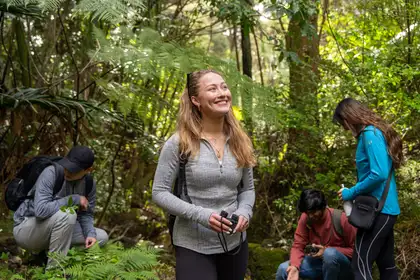
Te Kunenga ki Pūrehuroa Massey University has a long history of supporting the natural world and living environment – from studying threatened snails, birds, lizards and wētā, to investigating why kiwi choose to live near kiwifruit orchards or where godwits rest during their yearly commute. To continue this work, Massey is merging the postgraduate offerings of experimental science subjects ecology and conservation biology into a single subject. This change creates a scientifically coherent alignment, fostering stronger connections between research activities and the student experience. It also aligns with Massey’s undergraduate programme in ecology and conservation.
Scientifically, most of the applied questions in conservation biology are rooted in ecology. To understand how to conserve our taonga species, we first need to understand their ecological habitat and how they interact with their specific environment(s). By combining the two subjects, students will have a better understanding of the theoretical foundations while also experiencing the practical nature of research in ecology and conservation.
The revised qualifications will be offered on the Manawatū campus and through distance learning. These changes are subject to Committee on University Academic Programmes (CUAP) approval but once granted, should be in place for the academic year in 2026.
Professor of Ecology Alastair Robertson from the School of Food Technology and Natural Sciences, says combining ecology and conservation biology subjects will open more research opportunities for students.
“As an ecologist, I believe that we must understand the ecology of a certain species before we can apply conservation biology: How does a species fit into the ecosystem? Only then can we understand their conservation needs,” Professor Robertson explains.
“I am looking forward to seeing where our students’ postgraduate study and research move in the future and the connections they will make across other scientific disciplines with these changes in our degrees.
“Our research is extremely collaborative – we work with other scientists at Massey including veterinarians, chemists, biologists, zoologists and agriculturalists. The breath of research really is staggering and that is advantageous, enlightening and a real pleasure for both researchers and students alike. To gain all these different perspectives on a research question really means we make great progress with our conservation and ecological studies.”
Student interest in ecology and conservation has produced fascinating research over the last few years. Working alongside experienced academics, postgraduate students have tackled a variety of important issues affecting our native taonga. For example, students collaborated with the Department of Conservation (DOC) to understand the giant and tusked wētā that prefer gorse as part of their natural habitat. They have supported efforts to maintain this habitat on retired farmland, helping protect these species in areas where land conversion was being considered.
Other students have been studying the genetic diversity of our native snails against a backdrop of environmental challenges such as habitat loss and predation from animals including rats, possums and pigs. Climate change also poses a threat to these animals, as they prefer moist habitats that are shrinking due to changing weather patterns. Massey research has observed genetic diversity in snail populations located close to one another geographically, providing insights into the implications for conservation. Are they a single species or several distinct local species with genetic differences?
Habitat degradation is also impacting the godwits, who have the longest non-stop migratory route of any bird in the world. Each year, they travel between Alaska in the United States and New Zealand, breeding in the northern hemisphere summer and ensuring access to plentiful food supplies. On their migration from New Zealand back to the US, they stop temporarily on their ~11-12,000 kilometre journey. Massey students have been exploring how declining in habitat quality in the Yellow Sea (between China and Korea) might affect these birds during their stopovers.
See our website for more information on the Postgraduate Diploma in Science and Technology (Ecology and Conservation) and Master of Science (Ecology and Conservation) or contact our academic advisors.
Related news
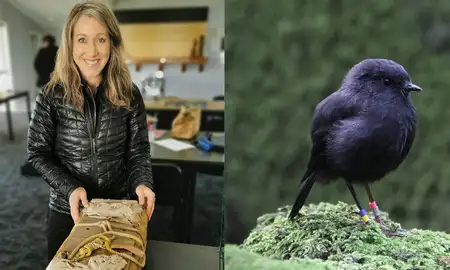
Weaving community engagement with research to conserve the Chatham Island black robin
Backed by a Marsden Fund Fast-Start grant, Zoology and Ecology Research Officer Dr Elizabeth Parlato is championing community engagement as part of her work to help safeguard the future of the Chatham Island black robin | karure | kakaruia.
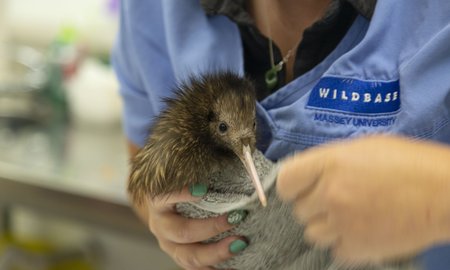
New research underway to enhance kiwi welfare and conservation
A current PhD research project is endeavouring to identify safe and effective drugs to improve the treatment of coccidiosis in kiwi.
PhD graduate’s research is the first holistic assessment of the ecology of ponds in Auckland
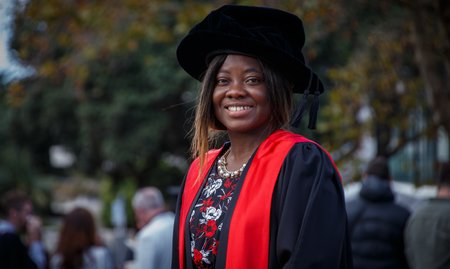
Born and raised in Ghana, pursuing higher learning and graduating with a PhD has been a dream come true for Dr Abigail Kuranchie.