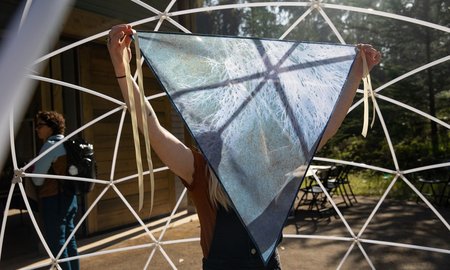
DYSPLA_motion at the Auckland Campus, image taken by Kazimir from Dyspla.
The one-day exhibition and panel event DYSPLA_motion was held in the Innovation Complex on 6 June.
Presented by United Kingdom (UK)-based arts studio DYSPLA, the event was the result of a collaboration between Te Kunenga ki Pūrehuroa Massey University alumna Dr Ruth Gibbons, local Māori artists Ehetere Rua and Jack Remiel Cottrell and DiverseMinds@Massey. The work explores the concept of neurodivergent physicality through dynamic, immersive artworks and open discussion.
Event organiser Dr Natalie Mathews says she hopes the event would be the start of a productive, open-ended conversation.
“Art offers a way to share experiences differently, to invite new ways of seeing and thinking about neurodivergence.”
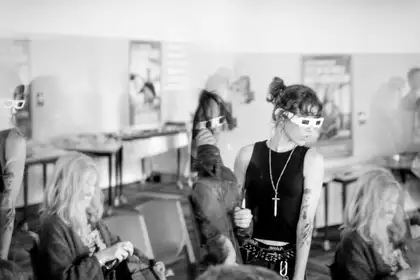
The digital artworks, displayed across four large screens, featured morphing 3D-animated portraits of the contributing artists, each accompanied by original poetry. Visitors were given 3D glasses to interact with the work, adding a physical dimension to the visual experience.
“It was fascinating to watch people move their heads and adjust their sight to view each sculpture; literally seeing through a different lens while engaging with neurodivergent storytelling,” Dr Mathews says.
Dr Ruth Gibbons, whose doctoral research at Massey focused on co-creating art with dyslexic adults, first met the DYSPLA team in the UK over a decade ago. Together, they secured funding from the British Council New Zealand and the Pacific to develop the exhibition and approached DiverseMinds to host the event on campus.
Dr Kathryn McGuigan also from DiverseMinds, says the collaboration fits naturally with the group’s kaupapa.
“We work alongside neurodivergent staff and students to create neurodivergent friendly spaces and to foster meaningful change. Arts-based projects like this one open up richer, more authentic conversations about neurodivergent lives.”
Planning for the event went beyond just securing a venue. The team worked to ensure the space was accessible, welcoming and paid homage to the international nature of the collaboration and the central role played by Māori artists. Support from the College of Humanities and Social Sciences and Office of Student and Global Engagement helped bring it to life.
The exhibition was designed with neurodivergent comfort in mind: natural lighting, no artificial fluorescents, movement encouraged, snacks available and fidget tools placed on every chair. The Rainbow Room student group played a key role in rallying attendance and the event was promoted across neurodivergent and arts networks.
Dr McGuigan says they wanted people to feel free to move, eat or just be themselves.
“It was exciting to see the space being used in this way and people fully engaging on their own terms.”
A standout moment was the panel discussion, which brought together voices from both Aotearoa New Zealand and the UK to reflect on neurodivergence, creativity and the politics of physicality. For Dr McGuigan, one key takeaway was the reminder that neurodivergent expression often defies conventional norms.
“Until society truly values and embraces diversity, neurodivergent safe spaces are essential. Art allows for those spaces, it connects people, sparks new questions and creates room for authenticity,” she adds.
Audience feedback was overwhelmingly positive. One attendee, a content creator known as Divergent_AF, later shared on Instagram that it was one of the few events where she didn’t feel social anxiety or post-event exhaustion.
With ongoing discussions about future collaborations, including a possible project in 2026 focused on neurodivergence and spirituality, the team hopes this is just the beginning.
“We’re already talking about how to keep the momentum going. There’s so much more to explore and art is such a powerful way in,” Dr Mathews says.
Related news
Sacred wisdom and creative connection: celebrating the Women’s Art Initiative
Te Kunenga ki Pūrehuroa Massey University is hosting the Women’s Art Initiative (WAI) exhibition at Tiritea House on the Manawatū campus from 4 to 23 October.
Anthony Luvera’s socially engaged art to take centre stage at Peter Turner Memorial Lecture
London-based artist, writer and Associate Professor of photography Anthony Luvera is the guest lecturer for this year’s Peter Turner Memorial Lecture on 8 August.
Massey artists feature in collaborative climate art installation
Staff from the School of Humanities, Media and Creative Communication are involved in an artistic installation taking place on the Wellington Waterfront next week.