
Bringing a new food product to market is a balancing act between instinct and evidence. Even after pouring time, expertise and passion into a formulation, the critical question remains: will consumers love it?
Traditional consumer testing can be financially out of reach for many businesses, yet relying on internal teams, colleagues or family carries huge risk. Feast’s TasteBench offers a practical, cost-effective alternative, providing objective insights to guide confident, data-backed decisions.
By opening its sensory facility one to two days every month, Feast enables food manufacturers, retailers, product developers and research and development teams to book products into professionally run consumer sessions without the full cost of commissioning a standalone study. Companies can submit up to five products for the consumer feedback, depending on the product type and session availability.
Sessions take place in Feast’s dedicated sensory space on Te Kunenga ki Pūrehuroa Massey University’s Palmerston North campus, with access to booths or immersive environments depending on study requirements. Participants are untargeted general consumers, offering unbiased feedback representative of the broader market.
Director of Feast Professor Joanne Hort says TasteBench is designed to provide companies with reliable consumer insight beyond internal reassurance.
“We know that evaluating products with target consumers is costly, but only testing via team consensus and family opinions can produce biased results that don’t reflect real-world purchasing behaviour. TasteBench provides authentic market feedback, giving companies the insights they need to make confident, consumer-backed decisions.”
Each TasteBench session involves 50-70 real consumers who provide feedback on level of liking, likelihood of purchase and commentary on why, including areas for sensory improvement. This makes it ideal for validating early concepts, benchmarking new launches or gaining independent reassurance before scale-up/launch.
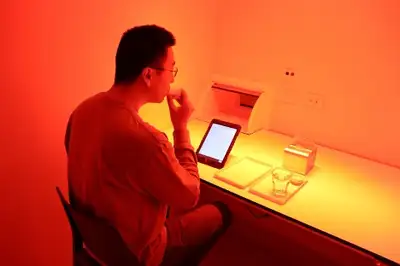
Feast sensory booth in action.
For companies seeking insights around product discrimination, tastings can explore whether changes to brand positioning, ingredients, formulation or processing methods affect how the product tastes, feels and performs, and whether consumers prefer it. This approach is particularly valuable for me-too products (new products closely resembling existing ones), ingredient swaps, new and improved claims or specific attribute claims, such as creamier, crispier, richer.
Within five working days of the session, participating companies receive a TasteBench report, offering a clear snapshot of consumer response and actionable recommendations to refine the product, address polarising attributes and make confident go-to-market decisions.
“Great products start with listening to the people who will love them. Consumer science is essential, and at Feast, we provide the means to gather that insight. TasteBench empowers food innovators to turn feedback into confident decisions at a small investment, before launching onto the market,” Professor Hort says.
Upcoming dates for TasteBench:
- April: 23 and 24
- May: 28 and 29
- June: 18 and 19
- July: 30 and 31
- August: 27 and 28
- September: 17 and 18
- October: 29 and 30
- November: 26 and 27
- December: 10 and 11
To learn more about the TasteBench programme, contact the Feast team at feast@massey.ac.nz.
ABOUT FEAST
The Food Experience and Sensory Testing laboratory is a hub for sensory and consumer research, training and consultancy. Feast drive consumer and sensory science forward by challenging traditional thinking, creating innovative research and expertise renowned worldwide. Located on Massey University’s Manawatū campus in Palmerston North, Feast has New Zealand’s only wall-to-wall projected immersive space for consumer sensory product testing. Using this technology, Feast can study human behaviour and perceptions in various settings, including a café, supermarket, and more.
Related news
More not always better: New research reveals sensory limits to New Zealand white wine flavour
New Zealand white wines are celebrated for their distinctive flavours, from the vibrant aromatics of Sauvignon Blanc to the diverse styles of modern Chardonnay. However, new research suggests there is a limit to how far those signature characteristics can be pushed before intensity affects enjoyment and changes how the wine tastes compared with expectations.

Feast Laboratory: The virtual all-around tasting experience
With 80 per cent of new products failing in the marketplace, conducting consumer testing beforehand becomes imperative, highlighting the potential for virtual reality technologies to revolutionise predictions of consumer acceptance.

To cultivate meat...or not to cultivate meat?
What’s at stake? Professor Joanne Hort tests the New Zealand market.