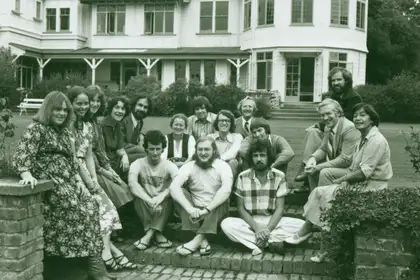
The first cohort of Bachelor of Social Work students and staff on the Manawatū campus in 1976.
From supporting whānau through crisis and helping communities navigate life's toughest challenges, to influencing social policy and leading some of Aotearoa New Zealand's most respected organisations, generations of Massey social work graduates have made a lasting difference in communities across the country and beyond.
This year, Massey is celebrating the programme's golden anniversary alongside Aotearoa Social Workers' Day, recognising five decades of educating practitioners who are often described as the ‘human face of a caring society’.
Head of School of Social Work Professor Kieran O'Donoghue says the programme's contribution can be seen in communities across New Zealand and in the generations of graduates who have shaped the profession.
"Massey’s social work graduates have been at the forefront of social work practice, leadership and social work education over the past 50 years. They have made differences in the lives of individuals, whānau, social service organisations and the profession."
Since welcoming its first students in 1976, the programme has grown into one of the country's most influential social work qualifications. Today, 378 students are enrolled and over 3,000 graduates can be found working in communities throughout New Zealand and globally.
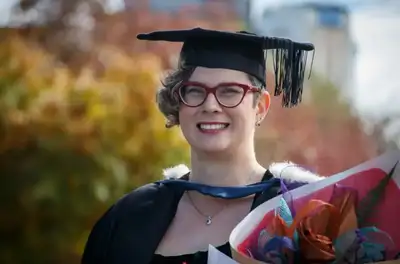
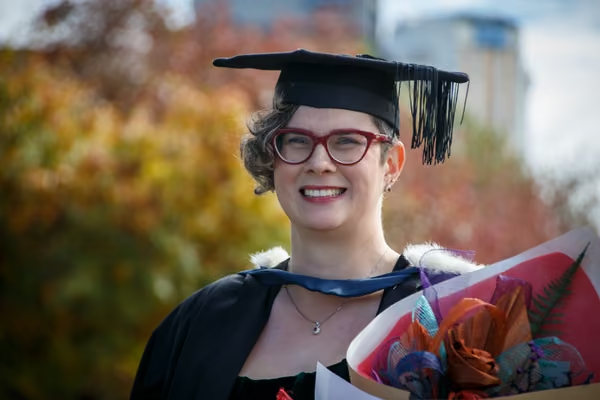
CJ Kane celebrating at her graduation ceremony.
Recent graduate CJ Kane says the programme is incredibly dynamic, and everyone is there for different reasons.
“The ability to be yourself and acknowledge others’ viewpoints while upholding your own is vital. Learn who you are, what you are about and what values guide you, then follow through,” she says.
Behind every milestone in the programme's history stand the people who helped shape it. Among them are Ephra Garrett and Merv Hancock, recognised as pioneers of social work education in New Zealand and instrumental in founding Massey's degree, the first of its kind at a New Zealand university. Today, their legacy lives on through the Ephra Garrett and Merv Hancock Awards, which celebrate excellence and contribution to the profession.
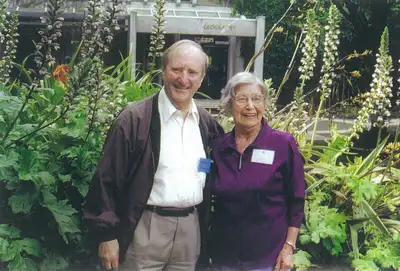
Ephra Garrett and Merv Hancock, two influential figures who helped develop the programme.
That legacy extends through generations of graduates, many of whom have gone on to become influential practitioners, academics and leaders across the social services sector. Notable alumni include Professor Emerita Robyn Munford, Wheturangi Walsh-Tapiata, Dr Leland Ruwhiu, Dr Yvonne Crichton-Hill, Dr Sonya Hunt, Professor Tracie Mafile'o and Professor Richard Shaw.
Previous Ephra Garrett award recipient and alumna Georjah Kaharoa Timoko Tansey says she loves the profession because it allows her to make a tangible difference in people's lives, especially those facing systemic challenges and vulnerabilities.
“It’s a profession rooted in empathy, advocacy and empowerment, where I can help individuals, whānau and communities navigate complex issues while fostering social justice and equality,” she says.
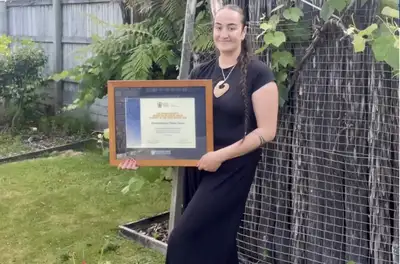
Ephra Garrett award recipient and alumna, Georjah Kaharoa Timoko Tansey.
Over five decades, the programme has evolved alongside major social, political and technological change. It has continually adapted to meet changing community needs, respond to developments in legislation and social policy and strengthen its commitment to Te Tiriti o Waitangi.
"The social work programme has responded to changes in society, communities, social service provision and the professionalisation of the career," Professor O'Donoghue says.
"Broadly, the programme has responded to Te Tiriti o Waitangi, changes in agency practice, technology, social policy and law."
The profession itself has undergone significant transformation. Social workers are now required to be registered, adhere to a code of conduct and hold a current practising certificate through the Social Workers Registration Board. Massey's programme has played an important role in supporting that professionalisation and has been accredited by the Board since 2006.
Teaching and learning have also changed dramatically over the years. While social work education at Massey included an extramural component from its earliest days, advances in technology have transformed how students learn and connect.
Once delivered across campuses in Auckland, Wellington and Manawatū, the programme is now offered nationally through a blended learning model that combines online study with practical workshops in Auckland and Manawatū, making it more accessible than ever before.
"The focus on public issues, policy and people's circumstances and situations, the development of practice knowledge and skills, Te Tiriti o Waitangi aspirations, responsiveness to diversity and a focus on community development have remained constant throughout the programme's history,” Professor O’Donoghue adds.
One of the most significant developments has been the programme's ongoing commitment to bicultural practice and Te Tiriti o Waitangi. The curriculum revision introduced in 2022 adopted a decolonisation and authentisation framework, supporting students to develop an authentic, grounded and distinctly New Zealand approach to social work practice.
Strong relationships with community partners continue to be a defining feature of the programme. Students gain hands-on experience through placements with organisations including Oranga Tamariki, Health New Zealand, Te Aroha Noa and a wide range of community and non-governmental organisations. Partnerships such as that with Te Rangimārie Marae further strengthen students' understanding of Te Tiriti-led practice and community engagement.
Today, demand for qualified social workers remains high. More than 90 per cent of Massey social work graduates secure employment within six months of completing their degree.
Professor O’Donoghue says the role of a social worker has never been more important. They are responding to the impacts of housing insecurity, family violence, poverty, food insecurity, social isolation, mental distress and the growing effects of climate-related disruption.
"[Social workers] walk alongside people during distress, grief and trauma when social circumstances impact their human rights, livelihood, health, wellbeing and dignity," he explains.
He adds that for communities facing increasingly complex challenges, social workers continue to play a vital role in strengthening resilience, fostering connection and supporting social wellbeing.
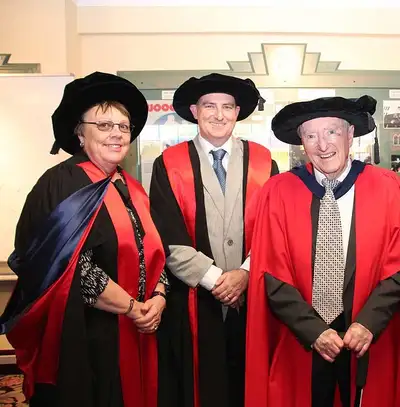
Professor Emerita Robyn Munford, Professor Kieran O'Donoghue and Merv Hancock at graduation in 2012.
As part of the 50th anniversary celebrations, Massey’s School of Social Work is hosting a series of webinars titled Reflections on the past, to inform the present and to envision the future. Bringing together alumni, practitioners and academics, each session explores a decade in the programme's history, reflecting on the social, political, economic and technological forces that have shaped social work education and practice in New Zealand. The next webinar is scheduled for 27 August. Register here.
The celebrations will culminate with Aotearoa Social Workers' Day on 16 September, where staff, students, alumni and sector leaders will gather to celebrate the profession and discuss contemporary issues ranging from culturally-responsive aged care to the impact of artificial intelligence on social work practice.
Reflecting on the programme's contribution over the past 50 years, Professor O'Donoghue acknowledges the generations of staff, students and graduates whose collective efforts have shaped social work education in New Zealand.
"Over 50 years the Massey University social work programme has been the foundation for developing social work ethics, knowledge and skills in Aotearoa and has contributed to the development of an Aotearoa-specific evidence base for social work and the professionalisation of social work.”
While much has changed since 1976, one thing has remained constant: a commitment to empowering people, strengthening communities and creating a more just and caring society.
Study a Bachelor of Social Work.
Related news
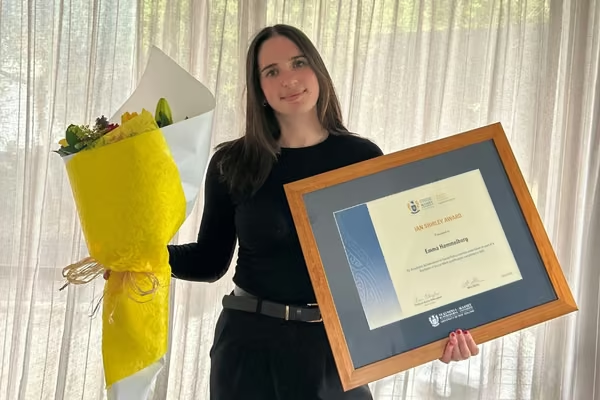
Ian Shirley Award winner passionate about advocacy and empowering whānau
Bachelor of Social Work graduate Emma Hammelburg has been awarded the Ian Shirley Award for outstanding academic achievement in social policy.
Embracing authenticity in social work
Having embarked on a five-year academic journey, Bachelor of Social Work graduate CJ Kane began her path towards social work over a decade ago while working in the disability sector.
Continuing the legacy for Ian Shirley Award recipient
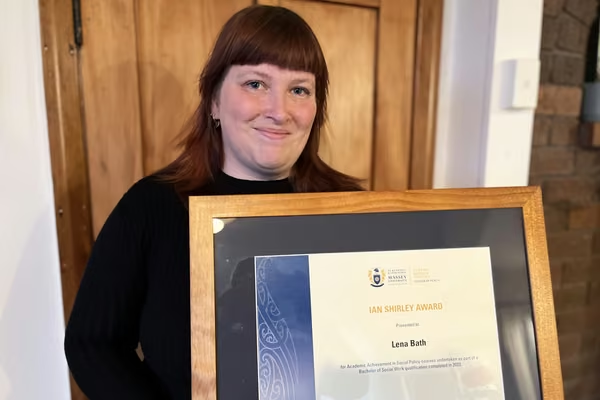
Lena Bath has been awarded the Ian Shirley Award for 2023, acknowledging her achievement in the social policy courses while studying towards a Bachelor of Social Work (BSW) qualification.