
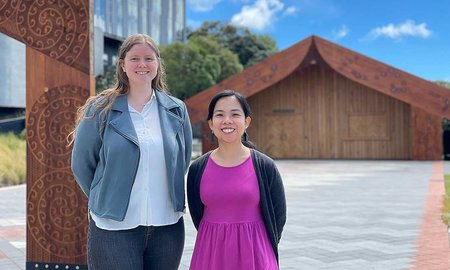
Associate Professor Julia Becker and her team are one of 10 successful applicants to secure funding as part of the Toka Tū Ake EQC University Research Programme.
The funding is part of the Toka Tū Ake EQC University Research Programme, which grants a combined total of $4.5million to successful applicants.
Associate Professor Julia Becker and her team from Massey University hope to understand why levels of public preparedness haven’t increased as much as expected in the last 20 years, and how individual and community perception might play a part in that. They hope that the research will create new cutting-edge methods that motivate people to prepare, to help inform public education programmes at a community and national level.
A team from Victoria University of Wellington and another team from Massey have also secured funding to better understand natural hazards and how Māori and non-Māori communities perceive risks from natural hazards.
Head of Research for Toka Tū Ake Dr Natalie Balfour explains, “Funding is based on the delivery of a three-year research programme, which aligns with the Toka Tū Ake research priorities, including building resilience, reducing the impacts of natural hazards and building stronger homes in less risky places.
“This year we published our latest Research Priorities Investment Statement, giving researchers clarity on what research areas are important to Toka Tū Ake.”
The long-standing programme is designed to help PhD and master's students develop skills under the guidance of a leading scientist in their field, helping the next generation of scientists continue to build on our collective natural hazard knowledge.
The successful research topics include resilient buildings, further understanding risks, education, helping empower people and research into smarter land use. The programmes are funded from 1 January 2024 and run through to 31 December 2026.
As well as supporting multiple students and early career researchers, these projects will help make a difference for Aotearoa. The last round of programmes helped further research in developing the resilience of marae and infrastructure, contributed towards the National Seismic Hazard Model (which estimates earthquakes across the motu) and helped to improve national practices for engineers.
“We’ve provided funding to tertiary institutions across Aotearoa New Zealand to help support natural hazard research and resilience since the 1990s and it continues to play an important role in helping us make a difference for people.
“Aotearoa New Zealand has many world-leading researchers and we received a number of great applications. The variety is incredible and I’m looking forward to seeing what they learn, and how it develops our shared understanding and resilience, so that everyone from families to decision-makers can plan more effectively and be more prepared,” concludes Dr Balfour.
Republished with permission from Toka Tū Ake EQC.
Related news
Massey researchers awarded Earthquake Commission Biennial Grants
Three Massey University researchers have been awarded a total of nearly $200,000 from the Earthquake Commission, to help New Zealanders better understand our natural hazard risk and identify ways to reduce the impact of those hazards.
Researchers mobilise citizen-scientists for community Earthquake Early Warning System
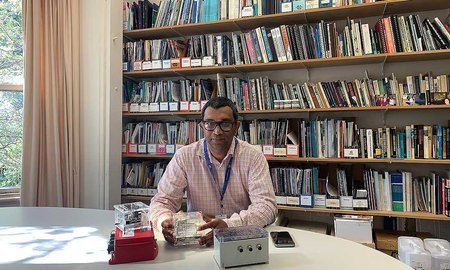
The Joint Centre for Disaster Research is leading a project to develop a low-cost community-based earthquake early warning system in New Zealand.
Affordable, community engaged earthquake warning system subject of research project
New funding to explore the development of an earthquake early warning system.
