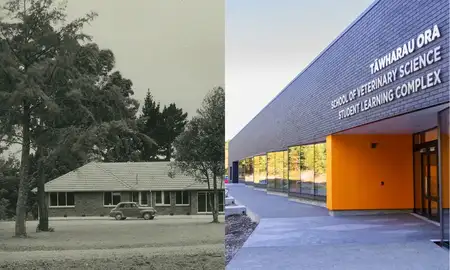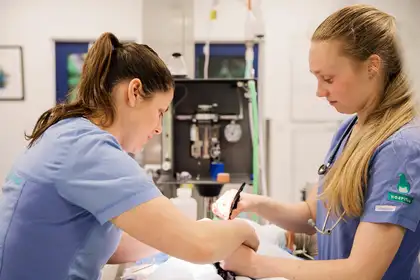
In 2023, admissions to Te Kunenga ki Pūrehuroa Massey University’s Bachelor of Veterinary Science increased by 25 per cent, lifting the total intake cap to 175 students (125 domestic students and 50 international students). The change follows an increase in the number of places available for domestic students set by the Tertiary Education Commission (TEC) and reflects the urgent need to strengthen the veterinary workforce across the country. Entry to the Bachelor of Veterinary Science is consistently oversubscribed and takes place via a competitive selection process.
For nearly 20 years, Tāwharau Ora School of Veterinary Science has worked alongside contracted veterinary clinics nationwide, partnering to deliver externships which provide structured, hands-on clinical placements that form a core part of the degree. These placements allow final-year students to apply their learning in real-world settings, working alongside experienced professionals in commercial environments.
Externships complement training at the Veterinary Teaching Hospital by giving students exposure to aspects of veterinary work that are difficult to replicate on campus. This includes highly seasonal work such as pregnancy testing and spring dairy medicine, as well as the day-to-day realities of clinical practice across companion animal, production animal and equine veterinary businesses.
The first cohort of students from the expanded intake will begin their clinical externships at the end of 2026, marking a significant increase in demand for placement opportunities. To meet this need, the school is calling for more practices across all species areas to join its externship partnership programme.
Academic Lead of Veterinary Education Professor Jenny Weston says the growing class size represents an opportunity for the profession.
“This growth gives more practices the chance to play a direct role in shaping the future veterinary workforce. Externships are not about students simply observing from the sidelines – our partners welcome students into their teams and support them to actively contribute to clinical work.
“That level of involvement takes commitment, but it’s also incredibly rewarding. Practices tell us they value the fresh perspectives students bring, and many see externships as an important investment in the long-term strength of the profession.”
Externship partnerships are formal, contracted and remunerated agreements, distinct from 'seeing practice’ that students organise independently. Contracts between the university and practices run for an initial three-year term, with the option to renew by mutual agreement with more flexible arrangements also available.
Practices interested in partnering with the school will be assessed through an application process, which may include an interview and/or a clinic visit. Consideration is given to factors such as student capacity, alignment with externship requirements and practical considerations including transport access and nearby student accommodation.
Veterinary clinics and businesses from across New Zealand are encouraged to apply.
Applications close Wednesday 18 February.
More information on becoming a contracted externship practice.
Apply to become a contracted externship practice with the School of Veterinary Science.
Related news
Massey University unveils new $70m veterinary research facility
The final new build in a ten plus year project to upgrade the veterinary facilities at Te Kunenga ki Pūrehuroa Massey University was officially opened this morning by Minister for Universities, Honourable Dr Shane Reti.

Veterinary Science breaks into global top 20 in QS Rankings
Veterinary Science has risen two spots in the 2025 Quacquarelli Symonds (QS) Subject Rankings, to now be ranked 19th in the world.
Celebrating six decades of nurturing veterinary talent
As the institution for veterinary education in Aotearoa New Zealand, we are proud to celebrate World Veterinary Day by shining a spotlight on the enduring legacy of Tāwharau Ora School of Veterinary Science .