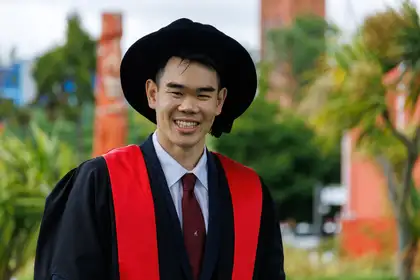
Dr Phutawan Ho.
As global air travel recovers from the disruptions of the COVID-19 pandemic, airports face growing operational pressures including long queues, bottlenecks and staffing shortages. In response, airlines and airports have increasingly introduced self-service technologies such as mobile check-in, automated baggage drop systems and biometric kiosks that use facial recognition.
Using Thailand’s busy aviation market as a case study, Dr Phutawan Ho’s research examines how these technologies affect the passengers who use them and the ground staff who work alongside them.
For passengers, the research investigates what encourages or discourages them from using biometric check-in kiosks. The findings suggest that the decision is not simply about saving time or making the check-in process more convenient. Trust and concerns about personal data privacy also play important roles. Although passengers may recognise the usefulness of these systems, concerns about how their personal information is collected and protected can discourage their use. Airlines therefore need to demonstrate clearly that appropriate data security measures are in place.
The research also explores the experiences of ground staff. While employees may worry that automation will eventually replace their jobs, Dr Ho’s findings reveal a more nuanced picture of its effects on job satisfaction and intentions to leave.
Rather than viewing technology and human service as competing forces, Dr Ho proposes an integrated approach in which airport employees take on a new role as ‘Passenger Experience Ambassadors’. Positioned alongside automated kiosks, these staff members can assist passengers, answer questions and build confidence in the technology while moving beyond routine check-in duties into more specialised, customer-focused roles.
This approach offers airlines and airports a practical way to improve technology adoption while supporting employee retention and preserving the human connection that remains important in air travel.
Dr Ho says the inspiration for his thesis came from observing the introduction of self-service systems in Thailand.
After hearing news about the country implementing these technologies, he noticed that relatively few passengers appeared to be using the machines. This observation prompted him to ask why, when these systems are meant to make airport processes easier and more efficient, are so many passengers reluctant to use them?
That question developed into a broader investigation of the factors influencing passenger adoption and the implications of automation for airport employees. By examining both perspectives, Dr Ho’s research sought to provide a more complete understanding of how airports can successfully introduce new technologies.
One of the most surprising findings from his research was that the use of self-service technology around ground staff did not directly reduce their job satisfaction or make them want to quit.
Dr Ho says he was provided with a great deal of support during his time at Massey. His relationship with his PhD supervisor was also a highlight.
“I did not expect the relationship between PhD student and supervisor to be this close. I often heard many PhD students complaining about the difficulties finding the time to meet with their supervisor. For me, we meet almost every day during lunch time. If I was struggling, it would not take long to find the solution.”
He also notes that one of his favourite places was the cherry blossom walk at the entrance to the Manawatū campus.
Having completed his studies, Dr Ho is currently working as a lecturer in Aviation Business Management at Mae Fah Luang University in Thailand.
In this role, the knowledge gained through his doctoral research has the potential to inform both teaching and industry practice. His research offers valuable insights for future aviation professionals, particularly as airlines and airports continue to introduce technologies that reshape passenger services and the responsibilities of airport employees.
Related news
Air New Zealand is betting on Christchurch. But will the regions benefit as well?
By Lecturer Ajai Jayathilakan
Putting people at the centre of virtual reality shopping
Fascinated by the intersection of technology and human behaviour, Dr Aysu Erensoy’s doctoral research explored how people experience shopping in virtual reality (VR), uncovering practical ways emerging technologies can create better customer experiences.
NZ’s regional air routes are under pressure. Is more government intervention the answer?
By Lecturer Ajai Jayathilakan