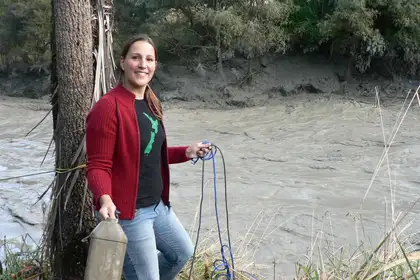
Dr Anke Zernack collecting samples during the 2007 Ruapehu lahar.
Drawing on her experience with the 2007 Ruapehu lahar, she shared insights into what Aotearoa New Zealand did right and what still needs to be done to safeguard communities from future volcanic hazards.
The Nature Geoscience panel was published in November 2025 as a special edition marking the 40th anniversary of the Armero disaster in Colombia. Known as the deadliest lahar event in recorded history, it claimed more than 23,000 lives. Experts from Mexico, Japan, Ecuador and New Zealand reflected on how lahar research, monitoring and mitigation have advanced since the tragedy, and what more is needed for the future.
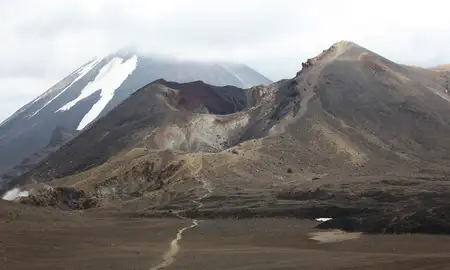
Now a Senior Research Officer at Te Kunenga ki Pūrehuroa Massey University, Dr Zernack has been working on lahars since her PhD, studying Mount Taranaki’s lahar records spanning 200,000 years. She shared her experiences from the March 2007 Ruapehu lahar event in the article. This lahar followed the 1995-96 eruptions, which emptied the crater lake and deposited volcanic material that formed a natural dam blocking the lake’s outlet. As the lake gradually refilled, the dam became unstable and eventually broke, overflowing more than a decade later.
“It was an excellent example for how monitoring, mitigation measures and multi-agency action plans can reduce risk to people and infrastructure. A warning system and a lahar alarm, a 300-metre-long bund – an earth or stone ridge designed to slow water runoff on slopes – along with structural and infrastructure improvements and public awareness measures protected local communities, the main highway and hydroelectric schemes,” Dr Zernack explains.
When the dam broke after heavy rainfall on the evening of 17 March, the warning system activated the emergency response plan, resulting in no injuries and minimal damage.
“The New Zealand lahar response showed how well preparedness can work, bringing together scientists and emergency management. But lahars can also be unpredictable. You only need a volcanic slope, abundant loose material and water, but even then, small events can significantly grow and become much more hazardous along the way if conditions allow,” Dr Zernack says.
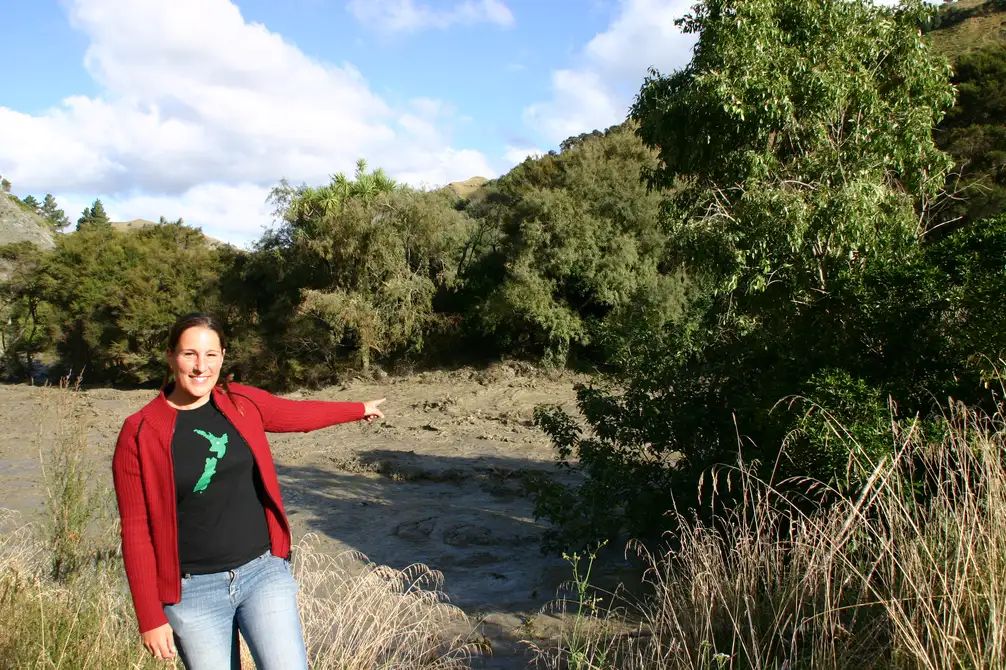
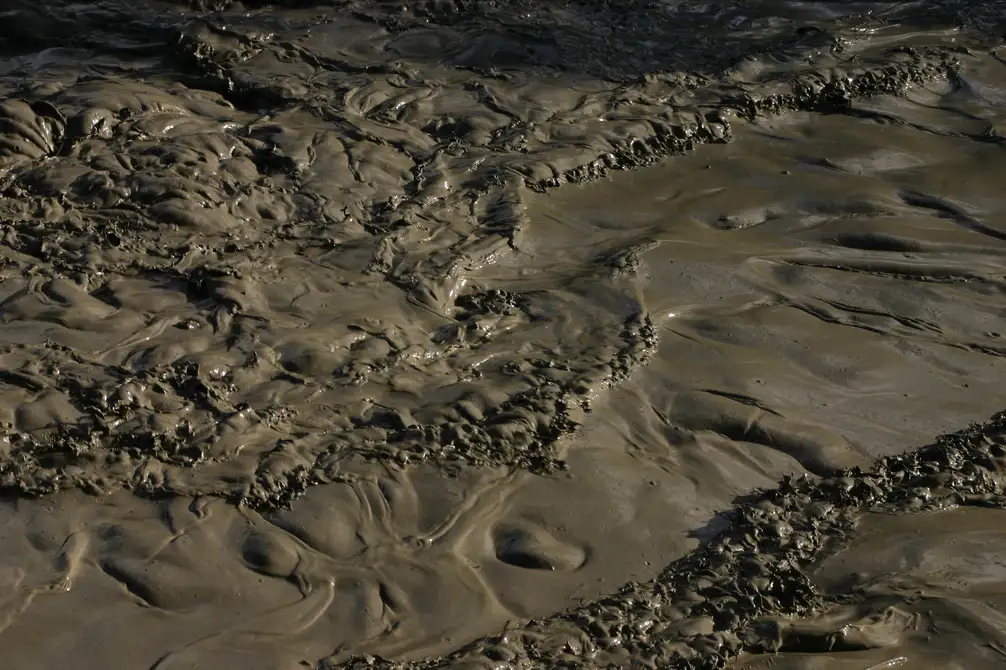
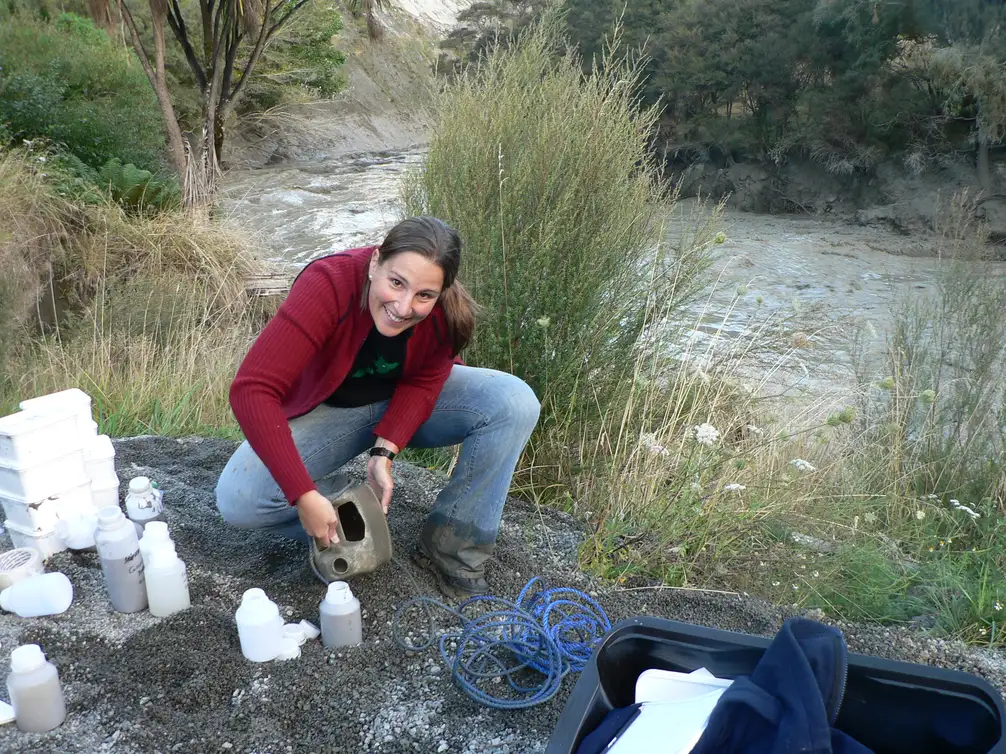
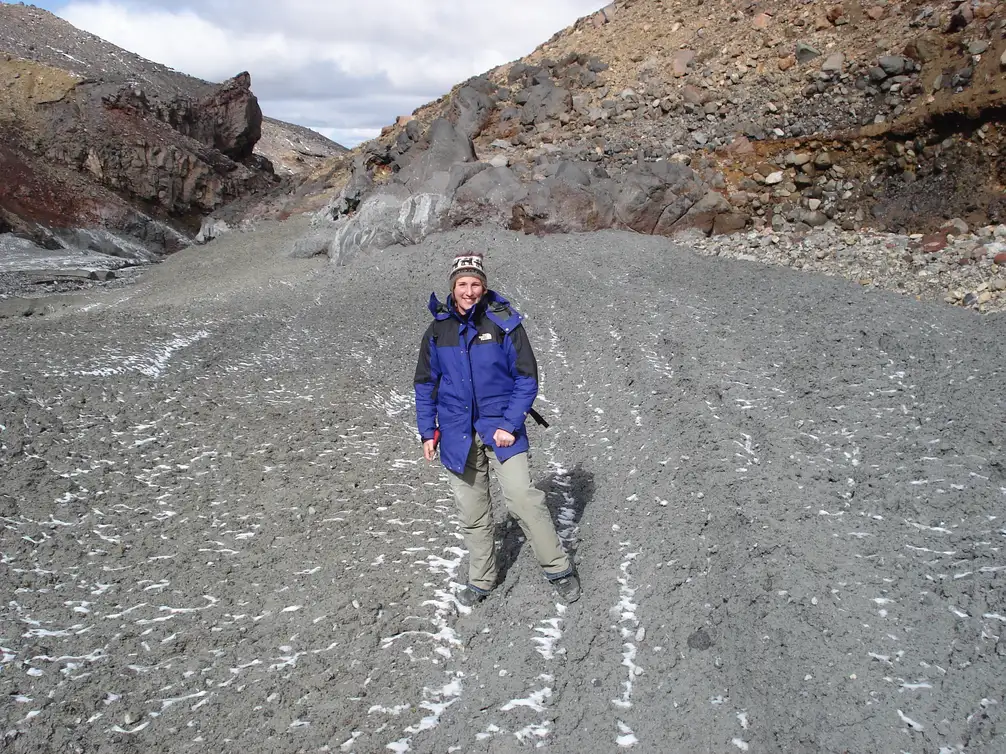
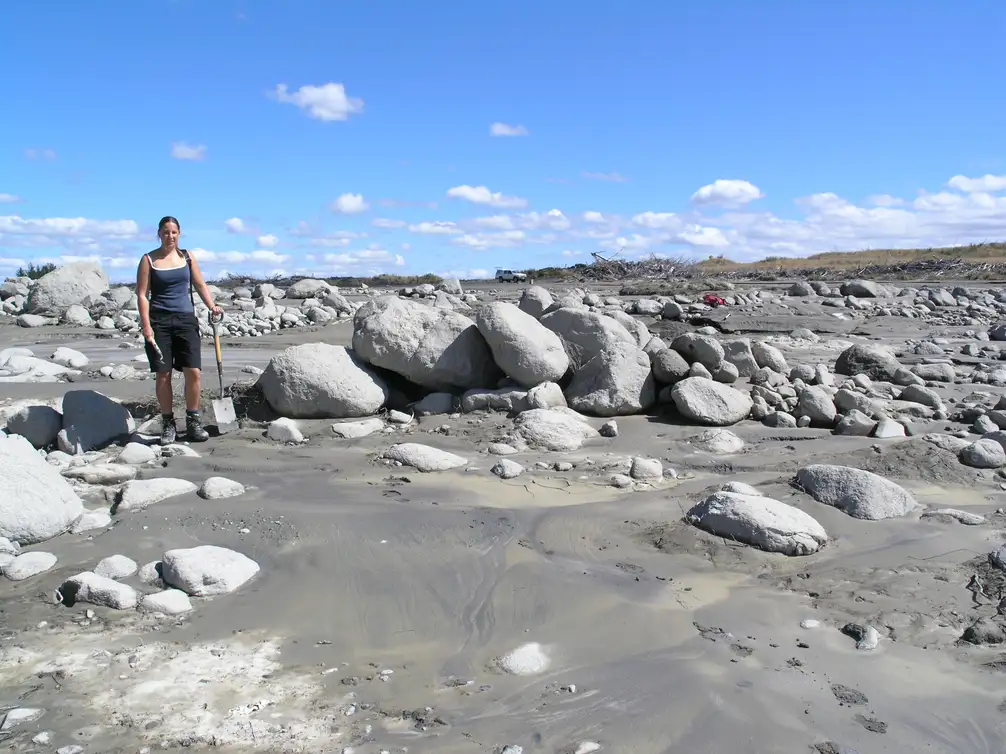
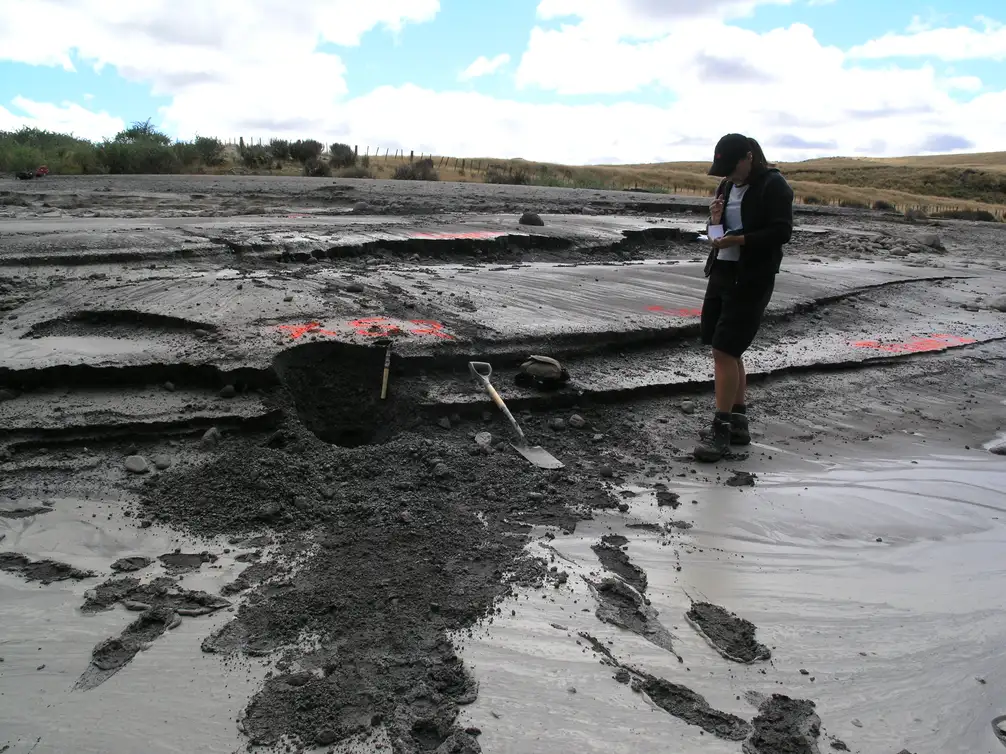
During the 2007 event, Dr Zernack observed the flow, collected samples and returned in subsequent weeks for further study.
“Seeing it firsthand meant I got a much better understanding of how these flows operate, but direct observations are rare. That is why studying the deposits they leave behind, along with the conditions that led to their formation and geophysical data, helps us interpret past events and improve models to better predict future lahars.”
Studying past events is becoming increasingly important as climate change increases the likelihood of lahar activity.
“We haven’t seen major lahars in recent years because eruptive activity has been low, but smaller landslides are likely to increase. More rain adds pressure to the hydrothermal system within a volcano or to the loose unstable material making up its flanks, which can trigger slips that transform into lahars. With climate change, especially in regions with heavier or more intense rainfall, this risk will grow.”
To prepare for the future, Dr Zernack is part of a project led by Professor Mark Bebbington, funded by the Ministry of Business, Innovation and Employment Endeavour Fund. The project, Te Awe Mapara, aims to build a National Volcano Hazard Model under changing climate conditions. Working with iwi partners, it integrates taiao (natural world) monitoring strategies to create robust systems for monitoring, decision-making and forecasting volcanic hazards, moving beyond predicting eruptions to understanding how hazards evolve and their potential impacts.
Dr Zernack says she is proud to contribute to this work.
“New Zealand is a leading authority on lahar research, and with the uncertainty of future climate impacts, it is more important than ever that we learn from past events and are ready for what comes next.”
Read the full article from Nature Geoscience: ‘Understanding lahars’.
Related news
Researchers secure funding for pioneering climate and disaster projects
Three projects led by Massey researchers have been awarded funding from the 2024 Ministry of Business, Innovation and Employment Endeavour Fund.
Funding awarded to bring transformational projects to life
Five projects led by Massey researchers, some involving co-leadership with partner entities, have been awarded more than $31 million from the 2023 Endeavour Fund.
Funding success aimed to initiate new international collaborations
Dr Marilou Raduban and Dr Anke Zernack have been successful in receiving funding from the most recent round of the Royal Society Te Apārangi's Catalyst Seeding Fund.