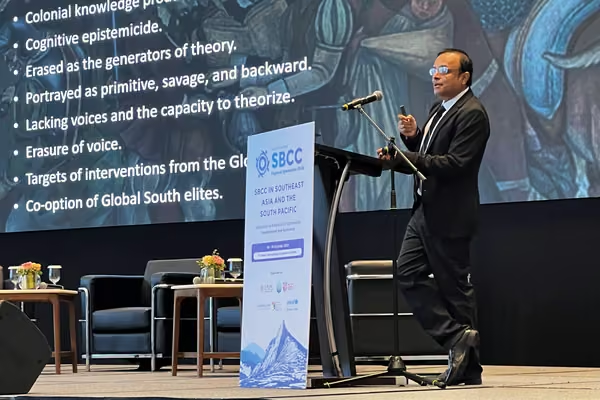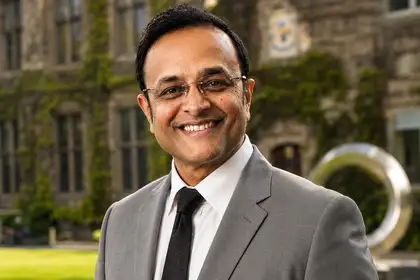
Professor Mohan Dutta
The citation recognises Professor Dutta's leadership as Chair of the NCA's Academic Freedom and Tenure Task Force, which examined challenges facing academic freedom and developed recommendations to strengthen protections for scholars and institutions.
The NCA was founded in 1914 and is the largest scholarly association for communication researchers and educators, representing thousands of members across the United States and around the world. The Presidential Citation recognises exceptional service to the association and the wider discipline.
Professor Dutta says the recognition reflects a collective commitment to protecting the conditions that enable research and knowledge creation.
"Recognition is meaningful only when it reflects service to a community and to values larger than oneself. This citation honours a collective labour of care for the conditions that make knowledge possible in these times of unprecedented attacks on academic freedom and tenure."
Appointed by then-NCA President Walid Afifi, Professor Dutta led the six-member task force over two years to examine the state of academic freedom and tenure within the communication discipline. The group's final report explored growing threats to academic freedom and outlined recommendations aimed at strengthening legal, institutional, union and disciplinary support for researchers. It also examined legislative attacks on critical race theory, whiteness studies and scholarship on Palestine, as well as transnational harassment campaigns directed at critical scholars.
Professor Dutta says one of the achievements he is most proud of is the collective courage shown by the task force throughout its work.
"Academic freedom is defended by exercising it."
The report places particular emphasis on supporting scholars and academic workers who face the greatest challenges in carrying out their research, while proposing practical measures to strengthen protections across the profession.
Professor Dutta points to the United States federal appeals court ruling striking down the higher education provisions of Florida's Stop WOKE Act. This was won through collectively organised legal advocacy led by the American Civil Liberties Union and the National Association for the Advancement of Colored People Legal Defense Fund, alongside faculty plaintiffs, as evidence of the effectiveness of the collective legal strategies the report recommends.
The work also aligns closely with the research undertaken through the Center for Culture-Centered Approach to Research and Evaluation (CARE) at Te Kunenga ki Pūrehuroa Massey University.
Professor Dutta says CARE's culture-centred approach is built on creating opportunities for communities at the margins to shape knowledge and social change.
"The questions are the same ones I work on daily: whose voices count, what structures erase them and what it takes to build otherwise."
Professor Dutta hopes the Task Force's work will help move conversations about academic freedom beyond statements of support and towards lasting structural change.
"The future of communication research depends on scholars being able to ask dangerous questions. That freedom is never given. It is organised."
The Presidential Citation is the latest in a series of international honours recognising Professor Dutta's leadership in the communication discipline, following his selection to deliver the prestigious Carroll C. Arnold Distinguished Lecture in 2025.
Related news
Professor Mohan Dutta to deliver prestigious lecture in the field of communication
Te Kunenga ki Pūrehuroa Massey University’s Dean’s Chair in Communication Professor Mohan Dutta, has been selected to deliver the Carroll C Arnold Distinguished Lecture at the National Communication Association.
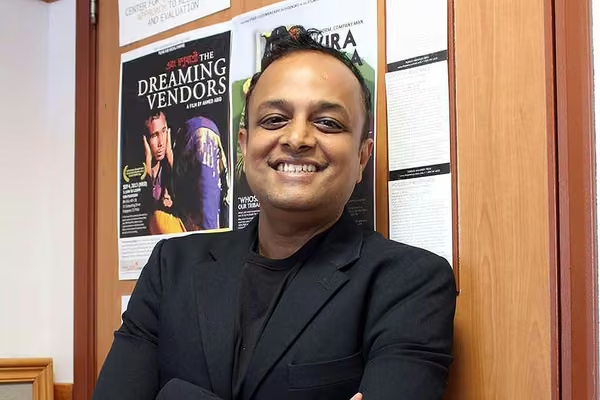
Professor Mohan Dutta receives 2024 Global Communication Award
Professor Dutta has been recognised for his pioneering work in de-westernising communication research and promoting social justice through community-led initiatives.
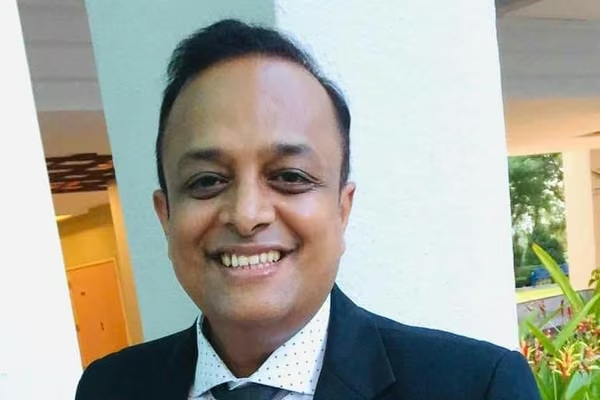
Professor Mohan Dutta delivers keynote lecture at symposium in Malaysia
The Social and Behavioural Change Communication Regional Symposium was attended by professionals, experts and thought-leaders from around the world.