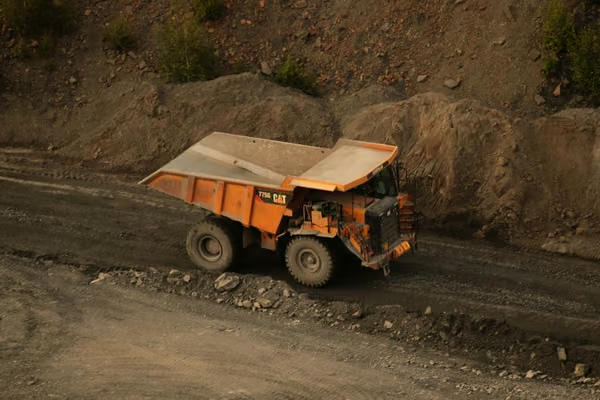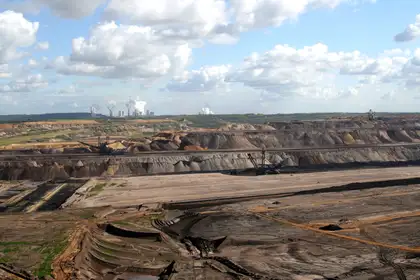
A couple of years ago, Political Commentator Matthew Hooton argued in the New Zealand Herald that mining was New Zealand’s last chance to avoid Third World status. Leaving aside the fact that mining dominates a number of Third World countries and it has sometimes done them more harm than good, the argument rests on a familiar idea: that expanding mining in New Zealand would somehow remove of all the country’s economic challenges.
Minister of Resources Shane Jones has similarly championed mining, arguing that foreign investment can unlock critical minerals and strengthen global supply chain and transform regional economies.
Meanwhile, there are other commentators who see mining as inherently destructive, a source of pollution, degradation and long term environmental harm.
There is truth in that history. Mining has left deep scars, both in New Zealand and overseas. But there are also more recent examples of operations that are better regulated and less environmentally damaging.
“Less damaging” is the key phrase here. Mining, by definition, disturbs and transforms landscapes. With all mining operations, the real question is not whether damage occurs, but how much, what kind, and how well it is managed.
As long-time observers of the minerals sector, we sit somewhere between these extremes. Mining is neither a silver bullet nor an unmitigated disaster. Public debate rarely reflects that middle ground. Fifteen years ago, the space between these positions was vast — but there are few places where the two sides genuinely engage. If anything, debates such as those around Santana’s Bendigo mine suggest the divide is widening.
But let’s face it. Unless there is an overnight revolution in our consumer practices and material basis, we’re going to need to continue to have mining, somewhere, for well into the foreseeable future. Global production statistics bear that our starkly – over the past 25 years on a per capita basis copper production has increased by more than a third; iron ore production has almost doubled; and nickel production has increased by almost 150%.
So, what should we actually be talking about? Elsewhere we’ve covered critical minerals in more detail, along with some thoughts on fast-tracking mining projects. Here are some of the other questions that deserve more attention.
Why can't we get a New Zealand company to do this large-scale mining instead of relying on foreign investors?
Firstly, industrial-scale mining requires a lot of capital upfront (a couple of hundred million dollars doesn’t get you very far), and the reality is that New Zealand has historically not had that kind of risk-taking investor pool. Looking at other sources of investment, we've also got a pretty poor record on state-owned mining companies – think of the collapse of Solid Energy in 2015 and the environmental liabilities of coal operations being nationalised at considerable ongoing cost to the taxpayer.
There are also significant advantages of getting capital from places with huge amounts of mining experience - the Toronto and Australian stock exchanges (where most mining companies reside) have pretty tight regulations around how exploration and mining companies report their reserves, resources, and finances.
International experience – as well as here in New Zealand - also shows there are some significant risks that come with ownership, especially state ownership. It’s a sector that is financially fickle on a year-to-year basis. Development and construction can take multiple years, followed by exposure to volatile global commodity prices. So it’s probably a bad idea for politicians weighing up the use of taxpayer dollars to fund a mine development or expansion at the same time as face up to ageing and deteriorating social and economic infrastructure.
Well, how are we going to benefit from it then?
A really good question. Firstly, we need to make sure all environmental and social costs and benefits - intended and unintended - are thoroughly considered and evidence from all sides is tested through transparent and rigorous regulatory processes. Go beyond the grandiose claims of the sector and the more apocalyptic environmental narratives to properly understand how the sector works – physically, environmentally, socially and economically. There are plenty of lessons globally we can learn from.
Probably the best thing we can to do to secure economic benefits is to focus on how we can maximise the New Zealand workforce and suppliers for the sector – typically the vast majority of dollars flows into these. So getting companies to work with government to build those skills and supply chains will have the biggest impact. This is where the real value from the sector comes to countries like Australia.
And it is good to keep on reviewing tax and royalty settings, but to recognise that these are not the main game in terms of the economic flows from the sector. It is certainly fair to say that the ‘grandfathering’ of mineral royalties in New Zealand is problematic: any new mines or mine extensions attached to long-standing exploration or mining permits still only pay the royalty rates set before 2012 (half the rate for mines on new leases). The sector focusses on royalties as they can have a big hit on a company’s finances because they're straight off revenue rather than margin, and they're paid regardless of profitability. But at the same time a one per cent royalty (as is the case with some of the proposed gold mines) on the value of a non-renewable mineral taonga, is simply far too low.
We should also think about them long term. Set aside a share of the returns from the sector for the future, and especially for future generations. We get one crack at extracting value from the minerals – think beyond today in terms of the revenue we extract from them. This is part of the art of transforming non-renewable resources into durable growth and sustainable development - the effects of the 19th century Otago goldfields on the establishment of Dunedin are a historic example.
Why are we investing in this kind of extractive economy - isn't that all just a bit 19th century?
Well yes, but to be fair the large areas of the New Zealand economy is extractive - the impact of agriculture on our waterways, our biodiversity, and our greenhouse gas emissions, has been devastating for decades. Last year’s State of the Environment Report showed some 45 per cent of the country’s total river length as no longer being suitable for swimming and recreation, and 55 per cent with levels of moderate or severe organic pollution or nutrient enrichment. The same report notes that methane and nitrous oxide emissions from agriculture account for a majority (52 per cent) of the country’s greenhouse gas emissions – notably more than all emissions from all forms of road transport (39 per cent). And under the current Government, those agricultural emissions have been removed from our emissions trading scheme (ETS).
Put simply, those beautiful rolling green paddocks and hills we are so famous for are essentially a massive continuous industrial site operating the length of the country, with environmental impacts that make mining look like a drop in the ocean. If climate change and clean water are the things you're most worried about, we can think of lots of places you should be protesting before, or at least alongside, mining.
In part, mining garners attention because it is such an obvious industrial intrusion into landscapes. A mine is typically a big hole in the ground, a singular target we can tie potential pollution and risk to, unlike the extensive green, cow-studded paddocks or tourism towns and the ski-fields that we take for granted across the rest of the motu but which can have equally – or even more – damaging diffuse effects on climate, biodiversity and waterways.
And in terms of public money supporting the sector? It certainly shouldn’t be a priority, but also think of all those plane loads of tourists on our state-owned airline and all of those big globby subsidies and law changes to attract and support the international film industry, or incredibly weak regulation of the climate and water impacts of the dairy industry.
This is not to say that we should be uncritical of mining – far from it, as we have both seen far too many examples of bad practices and operators – but perhaps just a little more self-aware of the levels of environmental damage, lobbying, subsidies and regulatory risk that already exist around the rest of the New Zealand economy.
Sefton Darby is an independent consultant with extensive experience of mining sector governance and has previously work as National Manager of Minerals for the Ministry of Business, Innovation and Employment, in minerals advisory roles for the World Bank and for various NGOs, and has extensive experience of working in and advising mining companies around the world. He is the author of 'The Ground Between: navigating the oil and mining debate in New Zealand' from BWB Books.
Dr Glenn Banks is a Professor of Geography in Massey University’s School of People, Environment and Planning. His research is primarily focussed on the socio-economic and cultural dimensions of large-scale extractive industries in Papua New Guinea and other parts of the Pacific, including Aotearoa New Zealand. He is currently conducting Marsden-funded collaborative research on local perceptions of change in Fiji and Papua New Guinea, and working on issues around mining in Aotearoa, geographies of wine, and sustainable development.
This article was first published on New Zealand Herald on 27 April.
Related news
Public seminar to examine political ecology of mining in Aotearoa
Te Kunenga ki Pūrehuroa Massey University Professor of Geography Glenn Banks will deliver a public seminar next week examining whether it is possible to “live well with extraction” in the context of Aotearoa’s current mining landscape.
Opinion: The hard questions NZ must ask about the claimed economic benefits of fast-track mining projects
By Professor Glenn Banks