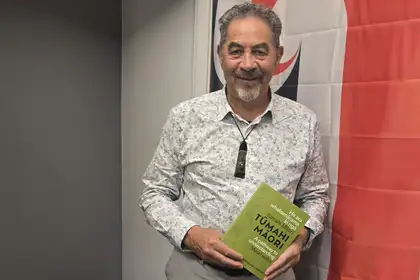
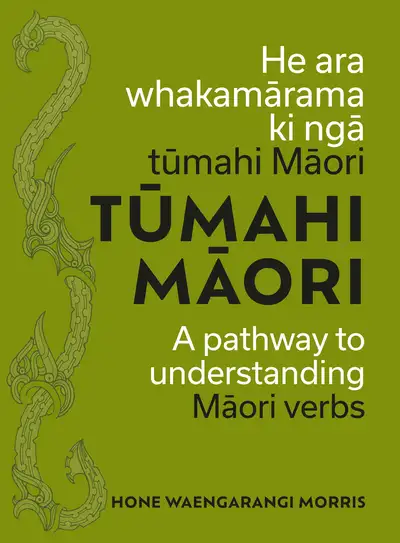
Tūmahi Māori: A pathway to understanding Māori verbs is designed to help learners improve their understanding and accuracy of te reo Māori, particularly in the use of verbs and associated sentence structures.
At the outset, Hone reminds readers of the fundamental truth that te reo Māori was originally an oral language. The oral foundation gives the language unique qualities, including subtle nuances, natural rhythms and melodic tones shaped by vowel sounds, aspects that are not easily captured in written form.
With the impacts of colonisation, legislative suppression, urban migration and the decline of fluent speakers, the written word became vital for the language’s survival. Māori newspapers from the 19th and early 20th centuries now stand as important records of reo Māori as it was spoken, often capturing authentic structures used by first-language speakers.
Hone didn’t grow up speaking te reo Māori due to the effects of colonisation and the ‘pepper potting’ policy, which disrupted Māori communities by placing individuals or families into predominantly non-Māori environments. He says he began learning the language only when he had to teach it.
“I thought that if I’m teaching it, I had better understand it. This was a long, challenging process done largely on my own, though I later attended university and eventually wānanga reo at Te Pūaha o Waikato, where the doorway to te ao Māori opened and I began to think Māori.”
Over the past 30 years, Hone has observed many enthusiastic learners making common errors, often stemming from misinterpreting verbal sentence structures and the role of particles. He found that by focusing on the five key Māori verb types and explaining how different particles function with each, learners could significantly improve their accuracy.
Tūmahi Māori shares these teaching insights and provides learners with a framework grounded in a Māori worldview. It explains grammatical structures, but also explores how these reflect Māori ways of thinking and communicating.
“A typical error made by learners, even those who are reasonably competent in te reo, is following English sentences structures. This results in using Māori words while still reflecting English thought patterns. There’s a real need to understand and internalise Māori structures, idioms, proverbs and phrasing. As the saying goes, ‘iti te kupu, nui te kōrero’ – minimal words saying a lot,” he explains.
The book offers clear explanations in both te reo Māori and English, along with examples and exercises to help learners consolidate their understanding. It guides readers in how to use verbs and particles correctly, aiming to build their confidence, fluency and sense of cultural authenticity in expression.
Hone hopes the book will support learners at all levels to deepen their understanding of te reo Māori and, in doing so, help them express their thoughts with accuracy and a Māori mindset.
“By reading the book and doing the exercises, learners will better understand the vital role particles play in shaping meaning – something essential to thinking and speaking in te reo Māori.”
He also sees the publication of Tūmahi Māori as a reflection of the current moment in the revitalisation of the language.
“In the 1980s, when kōhanga reo began, the focus was on teaching the language itself. Over the past 50 years, as our understanding of te reo Māori has deepened, its nuances, rhythms, whakapapa, we’re now in a place where we teach the curriculum in te reo Māori, which is a significant shift.”
Tūmahi Māori: A pathway to understanding Māori verbs was released on 10 July and is available at all good bookstores and online through Massey University Press.
Related news
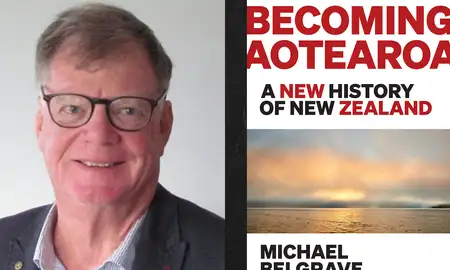
Becoming Aotearoa: a call to context in the narrative of our country’s history
The first major national history of Aotearoa New Zealand in 20 years has been released by Professor Emeritus Michael Belgrave through Massey University Press.
Massey University Press: Elevating research and reputation through publishing
Launched in 2015, Massey University Press is a vibrant platform for scholarly and creative voices that enrich Aotearoa New Zealand’s cultural landscape.

The Unsettled: Small stories of colonisation
Professor Richard Shaw’s latest book explores the historical and emotional territories of New Zealanders coming to terms with the ongoing aftermath of the New Zealand Wars.