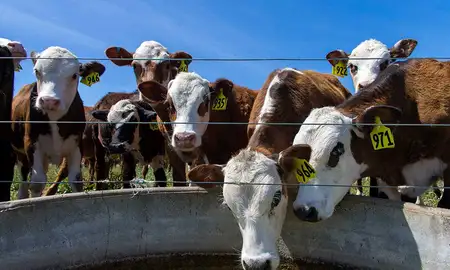
The study, led by researchers from Te Kunenga ki Pūrehuroa Massey University, found that a combination of behavioural, occupational and environmental factors are now driving infection risk, with many being preventable through better education and targeted interventions.
Leptospirosis is a bacterial disease that can cause anything from mild flu-like symptoms to serious illness or even death. Since the 1970s, it has been considered an occupational disease in New Zealand, mainly affecting dairy farmers, pig farmers and abattoir workers.
Vaccines for cattle and pigs were introduced in the 1980s, alongside improved farm safety guidelines and the implementation of protective gear. But despite these efforts, New Zealand continues to have one of the highest leptospirosis rates among high-income temperate countries, with flooding associated outbreaks, as seen in Hawke’s Bay in 2023 after Cyclone Gabrielle.
Epidemiologist Professor Jackie Benschop says our understanding of the disease is shifting, and that more people could now be at risk.
“We’re starting to see leptospirosis behave more like it does in tropical regions, with rodents and the environment playing a bigger role in how it spreads. What’s concerning is that we’re seeing more cases in people working jobs that haven’t traditionally been seen as high-risk, which shows there are significant gaps on current risk factors.”
The case-control study identified several key risk factors for leptospirosis that could be reduced through changes in work habits and public awareness. These included uncovered cuts or scratches while working, particularly in roles involving livestock, not wearing gloves during on-farm slaughter, cleaning urine or faeces from yard surfaces, using untreated water from creeks, streams or rainwater at work and livestock carrying strains of leptospirosis not covered by current vaccines, especially on dry stock farms. Exposure to rodents is also becoming a more prominent source of infection.
Professor Benschop says these findings show the need for more education across a wider range of communities, in farming and beyond. She plans to work with community groups such as Rural Women New Zealand to incorporate this new knowledge into practical interventions.
“We need to spread the word beyond the usual high-risk groups, because that’s where we’re now seeing more cases. There are things people can do, like wearing gloves, covering all wounds with waterproof plasters and making sure livestock are properly vaccinated. Rodent control and good hygiene are also critical. We can’t just rely on the old thinking as this disease is changing, and our response needs to change with it.”
The research offers globally relevant insights, especially for countries with similar farming practices and rural water challenges.
Related news
Animal health takes a team: celebrating the diverse roles in the veterinary field
World Vet Day 2025 celebrates the many essential roles professionals play in the veterinary and animal health field. We caught up with a few of our experts from Tāwharau Ora School of Veterinary Science to learn more about their contributions to animal health, welfare and public safety.

The silent spreader: Reassessing the role mice have in Leptospirosis risk
Emerging research highlights mice as a critical yet underestimated source of leptospirosis, emphasising the need for improved strategies to control the spread of the infectious disease.
New leptospirosis research calls for stronger vaccination uptake in dry stock farming
Researchers from Massey University and the University of Warwick have found that non-dairy stock farmers are just as likely to get infected with leptospirosis as dairy farmers.