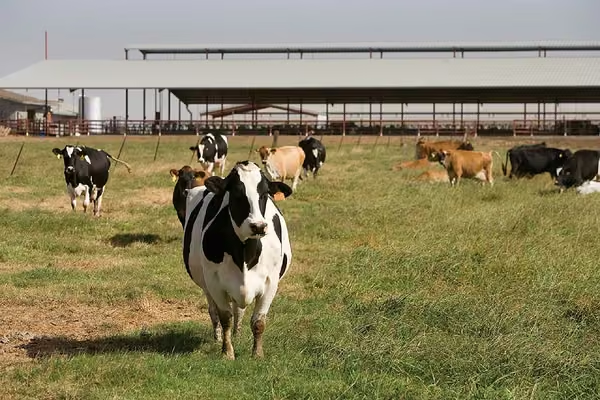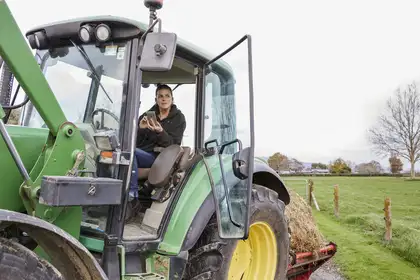
Image credit: Paul Sutherland Photography.
The NZ Women in Farming Wellbeing Survey aims to address a significant gap in research and data on rural women — a group whose contributions to the agricultural sector are vital but often under-recognised.
The Research Team consists of Associate Professor Nicky Stanley-Clarke from Massey University’s School of Social Work, and Dr Jorie Knook and Dan Smith from Lincoln University’s Department of Land Management and Systems.
Dr Stanley‑Clarke says the survey comes at a critical time for the sector.
“With the Government’s recent consultation on the Draft Mental Health and Wellbeing Strategy 2026 - 2036, a renewed call for a focus on rural wellbeing and national Fieldays underway this week in Waikato, this survey fills a knowledge gap about the wellbeing needs of women in farming. We know women are balancing multiple roles, from farm work to family responsibilities and often off‑farm employment, but there is very little New Zealand‑specific data capturing what this means for their wellbeing.”
The initiative also aligns with growing national and international recognition of women’s roles in agriculture, with 2026 marked as the United Nations International Year of the Woman Farmer.
Despite increasing numbers of women entering farming and agricultural study, much of the existing research, services and policy focus has traditionally centred on male farmers. Dr Stanley‑Clarke says this has created a blind spot in understanding the pressures facing rural women.
“International research highlights what’s often called the ‘triple burden’ of managing farm work, caregiving and household responsibilities. In New Zealand, that can also include paid work off the farm and strong commitments to community life, often leaving women with little time to prioritise their own wellbeing.”
The researchers believe it’s vitally important to undertake this study alongside farming women and industry partners who are already doing great work in this space.
“There are some great farming organisations supporting farming women, such as Dairy Women’s Network, Rural Women New Zealand and Agri-Women’s Development Trust, but to our knowledge there is no New Zealand academic research, and no current data capturing the wellbeing needs of this sector,” she adds.
“We hope the survey results will create a comprehensive national picture of women’s wellbeing in farming, providing evidence to inform future services, policy and community initiatives.”
The survey builds on previous work from Dr Stanley-Clarke and Dr Knook in rural mental health, including programmes such as WellMates and SafeMates, which are peer-led mental health programmes for agriculture students.
“Our earlier research showed just how important rural women, especially mothers, are in supporting mental health conversations, reducing stigma and helping young people thrive,” Dr Stanley‑Clarke says. “This survey is about acknowledging that role and ensuring women themselves are better supported.”
Dr Stanley‑Clarke says strong participation is essential to ensuring meaningful outcomes.
“We want to hear from as many women as possible, whether they’re working on farms, managing households, or contributing to rural communities in other ways. The insights they share will help us advocate for better support and ensure the wellbeing of women in farming is recognised as a priority.”
The anonymous survey takes approximately 15 minutes to complete and is open until mid‑July.
As the questions relate to mental health, the researchers stress that participants can stop at any time, and encourage anyone who needs mental health support to reach out to Lifeline, or see their GP or health practitioner.
Related news
Mental health social work equips clients to recover
Just months after completing her Bachelor of Social Work at Te Kunenga ki Pūrehuroa Massey University Katie Ward-Donnellan is changing lives as a mental health social worker.
Exploring regenerative science at 2026 Fieldays®
Te Kunenga ki Pūrehuroa Massey University’s stand at Fieldays® 2026 will showcase regenerative science and circular bioeconomy innovation supporting more sustainable and resilient farming systems.

Massey students learning to be WellMates
Agricultural students are receiving a boost to their mental health thanks to a new wellbeing programme being piloted at Massey.
Supporting farming families during times of stress
New research suggests health promotion campaigns could have a detrimental impact on some farmers during times of stress, and that agricultural professionals play an important role in hard times.