Christchurch's Masjid Al Noor Mosque. Photo courtesy of James Dann, CC BY-SA 4.0 <https://creativecommons.org/licenses/by-sa/4.0>, via Wikimedia Commons.
Chris Wilson and Michal Dziwulski’s book He Told Us: How an Australian Committed Far-right Terrorism in Christchurch, New Zealand raises important questions about how we govern our secret intelligence agencies.
Wilson and Dziwulski expose an embarrassingly large gulf between what they discovered with very limited resources and what Ko tō tātou kāinga tēnei | Report: the Royal Commission of Inquiry into the terrorist attack on Christchurch masjidain on 15 March 2019 disclosed with the commissioners’ immense power to compel testimony as well as the considerable administrative, investigative and analytical support of their wider inquiry team, and an eye-watering budget.
After assiduously collecting messages posted on social media platforms, Wilson and Dziwulski trace Tarrant’s online life before his attack. Through their careful analysis of this data, they cast important light on Tarrant’s radicalisation towards violence, demonstrate the powerful role of online ecosystems in enabling and sustaining radicalisation and signal how Tarrant’s terrorism contributes to the radicalisation of others.
Wilson and Dziwulski demonstrate that the record of Tarrant’s social media use is fundamental to understanding the intent behind, and the preparations for, his attack. This illustrates how highly motivated he was by the potential adoration of a like-minded online audience. Yet the commissioners thought Tarrant’s social media posts immediately prior to the attack had little relevance to their inquiry, and the chief commissioner, who talked to Tarrant about his posting, accepted his evidence at face value – seemingly as though he was a reliable witness!
Wilson and Dziwulski openly discuss their methodology and have written their book so we might all better understand not just how but also why this terrible act happened - so that we can all learn from it.
The commissioners, however, did not disclosure their methods, what information they requested and received from agencies, or how they reached their conclusions on Tarrant’s preparations for the attack. The chief commissioner was involved in reframing the inquiry’s terms of reference so that, instead of what the agencies should have known, its scope was limited to what information they held. This meant if agencies held no adverse information on Tarrant, then no one could be found accountable and there was nothing to be learned from the tragedy. Their findings now seem pre-ordained.
The gravity of the report’s deficiencies undermines its credibility and calls into question the competency, if not the integrity, of the commissioners.
In what can now be seen as a cynical effort to pre-empt critical appraisals of their report, the commissioners took a vow of silence, glibly stated the report should speak for itself, and permanently sealed the archive of material they assembled from public view.
That is nothing less than a travesty of accountability.
Public inquiries are vitally important ad-hoc oversight measures initiated by senior politicians. Yet the lack of remedies available to correct this report’s deficiencies reveal limitations and weaknesses in the regular oversight measures and public accountability arrangements we use to govern the secret activities of our intelligence agencies.
The Inspector-General of Intelligence and Security can scrutinse how those agencies complied with the commissioners’ requests, but has no statutory mandate to assess the report’s veracity.
Rather than holding to account those with the highest responsibilities for our intelligence agencies, the parliamentary Intelligence and Security Committee functions as a shield of political impunity because the Prime Minister (also Minister for National Security and Intelligence) chairs it and the Minister responsible for both intelligence agencies sits on it. These ministers are unlikely to cross-examine themselves when the political stakes are so high.
Two public interest questions now arise. Is the new knowledge conveyed by Wilson and Dziwulski’s book sufficient to change the outcome of the inquiry? If so, do we need another inquiry into the attacks? My answer to the former is ‘absolutely’ but ‘probably not’ to the latter because it would, with the passage of time, do more harm than good.
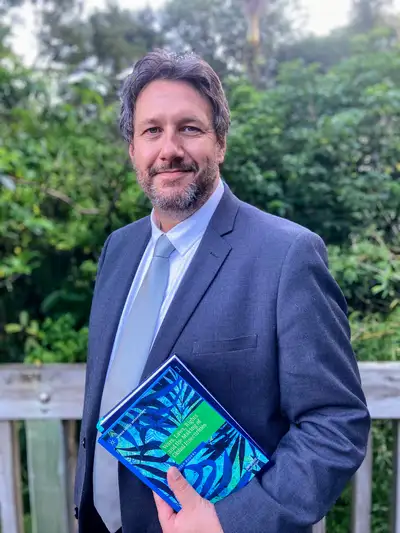
Dr Damien Rogers
Nevertheless, researchers must have access (even if it is controlled) to the suppressed material to scrutinise the report. Without independent verification, we cannot hold any confidence in commissioners’ use of materials, methods and key findings.
The Public Inquiries Act 2013 now needs updating. Self-defeating terms of reference must be precluded. Commissioners must have access to independent expertise on their matters of concern and any expert advice must become public. Commissioners must not be able to indefinitely suppress official information they use during the public inquiry. Commissioners must be available to answer questions about their report from the public within a reasonable period after its publication.
If commissioners criticise an agency, then that agency cannot take the lead on implementing the report’s recommendations. The minister responsible for agencies at the heart of an inquiry cannot become the lead minister implementing those recommendations either.
These changes might start reassuring the public that secret intelligence activities conducted in their name are always conducted in their interests.
Dr Damien Rogers is an Associate Professor of International Relations and Security Studies at Te Kunenga ki Pūrehuroa Massey University in Auckland.
Related news
Opinion: The US just increased global insecurity, again
By Dr John Battersby
Opinion: Understanding counter-terrorism needs serious scholarship
By Dr John Battersby
How are security agencies keeping us safe?
How concerned should we be about threats to our security - from terrorists to cyber hacking? What are the boundaries for our intelligence agencies when it comes to protecting the safety of citizens while respecting personal privacy?