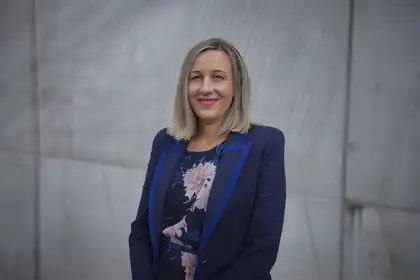
Associate Professor Margaret Sandham
How we feel about something often shapes whether we think it is worth paying for. The cost of living has risen, financial pressure has increased, and maintaining personal wellbeing can feel more difficult than ever. For many, experiences such as a massage have become an unaffordable luxury. Against that backdrop, it is not surprising that the headline Corrections Minister halts $9m 'massage programme' for prisoners provoked a strong reaction. It tapped into understandable concerns about fairness and whether public money is being spent wisely.
But what happens when we let our emotions override the facts?
New Zealand First Party Leader Winston Peters went as far as to describe the now axed initiative as “voodoo BS and a waste of taxpayers’ money”. These emotive headlines may generate public outrage, but they tell us little about the outcomes the initiative was intended to achieve, or whether it was likely to achieve them.
In my 25 years as a registered health professional and researcher working across prisons, hospitals, universities and community settings, my career has been guided by one question: what works, for whom? In every publicly-funded role, I have understood that I had a responsibility to use taxpayer money wisely. As an intensive care nurse, decisions were about choosing the option that delivered the best outcome. A 50 cent gauze dressing might seem more economical than a five dollar hydrocolloid dressing, but if the latter stayed in place longer, reduced complications and healed the wound faster, it often represented better value. Those decisions were guided by clinical evidence, protocols and experience. We were not driven by emotional judgements about the worthiness of the person in the hospital bed.
Later, as a clinical psychologist in a publicly-funded service, the same principle applied. I selected treatments supported by evidence and avoided interventions that simply ‘felt nice’ but failed to demonstrate meaningful benefit. Publicly-funded healthcare should always be accountable for the outcomes it achieves. The only way to know whether an intervention represents value for taxpayers is to measure whether it improves people's health and wellbeing.
Healthcare has seen countless treatments rise and fall in popularity, but those supported by research evidence endure. Unfortunately, what the evidence supports does not always align with what governments choose to fund when public sentiment and political pressure drive decision making.
Western healthcare has not always met the needs of Māori, and this is reflected in the persistent inequities in health outcomes between Māori and non-Māori. Rongoā Māori is an ancient system of healing grounded in mātauranga Māori and passed down through generations to trained practitioners. It is a holistic approach to health that encompasses physical, mental, spiritual and whānau wellbeing. The Ministry of Health commissioned a review of Rongoā Māori services in 2022 and found that Rongoā Māori improved wellbeing by strengthening cultural identity, whānau connections and people's ability to support their own health. Rongoā Māori can be used alongside Western medicine or as a standalone therapy.
It is understandable that rongoā Māori is often met with scepticism. Most New Zealanders have grown up within a Western healthcare system and have had little exposure to traditional Māori healing practices. As with any approach to healthcare, it is reasonable to ask whether it is effective.
Evaluating what works for whom is particularly important at a time when New Zealand's health system is under increasing pressure. An ageing population, growing rates of chronic disease, workforce shortages and rising costs mean demand for healthcare continues to outstrip available resources. Governments must make difficult decisions about where to invest limited public funds.
Those decisions should be guided by evidence, not by the emotions a headline evokes. Governments should fund interventions based on how well they improve the outcomes that matter to the populations they serve. But that is only possible if we measure those outcomes in valid and meaningful ways. Without appropriate outcome measures, we cannot determine whether an intervention is effective, whether it represents value for taxpayers or whether public money has been well spent.
That is the issue at the heart of the debate. The question is not whether rongoā Māori feels acceptable. The question is whether it measurably improves the outcomes it is intended to achieve. That is the standard we should apply to every publicly-funded health intervention.
Dr Margaret Sandham is a Clinical Psychologist and Registered Nurse within the School of Psychology in the College of Humanities and Social Sciences.
Related news
Opinion: Why the friends you make at university often become mates for life
By Professor Kirsty Ross

Opinion: The Pentagon declares war on manopause
By Professor Beth Greener and Dr Megan MacKenzie