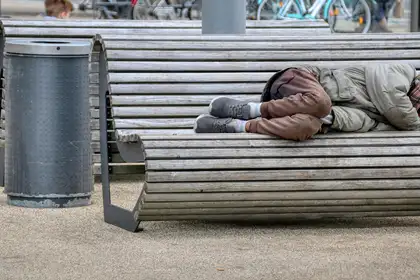
Since 2017, I have run a writing group at Te Pūaroha Compassion Soup Kitchen in Wellington, as part of Te Hā Tangata, a project that supports people experiencing homelessness to tell their stories.
Week after week, I have sat with people whose lives are usually described in public by reductive labels: rough sleepers, service users, the homeless, street people. But in the writing group, none of those labels is accurate. I see talented, creative people with extraordinary storytelling abilities. Yes, many of them are also trying to make sense of grief, trauma, family rupture, addiction, bureaucratic exhaustion, legacies of colonisation, and the daily effort of staying alive. But that does not detract from the insights, skills and crucial perspectives they bring to the world.
A writing group does not solve homelessness. But it does offer a place where people who are housing deprived are not treated as a nuisance to be managed, but as human beings with something important to say. That is why I do not believe move-on orders are the right response to the visible distress many people encounter in our city. I understand the frustration. People who are housing deprived can be noisy at night. Some block access to shops or public spaces. Some are unwell, frightened, intoxicated, or in crisis. Communities deserve safety. But a serious response has to distinguish between reducing harm and reducing visibility.
The Government’s proposed Summary Offences (Move-on Orders) Amendment Bill would let police order people aged 14 and over to leave a public place for up to 24 hours not only for threatening or disruptive behaviour, but also for begging, rough sleeping, or showing signs of trying to inhabit a public place. Breaching an order could bring a fine of up to $2,000 or three months in prison. Even the Attorney-General has reported inconsistencies with the New Zealand Bill of Rights Act, including freedom of expression and freedom of movement.
That should concern us. Because, as Wellington Central MP Tamatha Paul has asked, where is a person meant to go if they have nowhere safe to go? Another doorway? Another suburb? Another park bench? All of them likely further away from the support they need. Wellington City Missioner Murray Edridge has also asked why people who are “just trying to survive” should be captured by legislation designed to respond to disorder.
These questions are crucial, but I want to add a slightly different point to the conversation. The deepest failure of move-on orders is not only that they displace visible hardship, but that they misunderstand what makes a city safer in the first place. Safety does not come from shifting evidence of social failure from one block to another. Safety comes from addressing the conditions that put people there in the first place. Rough sleeping is only the visible edge of a much larger set of issues, many of which begin very early in life.
Sitting with and hearing the stories of people who are housing deprived has changed my understanding of the causes. Stories published in a Te Hā Tangata book in 2018, showed that pathways into housing deprivation often begin early, long before people are able to make adult decisions. New research on youth homelessness in Aotearoa supports this, finding that 7% of young people have experienced recent homelessness, with much higher rates for Māori, families in severe hardship, and those experiencing frequent or involuntary moves. Research on pathways into adult homelessness in Hamilton found adverse childhood experiences were common and often preceded long chains of disruption across people’s lives. By the time someone is sleeping rough, many earlier chances to intervene have already been missed.
That is why the big picture matters. Housing First approaches are part of the evidence-based solution. But housing, while essential, is not the whole picture. People also need places of belonging, and a society that notices and responds before crisis hardens into long-term exclusion. That is where community-based creative spaces matter. In the writing group, I have seen people use poetic language to access and name pain that had previously been locked inside. I have seen confidence grow. I have seen people develop practical communication skills that help them deal with institutions and official systems. I have seen creative work become a bridge back to connection, routine, purpose and employment.
Wellington already has some of this important creative social infrastructure. Compassion Soup Kitchen offers meaningful activities and community alongside its focus on meals. Vincents Art Workshop provides free creative space, materials and skilled support. Pablos Art Studio offers free materials, tuition, workshops, outreach and art therapy groups. DCM runs poetry meet-ups. These are not sentimental extras to be considered only after the “real” issues are dealt with. They are part of the ecology that helps keep people connected to themselves and to others.
This focus on creativity, if supported much earlier in the life cycle, could also help prevent people from ending up in severe distress in the first place. A 2025 systematic review found art therapy for children and adolescents experiencing acute or severe mental health conditions was highly effective, with reductions in depression, suicidal ideation, anxiety and trauma symptoms. Another review found a causal relationship between regular arts engagement and adolescent mental health and wellbeing. And a 2024 global study found that arts-based strategies provide accessible, scalable and culturally responsive support for youth mental health. If we care about prevention, then society-wide support for creative participation belongs in the conversation.
None of this means accepting threatening behaviour or leaving communities unsupported. Harmful behaviour needs a response. But if we confuse survival with criminality, or visibility with danger, we will keep backing bottom-of-the-cliff policies that tidy the streets while worsening the underlying wound. If we want fewer people in distress in public, we need to build the conditions that make distress less likely: housing, mental health and addiction support, early intervention, well-resourced community spaces where people can create, connect and be recognised, and strong policy support for access to creative expression throughout every stage of life.
A city becomes safer not when it gets better at removing visible hardship, but when it gets better at preventing hardship from becoming public catastrophe in the first place. The arts have a crucial role to play in that process.
Dr Elspeth Tilley is a Professor in Creative Communication in the College of Humanities and Social Sciences at Te Kunenga ki Pūrehuroa Massey University.
This article was first published on The Post on 1 June.