Image credit: Hosnysalah via Pixabay.
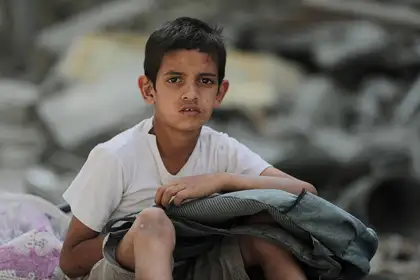
The images of emaciated children in Gaza, their hollow eyes and frail bodies deprived of food as bombs drop around them, sear through our collective consciousness, offering a haunting reminder of a past that refuses to stay buried.
Living with the scars of the 1943 Bengal famine, with stories of chronic hunger shared by generations that lived through extreme food shortages and starvation, I am struck by the chilling parallels between the hunger in Gaza today, and the starvation that ravaged my ancestral homeland. Famine is not a mere consequence of war or scarcity; it is a deliberate instrument of colonial power, an immoral tactic wielded to subjugate and erase. The hunger in Gaza, like the Bengal famine, is a manufactured crisis, a tool of domination rooted in the colonial playbook, and its immorality demands our collective outrage and resistance.
The Bengal famine, which claimed the lives of 2-3 million people, was not an act of nature, but a product of colonial negligence and exploitation. British policies under then Prime Minister Winston Churchill’s administration, diverted food supplies from India to feed wartime Britain and its allies, prioritising imperial interests over the lives of colonised subjects. Rice exports continued even as Bengal’s poor starved.
My grandmother’s stories of neighbours wasting away, of families selling their last possessions for a handful of rice, are etched into my understanding of what famine means—not just hunger, but the systematic stripping of dignity, agency, voice, and life itself. The construction of the colonised as “less than human” mobilises an entire infrastructure of colonial rule designed to deprive and discipline.
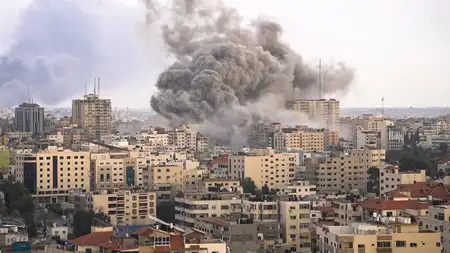
In Gaza today, we are witnessing a similar orchestration of starvation. Since the escalation of conflict in 2023, Israel’s blockade and military actions have cut off food, water, and aid to the 2.3 million Palestinians trapped in the enclave. Reports from the United Nations and humanitarian organisations paint a grim picture: over 80% of Gaza’s population faces acute food insecurity, with children and the elderly dying from malnutrition-related causes.
According to the Integrated Food Security Phase Classification system (IPC), a famine is declared when at least 20% of households face extreme food insecurity, described as starvation or severe lack of food; at least 30% of children under five suffer from acute malnutrition; and at least two adults or four children per 10,000 people die daily due to starvation or malnutrition-related diseases. Israel’s blockade and the restricted humanitarian access make it difficult to gather comprehensive data and confirm all three famine criteria. Moreover, a formal declaration of famine requires consensus among IPC partners, a process that is rife with political and technical barriers.
However, this is what we do know at this point in July 2025. The UN describes Gaza as the “hungriest place on Earth,” with 100% of its population at the risk of famine. Over 100 aid organisations including Oxfam and Doctors without Borders warn of mass starvation. The IPC states, “according to the most likely scenario, both North Gaza and Gaza Governorates are classified in IPC Phase 5 (Famine) with reasonable evidence, with 70% (around 210,000 people) of the population in IPC Phase 5 (Catastrophe).” The IPC projects a “critical risk of famine” by September 2025, with northern Gaza and Gaza Governorates already exceeding the insecurity threshold. Noting the deliberate techniques of starvation deployed by Israel, Amnesty International cites deliberate restrictions on aid and destruction of critical food infrastructure, calling the use of starvation as a form of genocide against Palestinians. The IPC further notes that the malnutrition and mortality thresholds are likely close to being met.
The destruction of agricultural land, fishing boats, and markets ensures that even the means of sustenance are obliterated. This is not an incidental outcome of war, but a calculated strategy, reminiscent of colonial tactics that weaponise scarcity to control and dehumanise.
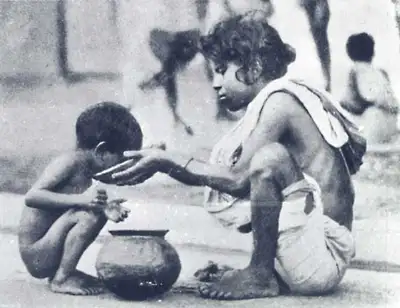
1943 Bengal famine. Image credit: Unknown, via Wikimedia Commons.
As a scholar who studies the interplays among hunger, dignity, and voice, I see famine as a form of structural violence, where colonial structures manipulate systems—trade, aid, governance—to perpetuate suffering among the colonised. In Bengal, the British exploited caste and class hierarchies, ensuring that the rural poor and oppressed caste communities bore the brunt of starvation, while elites hoarded resources. In Gaza, the blockade and bombardment disproportionately harm the most vulnerable—refugees, laborers, and children—while global powers turn a blind eye, complicit in their silence. The immorality lies not only in the act of starvation but in the erasure of these voices, and the dismissal of their humanity under the guise of “security” or “necessity.”
Reflecting on my roots, I recall the resilience of communities that survived the famine, their stories of solidarity amid despair. Neighbours shared meagre rations; women bartered skills to feed their families; and local leaders organised relief despite colonial apathy. Yet, these acts of resistance were never enough to counter the structural might of empire. Similarly, in Gaza, we see Palestinians distributing what little aid reaches them, community kitchens struggling to feed thousands, and farmers attempting to salvage crops under siege. These acts of defiance against engineered hunger echo the spirit of Bengal’s survivors, but they also underscore a painful truth: resilience alone cannot dismantle these systems.
The coloniality of famine lies in its ability to normalise suffering as inevitable. In 1943, British officials framed the Bengal famine as a result of local mismanagement or overpopulation, deflecting blame from their own policies. Today, narratives around Gaza often reduce the crisis to “war” “conflict” or “Hamas,” ignoring the decades-long occupation, blockade, destruction and dispossession that makes external aid critical. This rhetorical sleight of hand is a hallmark of colonial power, absolving the oppressor while blaming the oppressed for their own suffering.
The immorality of using famine as a tool extends beyond the immediate suffering it inflicts. It is a violence that reverberates across generations, eroding cultural identities and collective futures. In Bengal, the famine disrupted social fabrics, forced migrations, and left a legacy of trauma that lingers in the stories of community life. In Gaza, the starvation of today threatens to rob a generation of health, education, and hope, perpetuating cycles of marginalisation. This is the colonial logic at work: to weaken a people so profoundly that their resistance, their very existence, is diminished.
The culture-centered approach asks: how do we resist this immorality and what is the role of communication here? The answer perhaps lies in amplifying the voices of those who suffer and challenging the structures that enable famine. In Bengal, grassroots movements and post-independence activism sought to hold colonial powers accountable, though justice remained elusive. In Gaza, the global solidarity movement—through protests, boycotts, and advocacy—offers a glimmer of hope, yet it faces the uphill battle of confronting entrenched geopolitical interests and the consistent manufacturing of communicative instruments directed at silencing our solidarities.
As scholars, activists, and global citizens, we must center the narratives of Gazans themselves, their stories of survival and resistance, rather than allowing their suffering to be reduced to statistics or political talking points. We must continue to make visible the communicative inversions, turning the oppression into victimhood, unpacking the tools of silencing and actively resisting them.
The hunger in Gaza is a call to action, a reminder that colonial tools of oppression—whether in 1943 or 2025—are neither inevitable nor invincible. We must reject the normalisation of starvation as a byproduct of conflict and name it for what it is: a moral failing of humanity, enabled by systems of power that prioritise settler colonial expansion, land occupation, profit and control over life. My memory of Bengal’s famine, etched into my body, fuels my resolve to speak out against the weaponisation of food deprivation.
In closing, I return to the image of those children in Gaza, their resilience a testament to the human spirit, their suffering a condemnation of our collective inaction. As we bear witness to this manufactured famine, let us also commit to dismantling the colonial logics that sustain it. Let us build voice infrastructures that resist colonial propaganda, amplify the voices of the hungry, honour their dignity, and work tirelessly for a future where famine is no longer a tool of oppression, but a relic of a past we have overcome. For Bengal, for Gaza, for all those who hunger under the shadow of empire, this is our moral imperative.
Professor Mohan Dutta is Dean’s Chair Professor of Communication at Te Kunenga ki Pūrehuroa Massey University. He is the Director of the Center for Culture-Centered Approach to Research and Evaluation (CARE), developing culturally-centered, community-based projects of social change, advocacy, and activism that articulate health as a human right.
Related news
Opinion: The New Zealand Government and the silence over Gaza
By Associate Professor Sean Phelan
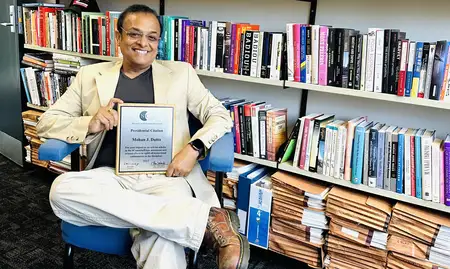
Professor Mohan Dutta receives 2024 Global Communication Award
Professor Dutta has been recognised for his pioneering work in de-westernising communication research and promoting social justice through community-led initiatives.

Opinion: India's General Election 2024: Everyday habits of democracy that resist authoritarian populism
By Professor Mohan Dutta

Professor Mohan Dutta’s academic-activism recognised with prestigious Presidential Citation
Professor Mohan Dutta has been recognised by the National Communication Association (NCA) with the Presidential Citation.