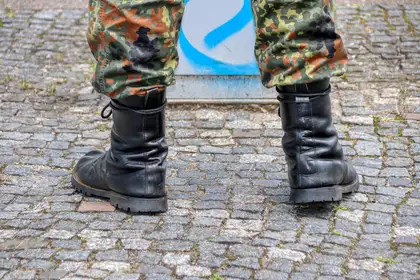
When the United States Secretary of War, Pete Hegseth summoned hundreds of United States Generals from their posts recently, among the directives he delivered was the military must employ “a ruthless, dispassionate and commonsense application of standards”. When teaching politics and international relations we emphasise how the phrase “common sense” is an immediate red flag, often disguising prejudice as universal truth.
Let us take a closer look at his demands. On the topic of weight Hegseth not only railed against “fat troops” but also against “fat generals and admirals.” Yet, weight is not the same thing as fitness, nor is it the same as strength. In the New Zealand context, for example, some personnel may struggle to pass the run test but are vitally needed for their strength on the gun line. Furthermore, those in higher roles tend to be older. Staying fit gets harder as we age and as injuries become more commonplace – particularly after years of hammering their body in the name of military service. Being overweight does not diminish the experience and leadership of these individuals, particularly when they are employed in roles that are strategic rather than operational in nature.
When it comes to grooming standards, Hegseth is demanding clean-shaven faces, dismissing anyone with a beard – unless ironically, they join the special forces. The inconsistency shows this isn’t about performance. Daily shaving can cause serious skin problems, especially for men of colour. And at a time when militaries are struggling to attract recruits—especially from tech-savvy subcultures needed for cyber defence and drone piloting—enforcing arbitrary grooming standards makes little sense.
Then there’s his demand that “Every designated combat arms position returns to the highest male standard only”. This framing ignores three realities. First, current standards evolved through evidence-based changes, not lowering expectations. Second, what counts as a neutral standard has not been defined by centuries of militaries designed for and created by very specific men. Feminist research has long pointed out if the world had been designed by women very different criteria would be in play, and those criteria can always be altered if there is the will to make it happen. For example, early armoured personnel carriers had no power steering, making it difficult to drive for all but very strong women and men. Now the technology has been altered so that anyone can drive these vehicles. Third, Hegseth assumes future wars will look like past ones. But new technologies and new battlefields demand different skill sets. Equipping the military solely for yesterday’s wars risks making it unfit for tomorrow’s.
Hegseth also asserts that combat and non-combat roles are the “same thing”. No one has suggested that this is the case. There are still specific role-related requirements for different units. But he is again wrong in eliding over the fact that non-combat personnel, and indeed civilians, are often caught up in warfighting – so these lines are very often blurred ‘on the battlefield’.
Perhaps most troubling is Hegseth’s insistence that ‘emotionally sensitive leadership is out,’ despite all the evidence to the contrary. This is a particularly laughable statement. A good leader absolutely requires empathy. All people need to feel valued in their organisation to commit themselves, let alone their lives, to the mission.
It is also important to pay close attention to some of the terminology he used. Hegseth made statements such as ‘we’re done with that shit’, using swear words to make himself likeable to military audiences. He also tried to physically demonstrate that his own fitness wasn’t in doubt and shamelessly promoted his own book. He also made claims about issues that just don’t exist such as ‘dudes in dresses’ and called Diversity, Equity, and Inclusion and other similar efforts ‘debris’.
With the sentiment he is espousing, Hegseth is opening the door to all manner of bad behaviours that militaries have been seeking to eliminate from their ranks so that they can carry out operational matters more effectively. The return of a permissive environment where sexism, racism, and even war crimes may be seen as not only acceptable but laudable should be a very real concern for all.
Dr Bethan Greener is Professor of International Relations. She is also currently Head of School for People, Environment and Planning and Acting Director of the Centre for Defence and Security Studies. She has published extensively on international security-related topics, including New Zealand defence issues.
Related news

Opinion: Mental Health Awareness Week - Let's make more time for play
By Professor Kirsty Ross

Opinion: Not voting in local elections is rational. Voters need better reasons to engage
By Dr Jeffrey McNeill