Image credit: Klimkin via Pixabay.
This year’s Aotearoa New Zealand Social Workers Day theme Toitū te kotahitanga, Toitū te oranga, strengthening intergenerational solidarity for enduring wellbeing, emphasises the importance of caring and respecting across generations to build collaborative relationships, resilient communities and sustainable environments, by valuing the wisdom of our elders and empowering our young people to respond to today’s challenges and visions a better future.
For social workers, collaborative relationships with individuals, families, whānau, and communities are the medium through which they support people to navigate, transition, change, and transform their situations and circumstances. Social work relationships occur in circumstances of social pressure and stress, such as inadequate housing, the impact of substance use, ruptured relationships, family violence, elder abuse and neglect, crime, financial insecurity and poverty. Social workers' collaborative relationships also occur with people across the lifespan and often are with people who experience distress, grief, trauma and social circumstances impacting their human and Indigenous rights, livelihood, health, wellbeing, and dignity.
Overall, collaborative relationships are foundational for working to achieve changes in people’s lives and social situations. Engaging in these relationships is a human process that involves recognising the other person's inherent dignity, their social and cultural context, and lived experiences. For social workers, authenticity, emotional intelligence, ethical awareness, social intelligence, and cultural intelligence, when embodied, are integral to effective engagement and sustaining professional relationships. In the age of artificial intelligence, technologically mediated communication, screens and automation, the importance of embodied social skills and collaborative relationships is key to social cohesion, and the resilience of communities and sustainable environments.

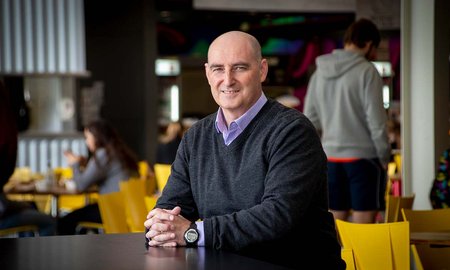
Professor Kieran O'Donoghue.
Social workers are often described as the human face of a caring civil society. For social workers and other health and social service colleagues, the current rationing of services, workforce constraints, and the pressure and stress in communities resulting from the cost of living and climate crisis, social deprivation, and social isolation, challenge the resilience of communities. For communities to remain resilient, they require investments in people, physical resources, and infrastructure, as well as access to essential services and the active engagement of community groups. Community social workers bridge gaps by leveraging their knowledge of the community, connecting people with others who can provide support and assistance, and sometimes providing a stable and supportive holding environment. However, this bridging work is much like the fixing of potholes on our roads, whereby the pothole is patched, but the road itself is not renewed or made more resilient. Like our roading infrastructure, this work relies on investment in developing community resilience, and such investment needs to involve communities in envisioning sustainable futures and creating sustainable environments.
In social work, sustainable environments support ecosystems to flourish on a continuous basis. They restore and renew in a balanced life cycle. The current social services environment is unsustainable: social workers are under-resourced, services are over-subscribed, the workforce is already stretched, and there is a lack of clear career pathways. Meanwhile, funders aim to manage costs without imposing undue financial burdens, further complicating the situation.
For a sustainable social work profession and social service provision, future investment is critical to retain, develop, and strengthen current social workers, as well as recruit people into social work education and ultimately into the workforce. As our society approaches 2030, with the potential for significant social disruption, potential mass unemployment and climate-related disasters arising from the application of artificial intelligence, and the impacts of the climate crisis, it is timely to consider the social implications and the environment required to sustain not only social cohesion, but also social wellbeing and quality of life. Social work and social workers play a crucial role in addressing these challenges. Their ability to build collaborative relationships, strengthen community resilience, and contribute to sustainable environments becomes even more vital during times of societal disruption and crisis.
This national Social Workers Day, my message to social workers, service providers, funders, regulatory bodies, politicians, and the public, is to pause and reflect on the contributions social workers make to our society and how social workers' contributions could be strengthened as we head towards an unknown future. Now is the time to imagine what a better future could be for us all, and how social work and social workers will contribute to this.
Professor Kieran O’Donoghue is the Head of the School of Social Work at Te Kunenga ki Pūrehuroa Massey University. He has published nationally and internationally in the areas of social work theory and practice, social work supervision and in relation to the social work profession. He is a registered social worker and a member of ANZASW (Aotearoa New Zealand Association of Social Workers).
Related news
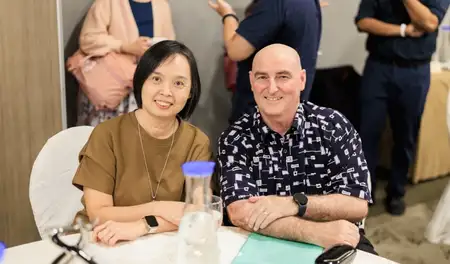
Supporting the ongoing development of social work supervision in Singapore
For more than a decade, Te Kunenga ki Pūrehuroa Massey University’s Head of School of Social Work Professor Kieran O’Donoghue has nurtured a deep and rewarding relationship with Singapore’s social work community.
Partnerships honoured at Work-Integrated Learning New Zealand conference
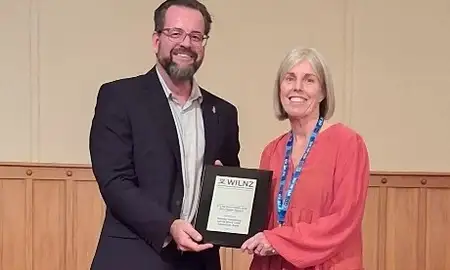
Te Kunenga ki Pūrehuroa Massey University’s School of Social Work has been honoured with a prestigious award at the 2024 Work-Integrated Learning New Zealand (WILNZ) Conference, recognising the School’s innovative approaches to student placements.
Social work in action: Gaining global experience through work-integrated learning
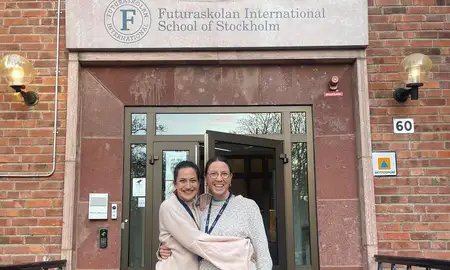
Fourth-year Bachelor of Social Work student Courtney Williamson is completing her final placement in Sweden, where she's gaining hands-on experience in the field she’s passionate about.
Opinion: Honouring the past, shaping the future: Aotearoa Social Workers’ Day and the journey ahead
By Professor Kieran O’Donoghue