Recent master’s research by Theané de Klerk analysed New Zealand’s national agricultural phosphorus (P) budget and found that overall, fertiliser use is closely aligned with the amount needed to maintain soil fertility. Phosphorus is an essential nutrient used in fertilisers to support pasture and crop growth, but excessive amounts can contribute to environmental challenges if not carefully managed.
During the 2021/2022 production season, about 143,000 tonnes of phosphorus fertiliser was applied to agricultural land nationwide. This compares with an estimated 157,000 tonnes required to maintain soil phosphorus levels, indicating a relatively balanced national picture.
“While my research only represents a single-season snapshot, the findings are encouraging for farmers, showing that the shift towards sustainable nutrient management has been worthwhile. It reflects the effort farmers have put into managing nutrients carefully,” Mrs de Klerk says.
While the overall amount of phosphorus being applied through fertiliser is broadly similar to the amount needed to maintain soil fertility, the research also found differences between farming sectors.
The dairy sector tended to apply slightly more phosphorus fertiliser than required, resulting in a small accumulation of soil phosphorus of around three kilograms per hectare per year. In contrast, the sheep and beef sector generally applied less fertiliser than required, resulting in a small decline of about two kilograms per hectare per year, which over time could result in some production losses for this sector.
Mrs de Klerk says that continued attention to nutrient management will be important to maintain this balance.
“There’s still room for improvement. Applying too much fertiliser in some areas can lead to phosphorus accumulation, while applying too little in others can gradually reduce soil fertility.”
The research relied heavily on industry data from organisations including DairyNZ and Beef + Lamb New Zealand. Limited data availability meant the analysis of the cropping and horticultural sectors was less detailed than that of pastoral farming.

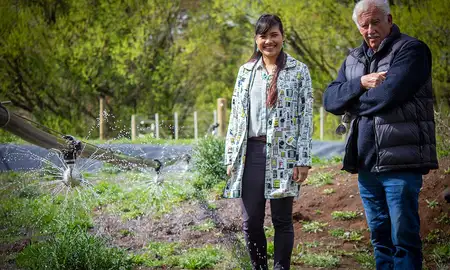
Theané de Klerk
Mrs de Klerk says she hopes the research will help inform future nutrient management decisions across the sector.
“Understanding how much phosphorus our soils actually need helps farmers apply fertiliser more efficiently, supporting both farm productivity and environmental sustainability.”
Now that her research is completed, Mrs de Klerk plans to pursue a career in sustainable nutrient management, working with farmers to improve the use of phosphorus and other key nutrients on farms.
Mrs de Klerk’s research was funded by the Fertiliser Association of New Zealand and was supervised by Associate Professor Lucy Burkitt, Dr James Hanly and Professor Peter Tozer of Te Kunenga ki Pūrehuroa Massey University, and Dr Katrina Macintosh of DairyNZ.
Related news
International students experience hands-on, future-focused agriculture and environmental sciences through university exchange
Three students from the globally top-ranked agricultural university, Wageningen University, are spending four months in Aotearoa New Zealand for an immersive study exchange, gaining practical experience in environmental and agricultural sciences.
Empowering tomorrow’s scientists by inspiring today’s teachers
Driven by her passion for science, Feilding Intermediate School teacher Jiselle Rider is spending six months with the university, enhancing her professional growth and advancing the science curriculum at her school through the Te Apārangi Royal Society’s Science Teaching Leadership Programme .
PhD student creates soil filters to remove phosphorus from wastewater
A team of Massey scientists are working with local councils to help remove phosphorus from wastewater using large filters made of soil.