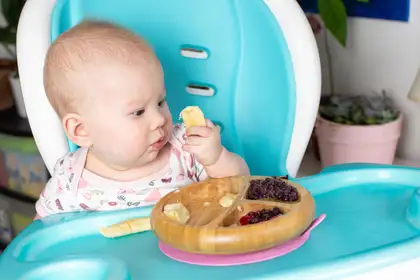
Berries and black beans have potential to feed good gut bacteria in babies during weaning.
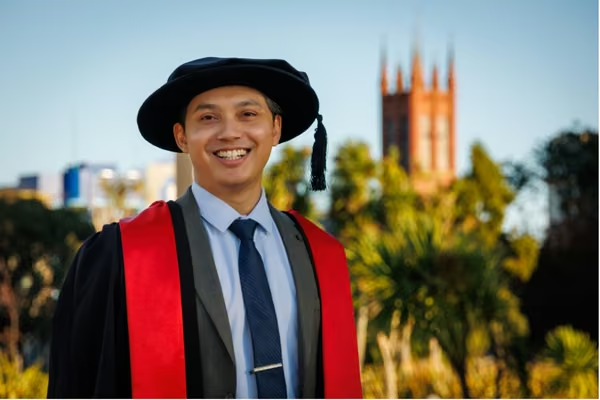
Massey University PhD graduate Vitor Geniselli da Silva spent years investigating what happens to infant gut microbes during weaning, the window typically between six and twelve months when babies transition from breastmilk to solid food. His research indicates it is possible to use common foods to promote a long-term positive influence over an infant’s health during this critical period.
"It is during this window that the gut microbes are more susceptible to changes, adopting new compositions that can last and thus affect our health in the long term. Dietary interventions after weaning are highly likely to be less effective."
Using a combination of laboratory experiments and computer modelling, his research identified berries and black beans as particularly promising foods. Both appear to support the growth of bacteria that convert complex carbohydrates into short-chain fatty acids, which in turn have numerous health benefits.
Research shows that if the gut microbiome is well-nourished during the weaning window the likelihood of obesity, type 2 diabetes and allergies later in life is lower.

Dr Vitor Geniselli da Silva spent years investigating what happens to infant gut microbes during weaning.
His research also tested whether computer models could reliably predict how infant gut microbes respond to different foods and dietary patterns and whether an individual's gut microbes could be accurately screened computationally before any clinical intervention.
"The computer models did a very limited job, suggesting that they need much more improvement. Right now, computational shortcuts in nutrition research are not ready to replace traditional methods. This is particularly surprising in an era when computational tools seem to be replacing other types of technologies."
Dr Geniselli da Silva says parents should focus on feeding their babies a balanced diet and respect current dietary guidelines.
“The more diverse the foods, the better. Focus on veggies, lean proteins and avoid juices, sweets and fast-food items."
Born in Campinas, Brazil, Vitor completed a degree in Food Engineering before earning a Master of Biotechnology Engineering.
He hopes his work will encourage other researchers to explore computational approaches in nutrition science and that berries and black beans will be tested in clinical trials to build on what his research suggested.
Related news
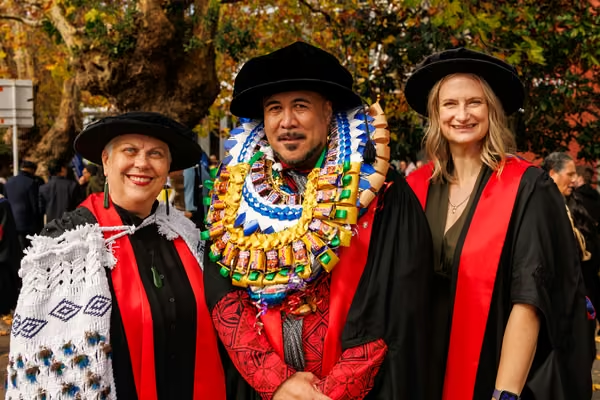
Three Massey staff celebrate PhD graduations alongside their students
Three staff from the Colleges of Health and Humanities and Social Sciences crossed the graduation stage yesterday to collect their doctoral degrees, sharing the moment with some of the students they teach.
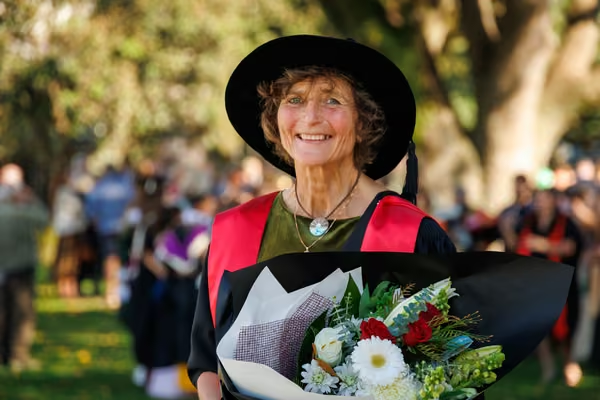
Unlocking the science of thriving in veterinary medicine
Being a veterinarian was a childhood dream for Dr Charlotte Cantley, but getting a place at vet school wasn’t easy. Decades later, after a full clinical career, raising a family and navigating the realities of the profession, she’s graduating again, this time with a PhD focused on a question that had quietly shaped her journey: what helps veterinarians not just cope, but thrive?
Rethinking student success through mental well-being
Research from PhD graduate Dr Idham Rocklen indicates student success is influenced as much by mental well-being, as intelligence and effort.