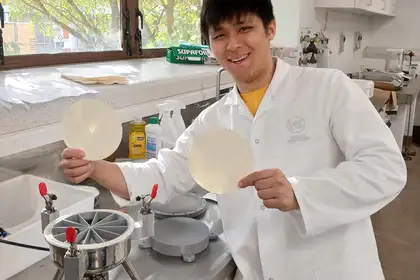
As the inaugural recipient, Ed Ron is completing a research project titled Sustainable Food Packaging: Utilising Food Processing Waste Streams for Fibre-Based Packaging.
The project investigates how apple pomace – the skins, pulp and seeds left behind after apples are juiced or processed – can be combined with wood pulp to create paper-based packaging with enhanced performance characteristics.
Ed Ron says the research aims to support a circular bioeconomy by creating value from materials that would otherwise be discarded, while reducing reliance on less sustainable packaging options.
“Apples are processed for juice almost year-round in Hawke’s Bay, creating a continuous supply of pomace. It’s currently a low-value by-product used for stock feed, but has shown promise for cellulose-based packaging, with the potential to improve on existing materials even before additives are added.”
Preliminary findings showed that blending apple pomace with wood pulp can improve certain mechanical properties compared with traditional wood-pulp paper alone.
“Combined with related work undertaken in collaboration with the Bioeconomy Science Institute (BSI), our findings indicate that supplementing traditional wood pulp with 20 per cent apple pomace can increase both tensile strength and tensile stiffness by approximately 50 per cent. This is significant because it suggests apple pomace could not only replace some conventional fibre sources but also improve important material properties.”
Ed Ron says he was excited by the opportunity to explore stronger, more sustainable paper packaging made from alternative materials.
“The scholarship has made this whole project possible, and I’m grateful to be part of a project that could change the way we view waste products. Apple pomace is very promising, but there are many other types of fruit waste that are readily available to be used. This research can help lead to closing the circular system for our produce, where what we take from nature is fully utilised and returned back to it.”
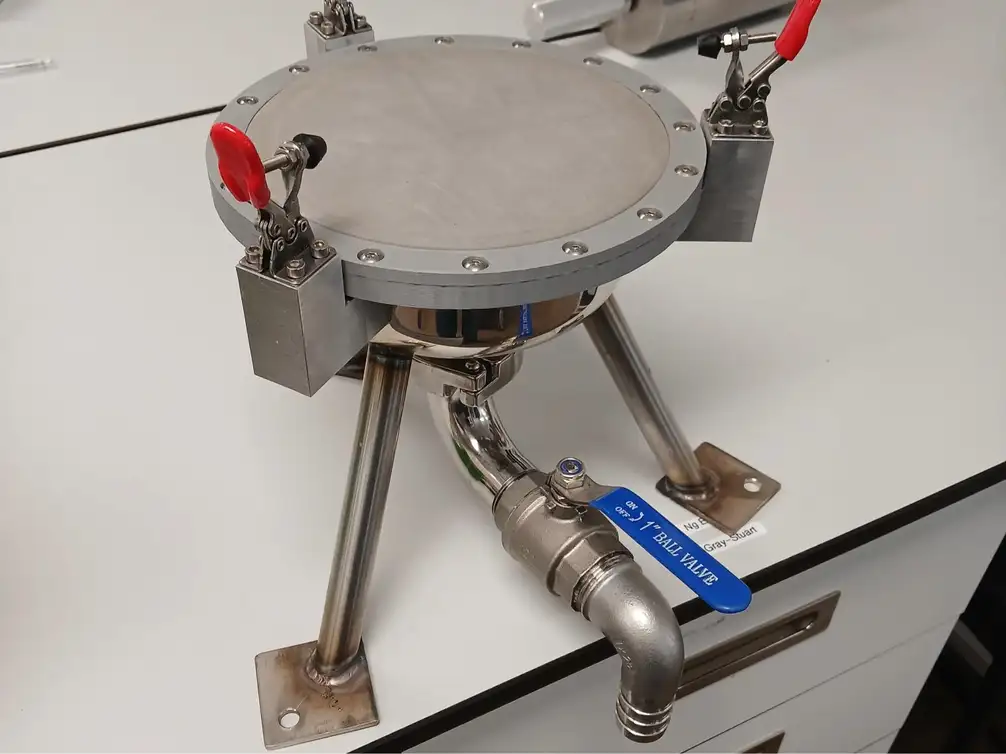
Through the scholarship funding, a laboratory-scale paper handsheet-making system was commissioned for Ed Ron’s work, enabling him to produce paper test sheets in accordance with international testing standards. The next stage of the project has focused on improving the material’s barrier properties.
“The main technical hurdle is improving the material’s resistance to water and oils, so that it is suitable for a wider range of food-packaging applications, including takeaway food containers and other food-service packaging. We’re exploring different plant-based coatings to identify ways to better protect food products,” Ed Ron says.
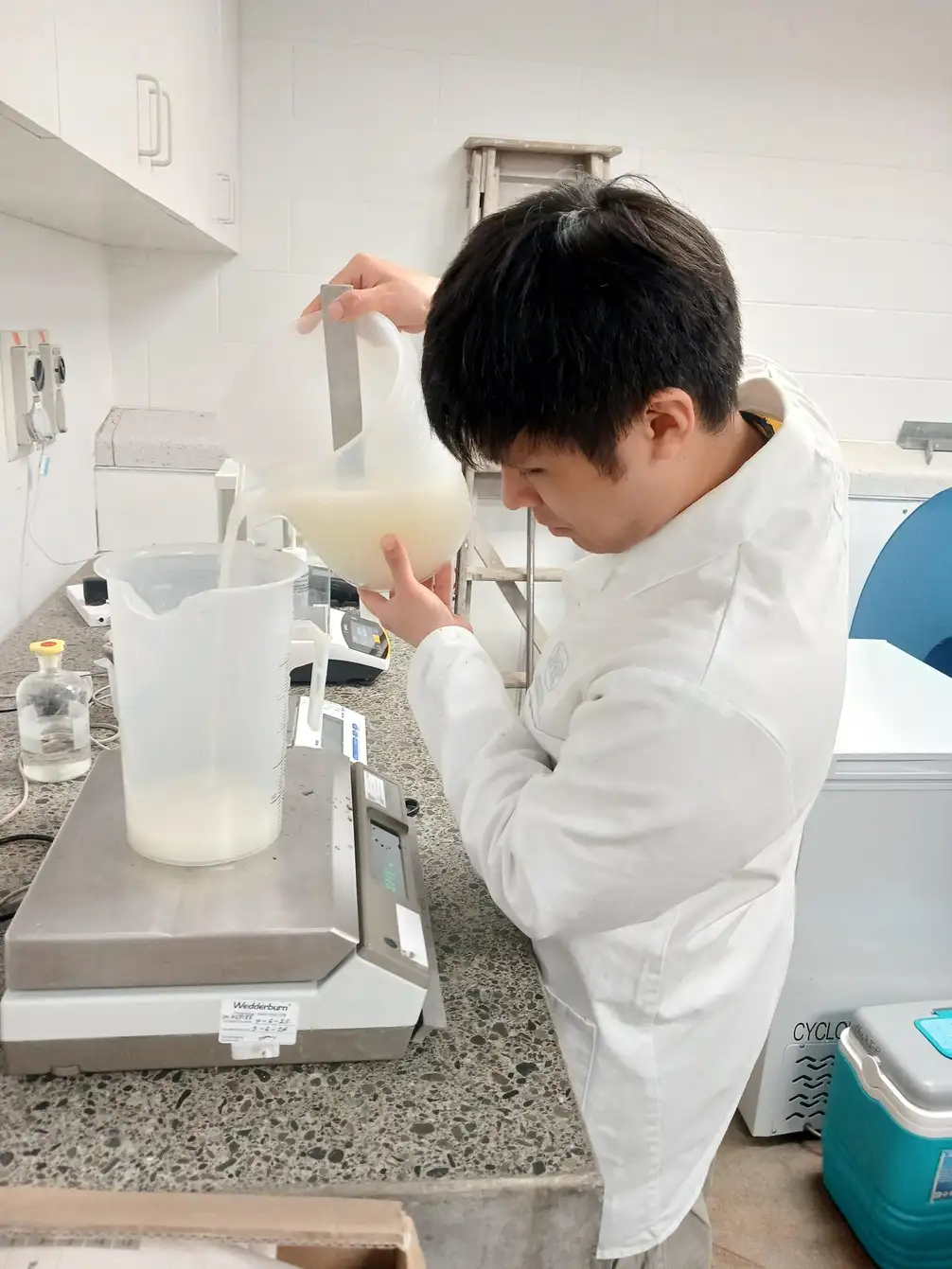
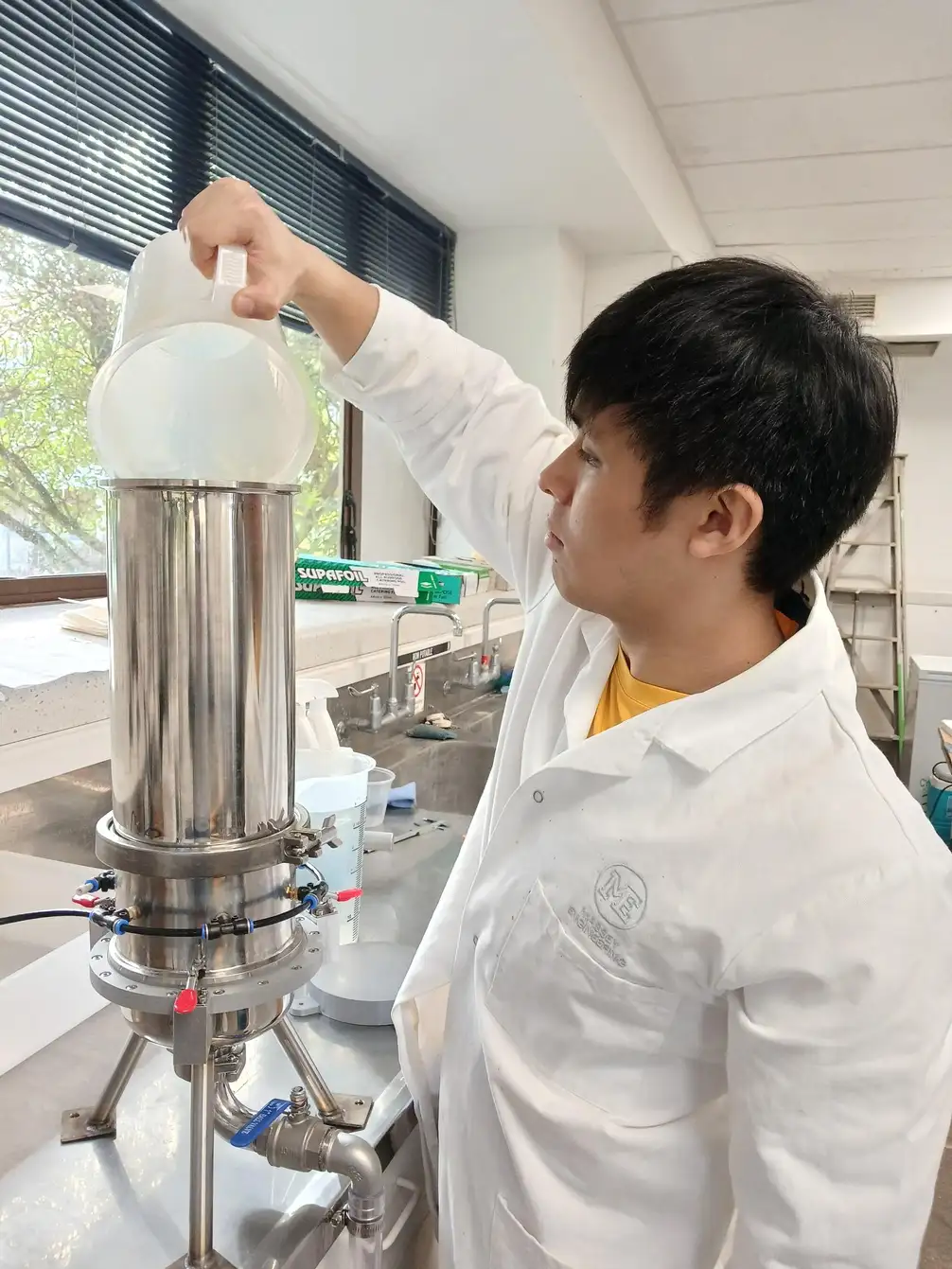
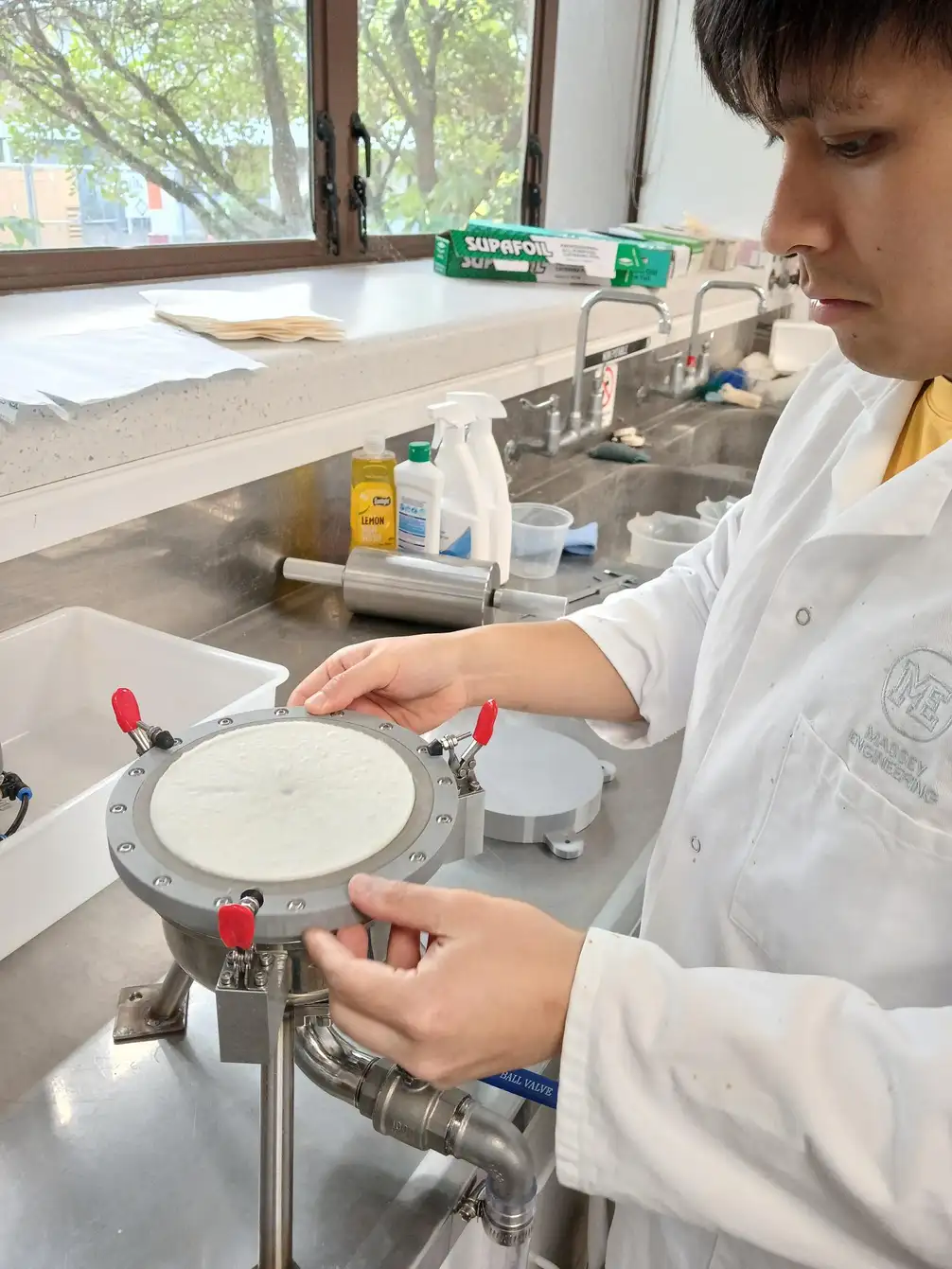
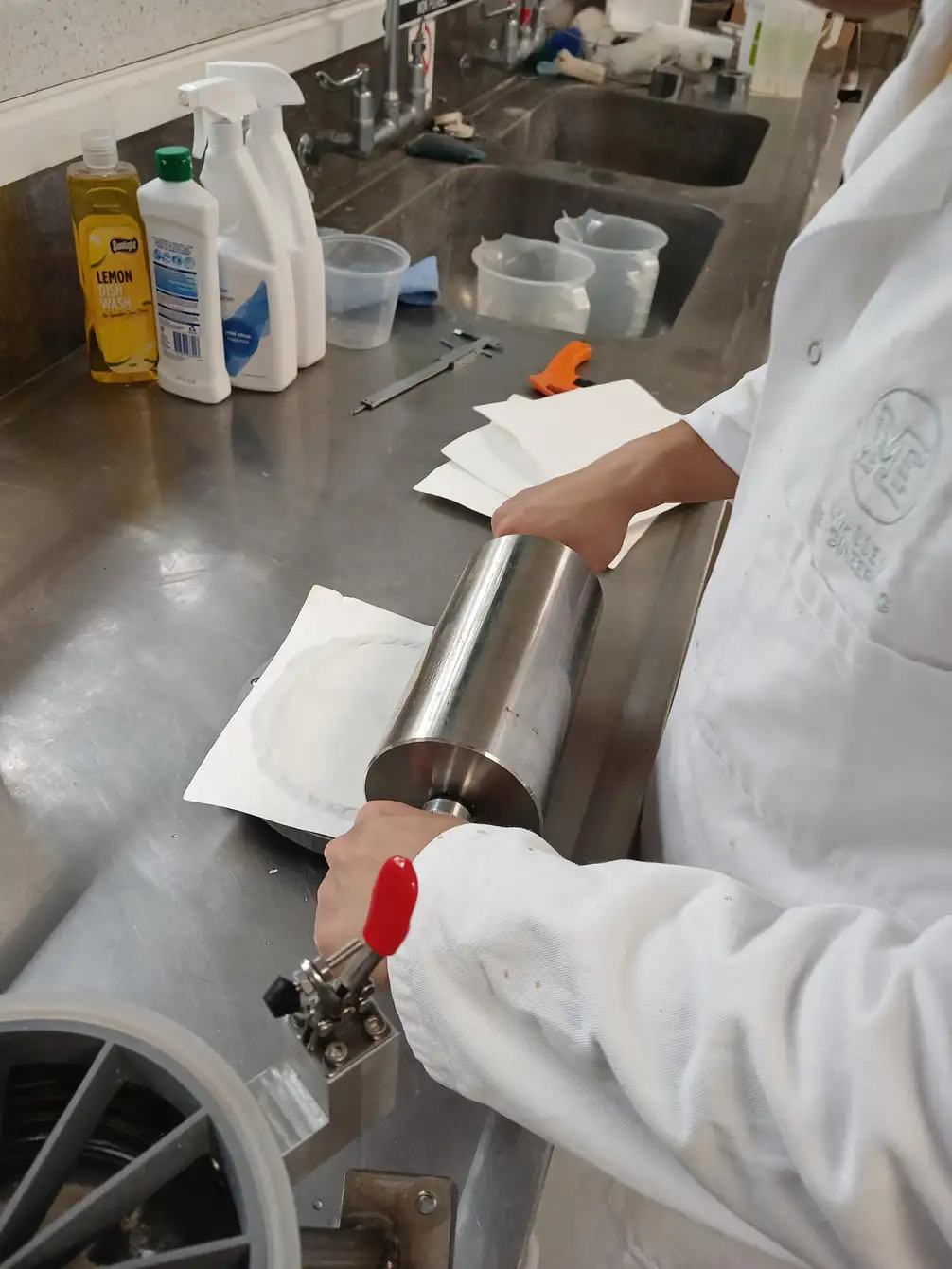
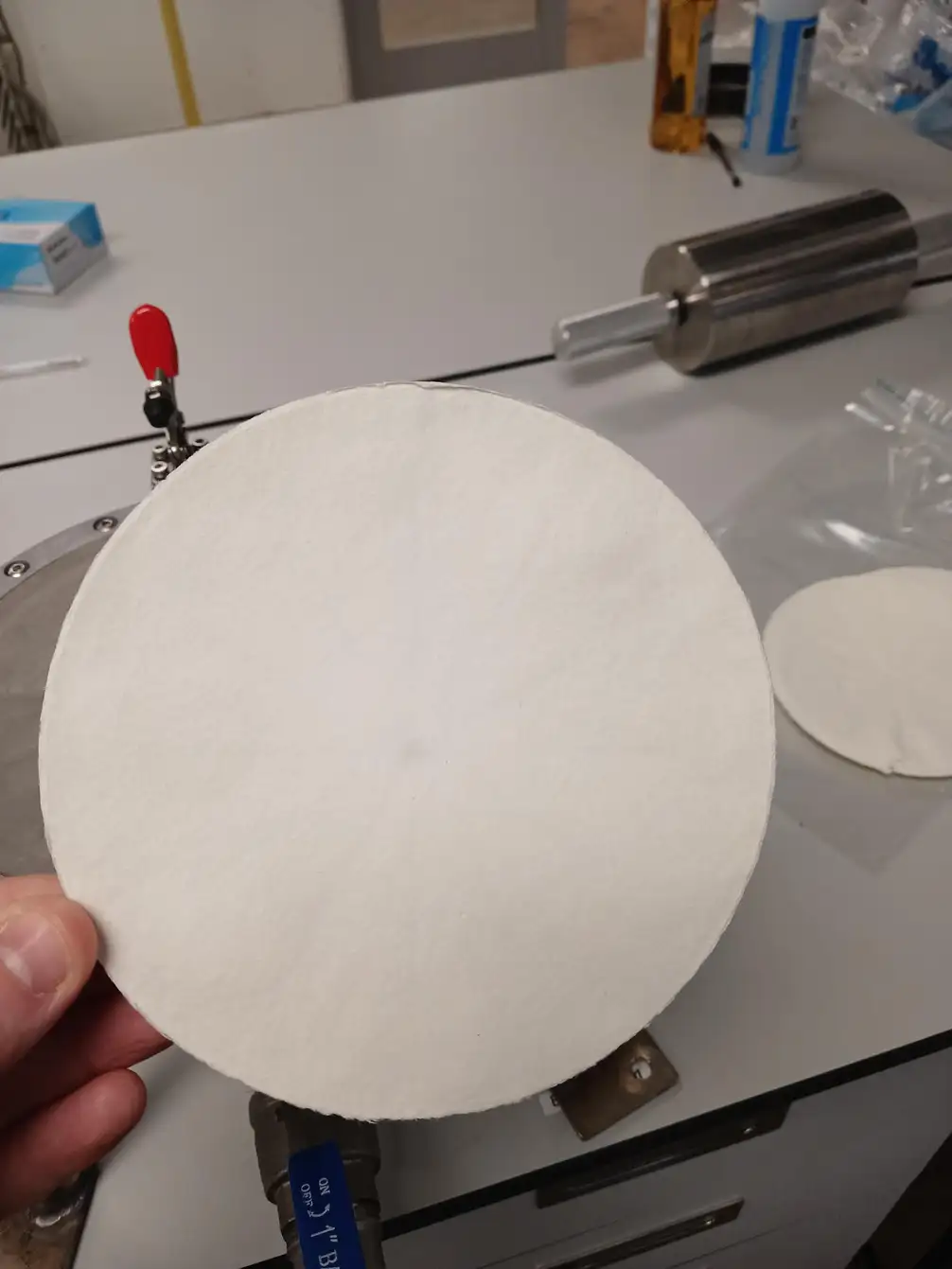
While the work is still at the proof-of-concept stage, it has demonstrated that apple pomace can supplement traditional wood-fibre sources while improving several key material properties. The next step will be to assess its commercial feasibility and determine how the material could be incorporated into new or existing packaging manufacturing operations.
The scholarship from REVO Packaging has helped fund access to specialised equipment, materials and testing, as well as travel to collect fruit-processing waste streams for use in the research.
Originally from Singapore, Ed Ron took a varied pathway into food technology, completing a Diploma in Applied Chemistry before gaining industry experience as a quality control internship with Takasago ITL and assistant brewer at 1925 Craft Brewery.
He says those experiences shaped his interest in food science and product development, and he hopes to continue working with food packaging materials following graduation.
Project supervisor and Senior Lecturer in Packaging Technology Dr Eli Gray-Stuart says projects like these address important challenges facing both the food and packaging sectors.
“Packaging is a key part of the food industry and plays a critcal role in achieving the most sustainable outcome across the food supply chain. Projects like these help create new value from food-processing by-products while supporting the development of more sustainable, locally sourced packaging material.”
Dr Gray-Stuart says industry support plays a vital role in enabling students to undertake research with real-world relevance.
“Scholarships such as these provide essential support, both financially and by helping students build research capability and gain experience solving real industry challenges. Industry support allows students to make connections, become excited about research and development and explore the possibilities it presents.”
Established in 2023, Revo Packaging is an Aotearoa New Zealand-based packaging procurement company focused on providing cost-effective, environmentally conscious packaging solutions while helping businesses make more informed packaging decisions.
Through its Packaging for Good initiative, Revo Packaging supports social and environmental causes by allocating a portion of its revenue to community and industry development projects.
Managing Director and packaging specialist Steffan Pedersen says supporting food technology students at Te Kunenga ki Pūrehuroa Massey University was a natural fit.
“We want to invest in initiatives that create genuine, long-term impact. There is a shortage of food and packaging technologists in New Zealand, which is why we want to support Massey and help strengthen pathways into the sector. By investing in students today, we’re helping support the future of sustainable packaging in New Zealand, and we’re excited to see what advancements emerge from projects like this.”
Related news
Sustainable science in action at Fieldays® 2025
Back at Fieldays® for another year of connection, collaboration and showcasing leading research and innovation, we’re delivering real-world, research-led solutions to the challenges facing modern agriculture.
Auxetic kōwhaiwhai designs bring new dimensions to kiwifruit growers
Māori artist Maihi Potaka and packaging expert Dr Eli Gray-Stuart have collaborated to created Māori-inspired, auxetic packaging for kiwifruit.
Massey researchers awarded funding for impactful projects
In what is Massey's largest ever cohort, five research projects have been awarded Smart Ideas funding by the Ministry of Business, Innovation and Employment (MBIE).