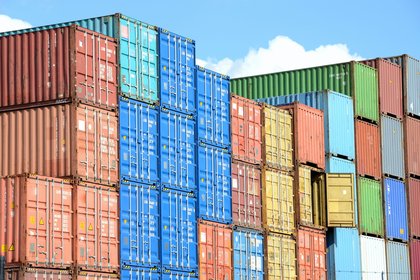
Before COVID-19 closed our borders in 2020, many of us took receiving goods from anywhere in the world for granted. Medicines, clothing, cars, appliances, industrial components, food and many more everyday goods were suddenly hard to find. Assumptions about the resilience of global supply chains were challenged on an unprecedented scale.
Honorary Research Associate Dr Germana Nicklin has been conducting research into the impact of COVID-19 on Aotearoa New Zealand’s national security, specifically in relation to supply chain disruptions. Her research included a review of literature and interviews with government officials involved in supply chain disruptions during 2020-2022.
The research will be published in a forthcoming volume on the future challenges for New Zealand’s national security, being published by Massey University Press with a planned release of December 2023.
We asked Dr Nicklin some questions about this.
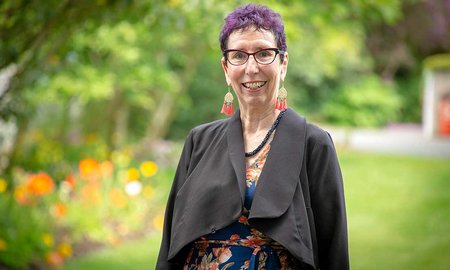
Dr Germana Nicklin.
How are global supply chains important for Aotearoa New Zealand?
They are the lifeblood not just of New Zealand’s economy but also for our way of life. We have to import things we don’t produce ourselves, as well as the widgets needed to make and distribute our own goods. An example is the flour shortage during the first COVID-19 lockdown. The flour was not in short supply, it was the packaging needed to put it onto supermarket shelves that was in short supply. On the export side, there were similar packaging problems.
What are the risks and challenges Aotearoa New Zealand faces with the global supply chain (including climate change)?
There are multiple risks to New Zealand even when there are no big disruptions. However, we have just had a pandemic, we have felt the supply chain effects of the war in Ukraine, we are in the midst of a global recession and the East Coast has experienced Cyclone Gabrielle cutting off supply lines. So disruptions to supply chains are here and they are not going away.
Other sorts of disruptions include terrorism and piracy, destruction of information systems (e.g from cyber-attacks), destruction of transport infrastructure and to energy supplies (which may also be affected by other disruptions).
When any of these happen at the same time, the effects will be unpredictable and a deep level of uncertainty will result. This sort of uncertainty occurs when the nature of the disruption is unknown, how to address it is unknown and all criteria normally used to analyse data are uncertain. All these factors happened during COVID-19.
How did COVID-19 create challenges and what were the assumptions that were proven wrong?
COVID-19 created challenges because it took us to a place of deep uncertainty. The virus behaved differently from known viruses, so assumptions based on the ‘known’ were faulty.
My research uncovered numerous faulty assumptions that affected the ways in which officials, industry and the general population responded to COVID-19. Many were about the ways in which goods move, and what affects supply chains; some were about the resilience of open markets and standard ‘supply and demand’ dynamics.
For example, officials assumed countries would continue to abide by international trade rules but some didn’t. New Zealand’s biggest trading partners, the United States and China, turned inwards, disregarding global trade rules and looking after themselves alone. As one senior official said, it was the small countries that banded together and helped one another. Understanding the flow-on effects of this change, and the implications for New Zealand, took time, as officials and industry actors re-oriented their thinking.
Many interviewees commented on their surprise at the border closing. Some were surprised by the importance of supply chains that had been invisible to them prior to the pandemic, while others were surprised that supply chain systems were not as flexible or responsive as they thought, and some were surprised at the speed with which some companies could pivot their operations.
For example, a really big assumption was that air cargo was not related to passenger flights. This assumption meant officials were unprepared for the delays in getting high value exports, such as perishable goods, out of New Zealand. Before COVID-19, passenger flights were their main means of transportation.
Such assumptions framed government policy and operational responses, with varied results.
How are the global supply chain risks and weaknesses a matter of national security for Aotearoa New Zealand?
People might be surprised to learn that supply chains pose national security risks every day. Examples are smuggling, particularly components for weapons of mass destruction, or hostile foreign states deliberately blocking supply lines.
In normal times, the functioning of supply chains is not a national security risk. It is a matter of national interest, but not of national security. It is when we get multiple disruptions at once or when a disruption is globally significant, such as the pandemic, that supply chain disruptions reach deep into society. When this happens, non-functioning supply chains affect our very lives, from the provision of food, to jobs and health. At such times, supply chains become a matter of national security. We saw this happen during COVID-19.
From your research what did Aotearoa New Zealand learn from the impact of COVID-19 on the global supply chain?
A key lesson was how we can be more resilient in the future. Supply chains are hugely complicated and their networks span individuals who create the demand for goods, to international organisations and foreign states.
We are all supply chain actors, because our actions affect supply and demand.
The Aotearoa New Zealand Government has commissioned work that will help build our supply chain resilience. The Supply Chain and Freight System Strategy will help with a much more comprehensive policy approach to the movement of goods and the Productivity Commission has a discussion paper out on the economic resilience of supply chains affected by disruptions.
These are welcome and much needed.
I think that my research points to two areas that are likely to be overlooked or seen a lesser priority, though, because they are ‘soft’ actions.
The first is the need to build strong relationships across all of Aotearoa New Zealand’s communities.
Some Māori businesses showed how deep community connections contributed to the resilience of both those communities and the business. Government agencies need to get much closer to local communities.
The second is to include the examination of deeply held assumptions in any strategic and policy thinking. We have to be able to question the unquestionable so that if the unquestionable happens, we have some idea of what might happen. One of the risks of faulty assumptions is that we are surprised by, and therefore unprepared for, the consequences.
Dr Germana Nicklin is an Honorary Research Associate at Massey and was a Senior Lecturer within the Centre for Defence and Security Studies for seven years. Her particular area of expertise is the confluence of border studies, border security and enacted policy narrative, drawing on the sociology of translation.
Related news
Opinion: The biosecurity implications of opening our borders
Dr Germana Nicklin and Teaching Fellow Dee McDonald discuss the potential biosecurity implications of reopening our borders.
Opinion: Lives bordered by COVID-19
Borders have effects, including restriction and judgements about who 'deserves' to be tested and treated. As we sit out the next few weeks or months, have regard to the effects of the Covid-19 borders on your values, says Dr Germana Nicklin.