About us
Based within the School of Veterinary Science at Massey, the Wildbase Oiled Wildlife Response team collaborates globally through research, education, training and response leadership.
Since 1998, we have partnered with Maritime New Zealand to respond to wildlife affected by oil spills and other pollution events in New Zealand.
We also coordinate New Zealand’s National Oiled Wildlife Response Team and are founding members of the Global Oiled Wildlife Response Service.
Read more about our response coordination
Wildbase’s vision is to promote research-led education in oiled wildlife response, reinforcing our reputation as a global leader in this profession.
Our aim
Through research, education and hands-on leadership, we aim to build capability in effective and efficient oiled wildlife response throughout the Asia-Pacific region.
We work to raise awareness to mitigate impacts, increase preparedness and achieve greater success in rehabilitated oiled wildlife survival globally.
Team members
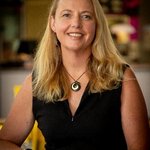
Professor Louise Chilvers
Louise leads all aspects of preparedness, planning, research and response for oiled wildlife in New Zealand and assist in increasing global awareness and preparedness. Louise is the coordinator of the New Zealand National Oiled Wildlife Response Team (NOWRT) and member of Global Oiled Wildlife Response Service (GOWRS).
Louise’s research focuses on marine wildlife, population and conservation biology, behavioural and foraging ecology and for oiled wildlife research. Studies include biological, social and economic, and management issues including compassion fatigue in emergency responders.
Bridey White
In an oil spill response, Bridey has responsibilities either in the command and control centre or in the oiled wildlife facility. She was a wildlife technician during the RENA response and was part of the oiled wildlife facility team rehabilitating oiled wildlife.
Her background is in marine animal husbandry and rehabilitation. Bridey has worked at Massey as part of the veterinary teaching hospital at Wildbase since 2005. She completed a Diploma in Veterinary Nursing and graduated with a Bachelor of Health Science in 2019.
In her current role as a technical officer, Bridey is responsible for developing and delivering training modules for oiled wildlife response and assisting with training and research. Bridey maintains a keen interest in the Wildbase Hospital and enjoys teaching bird and zoo animal behaviour in the undergraduate veterinary qualification. Bridey has a strong research interest in compassion fatigue and the cost of caring in animal care professionals.
Viviane Barquete
Vivi works in oiled wildlife response, training and research in New Zealand and internationally. She brings extensive international experience in oiled wildlife response, with a background spanning both field operations and in the command post (ICS and CIMS), supporting preparedness and response to wildlife emergencies, as well as seabird ecology and conservation.
She is a member of the Global Oiled Wildlife Response Service (GOWRS) and enjoys working with animals and people, contributing to collaborative efforts, and helping translate knowledge into practical, effective action in conservation and wildlife emergency response.
Training and courses
Wildbase offers online and face-to-face training in all aspects of oiled wildlife response. We can create custom courses tailored to your organisation's needs.
Wildbase oiled wildlife response programmes include:
- postgraduate qualifications
- veterinary teaching
- wildlife rehabilitation community
- university seminars
- specialised oiled wildlife training.
Our people are experienced researchers, wildlife oil response practitioners and trainers. As part of Massey, Wildbase staff have access to the university's world-class teaching processes and tools.
Online oiled wildlife response training
Massey and University of California at Davis have jointly developed a university-endorsed and research driven online Oiled Wildlife Response Training (OWRT) programme.
Find out more about our short courses
The Level 1 Foundations and Level 2 Rehabilitation and Facility Development OWRT courses are available for enrolment online.
Find out more about oiled wildlife response training and enrol online
Read the online oiled wildlife response brochure
Watch these short videos to understand more about what each course contains:
Research
Massey is at the forefront of oiled wildlife research. Wildbase actively take part in collaborative and in-house research to advance knowledge of best practice in the treatment and management of oiled wildlife.
See more information and research by Wildbase Oiled Wildlife Response Director Louise Chilvers:
Current postgraduate students
Current postgraduate students
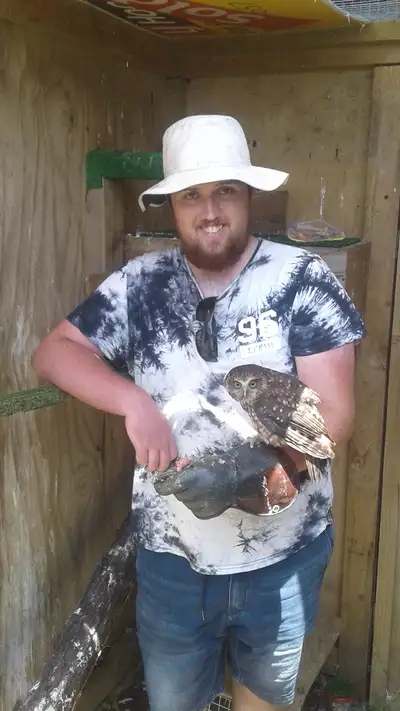
Liam Mowbray
BSc in Chemistry and Zoology (Massey University, Palmerston North) MSc in Ecology (Massey University, Palmerston North)
PhD candidate, School of Veterinary Science, Manawatū campusPreventing wildlife from becoming oiled is the priority in an oiled wildlife response. Liam's research focuses on hazing and deterring birds in relation to pollution events and the efficacy of methods that could be used within New Zealand’s ecosystems.
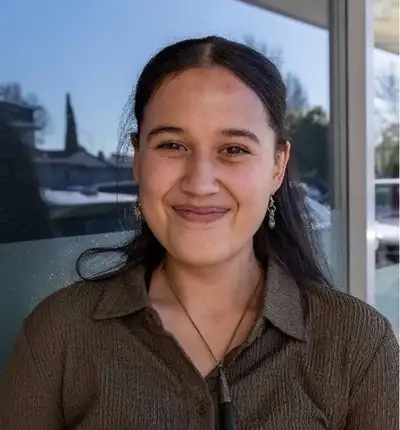
Karena Waru
BSc in Zoology
MSc in Zoology student, Wildbase Oiled Wildlife Response, School of Veterinary Science, Manawatū campusHe uri tēnei nō Ngāti Porou me Ngāti Kahungunu me Aitutaki hoki.
Karena’s research focuses on the population growth of pakake (New Zealand sea lions) in northern Rakiura (Stewart Island). Her research aims to improve understanding of the abundance, demographic structure and spatial distribution of this threatened taonga, supporting ongoing conservation and management efforts across Aotearoa.
Past students
Past students
Alex Egan
Alex Egan completed her PhD in environmental economics investigating the economic impact that marine oil spills have in remote compared to populated areas of New Zealand. Her thesis made the Deans’ Honours list for 2023.
Alex’s PhD focused on the impacts of marine oil spills to fisheries, tourism and clean-up costs to communities in both Tauranga, Bay of Plenty and Milford Sound, Southland New Zealand.
Rebecca French
Rebecca French completed a Master's of Science in conservation biology, on the impact of human disturbance on the subantarctic yellow-eyed penguin (hoiho).
Her research investigated the potential behavioural and population level impacts of human disturbance on Enderby Island in the Auckland Island group, which is a population stronghold for the penguins.
She has spent four summer seasons living and working in the New Zealand subantarctic as part of research teams, and has worked with New Zealand sea lions, fur seals and the yellow-eyed penguin (hoiho).
Diana Galbraith
Former master’s student, Wildbase Oiled Wildlife Response, School of Veterinary Science, Manawatū campus, Palmerston North
BVSc, BPhil (Vet), MWLM (Dist) Massey University, New Zealand
Diana's MSc research on New Zealand fur seals/kekeno (Arctocephalus forsteri) used stable isotope analysis on fur seal whiskers to distinguish the area of origin of pups. The database created aimed to help determine the area of origin of stranded and bycaught individuals.
Alasdair Hall
Former PhD candidate, Wildbase Oiled Wildlife Response, School of Veterinary Science, Manawatū campus, Palmerston North
BA(Hons) and MA in International Multimedia Journalism (Newcastle University, UK)
GDip in Biology (Victoria University, Wellington)
Al’s research focused on the abundance, distribution and threats to New Zealand fur seals (Arctocephalus forsteri) in the upper South Island. His research focused on 2 areas:
- how fur seal numbers and distribution in Kaikōura responded to the 2016 Kaikōura earthquake, and how proximity to State Highway 1 continued to impact these colonies
- changes in the numbers and distribution of fur seals around Banks Peninsula and throughout New Zealand, and how these could be managed during a marine oil spill.
Chris Muller
Chris Muller completed his PhD in wildlife ecology investigating the population dynamics and foraging ecology of the endangered, yellow-eyed penguins/hoiho at the Auckland Islands, New Zealand's sub-antarctic islands.
His research involved undertaking the first complete population count of yellow-eyed penguins at this species’ strong-hold, the Auckland Islands, and understanding their foraging ecology (diving and foraging locations) and diet.
Karin Sievwright
Karin Sievwright achieved first class honours for her master's thesis in conservation biology at Massey.
Her research involved monitoring the post-release survival and productivity of little blue penguins (kororā) – Eudyptula minor – that were oiled and subsequently rehabilitated following the 2011 Rena oil spill off the coast of Tauranga.
This research provides important feedback on the effectiveness of the oil rehabilitation process. It assessed whether rehabilitated penguins are able to transition to life back in the wild and have survival and reproductive rates similar to control (non-oiled) penguins.
Karin is also interested in the conservation, protection, and preservation of New Zealand’s native fauna.
News and newsletters
Find out about Wildbase Oiled Wildlife Response and other Wildbase work in the news.
Newsletter
Our News Bites quarterly electronic newsletter covers topics relevant to wildlife oil spill responses.
To subscribe, email: wildbase@massey.ac.nz
2025 newsletters
Related pages