Our purpose
Our research across fields is focused on fostering real benefits for communities. Through collaboration, we explore:
- plant-based fibre and dye research
- textiles design and development
- circular economy and zero waste strategies
- developing innovative, new production processes for natural fibres, such as muka (harakeke)
- developing research methodologies that are grounded in mātauranga and indigenous knowledges
- understanding the social, cultural, economic and environmental impacts of agricultural activity.
Based in Aotearoa New Zealand, our work is Te Tiriti o Waitangi led and prioritises Vision Mātauranga. While our work is place-based and local, our ways of working are relevant around the world.
Our core research programme explores the potential impacts of developing a harakeke (muka fibre) industry in Aotearoa in partnership with iwi and hapū.
Context
Harakeke is an Indigenous plant and taonga species. It has special importance for many iwi, hapū and other Māori groups. It supports environmental sustainability through:
- improving the health of waterways
- emission reduction planning on Māori farms
- contributions to social health (oranga) and cultural health (hauora).
Pā harakeke – a planting of selected varieties of harakeke chosen for their muka (fibre) or raranga (weaving/plaiting) – is beloved by many communities. There is broad interest in using harakeke in Māori enterprises.
Our local Aotearoa New Zealand fashion, clothing and textile (NZFCT) sector needs to reimagine itself to address local and international sustainability challenges, such as overconsumption, waste and pollution. To achieve a thriving and sustainable NZFCT sector, we need to explore ways to:
- grow a skilled workforce
- advance local materials manufacturing
- enable a circular economy
- promote Aotearoa fashion, clothing and textiles.
Cluster members
Meet the researchers behind the research cluster.
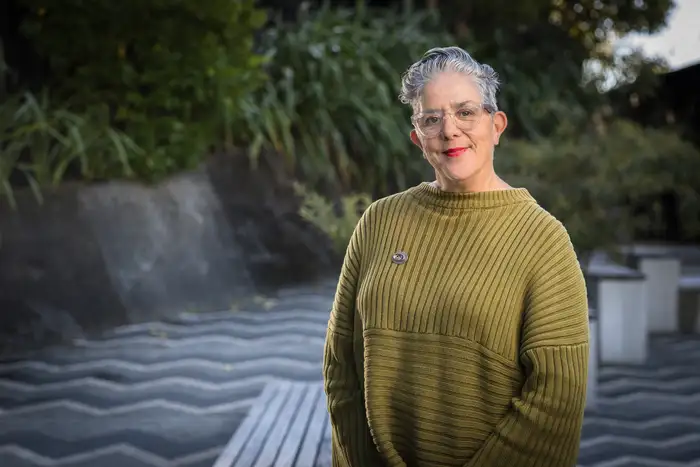
Professor Huhana Smith
Professor Huhana Smith is climate action researcher, exhibitor and community leader who’s led by mātauranga Māori. The sentiment that success is not individual, but built on the strength of many, reflects Smith’s research kaupapa and ongoing legacy of environmental and cultural repair.
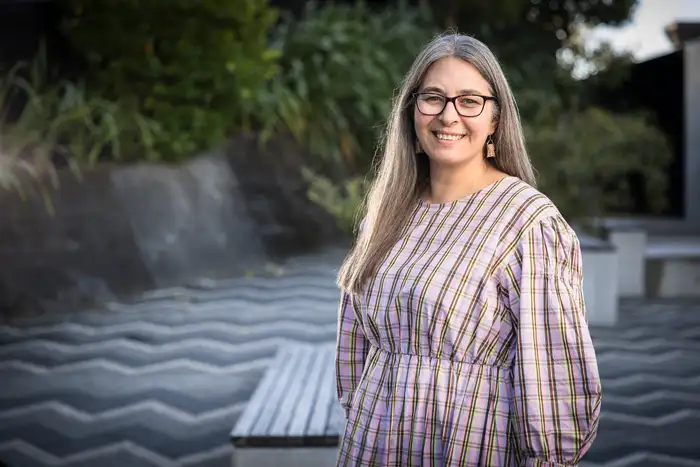
Angela Kilford
Angela Kilford is an artist, designer, educator and researcher living in Te Whanganui A Tara. Her current research practice focuses on how mātauranga Māori and Māori participation can inform textile design practice and research to produce ways to benefit Māori communities and to sustain Papatūānuku.
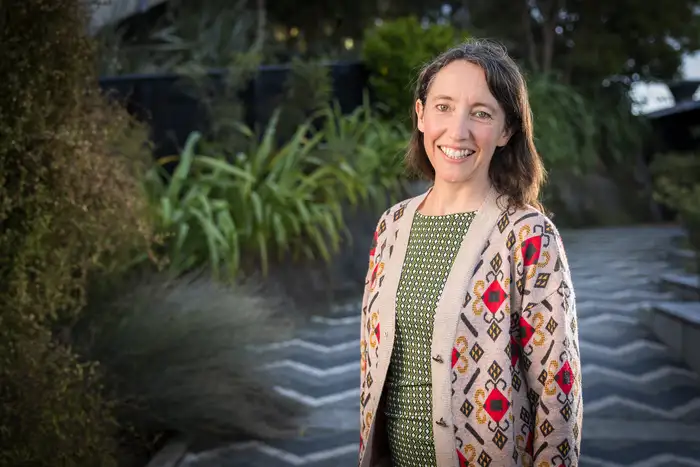
Associate Professor Faith Kane
Faith Kane is a textile and materials design researcher and educator, driven by the belief in the transformative potential of textile and material thinking to shape sustainable futures. Her work is grounded in place-based and transitional approaches that foster innovation, connection, regeneration and meaningful change. Find out more about Faith’s work at www.faithkane.com
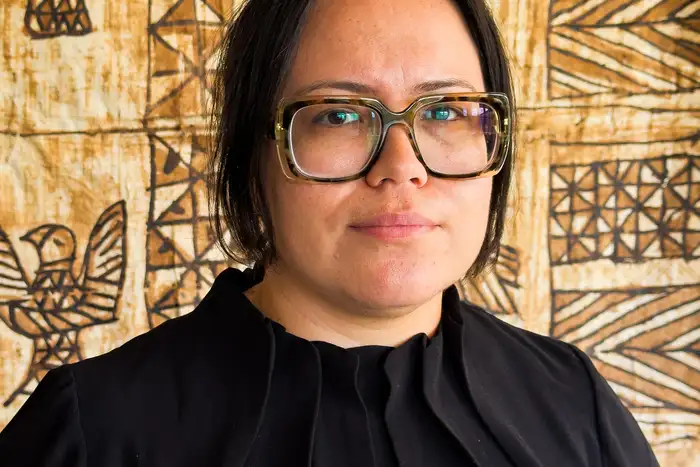
Sonya Withers
Sonya Withers is an Aotearoa-born Pacific creative with ancestral ties to Scotland and Sama'i, Falelatai, Sāmoa. She uplifts Māori and Pacific values in design through textiles and critical contextual studies. Her work explores Aotearoa-Moana practices that support Pacific communities, challenge Western design norms, and advance regenerative futures.
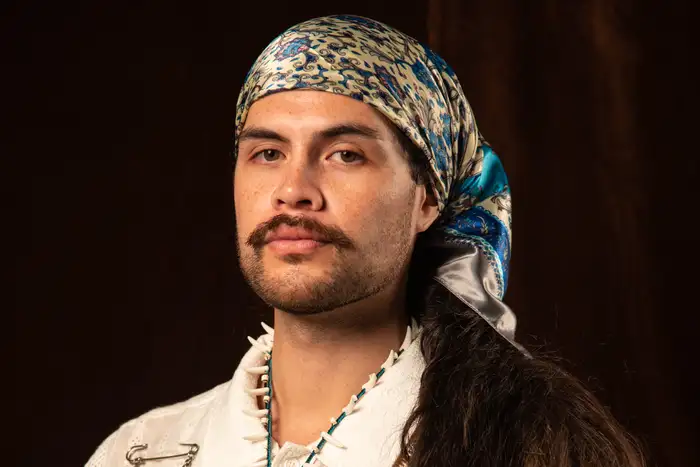
Matt Tini
Matt Tini is a lecturer at Toi Rauwhārangi and proud uri of Waikato, Ngāti Rākaipaaka, and Ngāti Kahungunu. Matt makes art as a way of seeing himself – tangata whenua in a shifting world. He unravels the layered, living complexities of Māori identity to meet the colonising gaze with graceful defiance. Matt has exhibited photographic, video and textile-based works in solo and group exhibitions.

Amy Sio-Atoa
Amy Sio-atoa is a Lecturer at Toi Rauwhārangi, specialising in sustainable textile coloration and bio-materials innovation. With expertise in textile surface design she has spent the last 4 years teaching intensively. Her Master of Design (Textiles) explored decolonial approaches to critiquing and embellishing myths of the tropical exotic from a European perspective.

Dr Rangituatahi Te Kanawa

Peter Brorens
Peter Brorens is a scientist in AgResearch's Bioproduct & Fibre Technology Team, specialising in fibres and materials. His research includes processing wool and plant-based fibres, developing biomaterials and composites and testing these materials. With an interest in engineering, Peter aims to enhance fibre processing. He has studied harakeke fibre for composite reinforcement and textile use.
Research projects
Muka Tāngata o te Taiao
Muka Tāngata o te Taiao The goal is to increase local materials manufacturing by re-establishing a harakeke industry.
This research was funded by a SREF Seed Fund. It aligns with the vision of our rangatira and weaving expert Rangi Te Kanawa. The goal is to increase local materials manufacturing. The cluster researched re-establishing a harakeke industry that is:
- circular
- regenerative
- sustainable
- renewing pā harakeke o te whānaungatanga.
This programme builds on research already developed in Te Aho Tapu Hou. It seeks to further optimise textile processing technologies to:
- develop apparel-grade textiles
- develop novel textiles that meet the needs of the NZFCT sector
- identify and develop uses for waste streams
- make it easier for iwi, hapū, whānau and industry to use harakeke.
Te Aho Tapu Hou
Te Aho Tapu Hou Established that muka fibre can be processed using wool fibre technology, without the use of harmful chemicals.
This project was led by Faith Kane in partnership with Te Kanawa and with collaborators Brorens (AgResearch), Ruka (VUW), Smith and Kawana-Brown.
It created a proof of concept that wool fibre processing technology can be adapted, without using harmful chemicals, to spin mechanically extracted muka fibre that could then be used to make high quality textiles in Aotearoa.
The project also optimised Te Kanawa’s muka fibre extraction technology. The improvements allowed different waste streams like green matter and harakeke to be separated during fibre extraction.
The researchers also developed a Mātauranga Māori based evaluation tool.
Te Rangianiwaniwa a Te Harakeke – The Harakeke’s Rainbow
Te Rangianiwaniwa a Te Harakeke – The Harakeke’s Rainbow The goal is commercial production of natural dyes for muka to give weavers an alternative to synthetic dyes.
Based in Mātauranga Māori, this study brings together textile researchers, Māori practitioners and scientists to learn more about native plant dyes and fibres. Science and the values of iwi partners Ngāti Tukorehe (Kuku, Horowhenua) were combined. This was important so the results of the research benefit iwi and their whenua.
We will test our methods on by-products from industry through wānanga with iwi weavers. Our goal is to achieve commercial production of natural dyes for muka so Māori weavers have another option to synthetic dyes.
Me Whakaoreore Tātou
Me Whakaoreore Tātou GIS Mapping and LiDAR scanning of Tahamata Incorporation Land holdings to reduce greenhouse gas emissions.
This project followed a decade of mātauranga Māori-led climate change adaptation research by Tahamata Inc, an iwi-owned farm connected to Ngāti Tukorehe. It was funded by the NZ Agricultural Greenhouse Gas Research Centre.
The project uses detailed GIS and LIDAR mapping to identify how to reduce greenhouse gas emissions. This includes:
- land-use transitions
- wetland restoration
- the return of pā harakeke for sustainable fibre production.
Limited LIDAR data for the coastal zone around Tahamata is challenging. It requires more funding to create detailed spatial layers as well as environmental and cultural landscape mapping.
Insights from this research will contribute to broader efforts like wetland re-wetting, which could seriously reduce emissions. This supports environmental sustainability and iwi-led economic and cultural priorities.
Collaborators and funders
Projects led by this cluster have involved collaboration and support from many organisations. Our partners include:
- AgResearch
- Victoria University of Wellington
- University of Canterbury
- Ministry of Business, Innovation and Employment
- Ngā Pae Maramatanga
- NZ Agricultural Greenhouse Gas Research Centre
- Health Research Council
- SfTI National Science Challenge
- SREF Seed Funding.
Research publications
Design
Design
Harakeke Nonwovens and Biocomposites in 'Intersections Exhibition: Collaborations in Textile Design Research', Textile Design Research Group at Loughborough University in collaboration with the Royal College of Art and Imperial College London, 12 - 14 September 2019 (design)
Kane F, Ruka T, Kilford A, Le-Guen MJ, Brorrens P, Komene K
Harakeke Nonwovens and Biocomposites in 'Towards a Critical Rurality', Rural Design Week, 31 May - 9 June, San Potito, Sannitico, Italy (design)
Kane F, Ruka T, Kilford A, Le-Guen MJ, Brorrens P, Komene K
Book chapters
Book chapters
Learning from Harakeke: Towards a Network of Knowledge for Textile Design in Aotearoa New Zealand (chapter)
Design and Nature: A Partnership
Kane, Faith; Smith, Huhana; Te Kanawa, Rangi; Ruka, Tanya Maree Te Miringa Te Rorarangi; Kilford, Angela
Harakeke provides a wide platform to weave and construct functional items.
Processing the leaf to fibre, the fibre to threads and dyeing the threads brings an awareness of te taiao, which is a crucial part of whakapapa. Harakeke creates possibilities for new enterprises within renewed industries and offers potential employment opportunities for Māori communities. In noting the harakeke plant as a whole-of-system healer, the potential of Indigenous agency and innovation contributes to economic growth through distinctive research with, and development of, matauranga Māori around harakeke. Faith Kane is an immigrant to New Zealand from the Midlands in the UK and has lived in Wellington since 2016.
Journal articles
Journal articles
Moana (Pacific) Expressions of Design: Setting the Conditions for Intergenerational inquiries through Learning and Creative Practice
Art/Research International: A Transdisciplinary Journal
Withers, Sonya; Harper-Siolo, Charlotte; Dunstall, Samuel; Vaima'a, Pelerose; Gibbs, Kristina; Te'o-Faumuina, Alexander https://journals.library.ualberta.ca/ari/index.php/ari/article/view/29757
Conferences
Conferences
Te Muka Taura: a site-based exploration of harakeke for dye extraction and muka colouration
This paper reflects on how different perspectives on knowledge, the threads and their associated values can be honoured within collaborative research. This is explored through the lens of a recent textile design research project: Te Muka Taura. The research project explores the use harakeke for dye extraction and muka colouration (Te Muka Taura) and aims to improve understanding of regionally specific plant dye colourants. This was achieved through collaboration between textile researchers, Māori practitioners and scientists. Funding was provided for the project by Science for Technological Innovation from June 2022 until October 2023.
Based in Mātauranga Māori (Māori knowledge), the project has advanced knowledge of the colouration of muka towards sustainable textile practices.
Mapping the benefits of collaborative textile research in Aotearoa New Zealand (conference oral presentation and published conference proceedings)
Kane, Faith; Kilford, Angela; Withers, Sonya; Ruka, Tanya
This paper critiques the traditional focus on value chains in textile design research, advocating instead for a benefit chain approach that prioritises fairness and equity. By looking at projects that used multiple disciplines in Aotearoa, it argues that textile research should address systemic injustices linked to capitalism, imperialism and colonisation, which dominant design methods support. The values of Indigenous and other communities must be considered from the start so the benefits of research are shared fairly and feel local and specific to one place. It argues that doing so leads to fairer and more equitable outcomes contributing to decolonisation and (re)indigenisation.
Interconnected Futures: material practices and knowledge-based systems in the academy at the Pivot 2021 Conference
Kane, Faith; Withers, Sonya; Kilford, Angela
This conference examined the changing role of textile design in addressing global environmental, economic and social crises. It prioritised Indigenous practices found across Te Moana nui a Kiwa which are based on place and relationships. Presenters reflected on the tensions experienced in integrating these knowledge systems within academic institutions. They explored how rewiring and co-creating textile design practices can contribute to a more just and interconnected future for Aotearoa.
The discussion highlighted the need to recognise Indigenous methods as valid rather than "alternative" within research and teaching contexts.
Exploring a place-based approach to developing new materials for sustainable futures: Natural fibre composites in New Zealand at the Textile Intersections conference 2019 (conference paper in published proceedings)
Kane, Faith; Kilford, Angela; Ruka, Tanya; Le-Guen, Marie Joo; Brorrens, Peter
This paper explores how design founded on place and relationships can drive positive change in materials design, focusing on harakeke in Aotearoa New Zealand.
The approach drew on notions of place-based design and textile thinking, and featured a collaboration between:
- university design researchers
- an agricultural and a forestry/biomaterials research institute
- an independent designer
- an expert in traditional harakeke weaving.
The study explored how to re-establish a harakeke industry that addresses environmental, social and economic challenges. Processing trials used Indigenous weaving practices with industrial techniques, revealing potential uses for sustainable materials in architectural surfaces and packaging.
Weaving a Sustainable Future for Aotearoa New Zealand: Learning from Harakeke at the Textiles and Place Symposium (conference paper)
Kane, Faith; Ruka, T.; Te Kanawa, R.; Smith, H.
This paper explores how harakeke can help develop a sustainable textile industry in Aotearoa. By integrating cultural, environmental, social and economic considerations, researchers propose a renewed harakeke fibre industry that restores ecosystems and supports Indigenous knowledge.
The study shows textile design methods inspired by the significance of harakeke, maps recent innovations and draws parallels with European flax revival. Several ongoing projects illustrate how harakeke can reshape sustainable textile practices.
Mātauranga Moana: uplifting Māori and Pacific values of conceptualisation over western co-design constructs at The 7th International Conference for Design Education Researchers.
Design Research Society, Learn X Design 2023 (conference paper in published proceedings) Withers, Sonya; Stokes, Georgina
This paper critically explores the difficulties that come with using Western co-design methods with Indigenous and diasporic communities in places like Aotearoa. It argues that these methods risk imposing neoliberal ideologies on resilient Māori and Pacific knowledge systems, values and collective design approaches.
The paper is grounded in the authors' Māori whakapapa, Sāmoan gafa, and relationship to Te Tiriti o Waitangi. Its discussion is grounded in an example with a collaboration with a local healthcare service aiming improve access for Māori and Pacific tamariki.
Panels
Panels
Working Beyond the Centre Panel: Intersectional Materialisms, Post Humanism
We hosted a panel that explored how art practices which combine multiple identities and art forms can inspire new thinking about the relationships between all things, how to challenge the effects of colonialism and how to restore and connect to Indigenous ways of being.
The panel focused on ‘interference methodologies’—how research and teaching can adjust and disrupt dominant ways of thinking and knowing.
Recent investigations within te ao Māori, Pākehā and tauiwi knowledge were presented, including:
- collaborations between artists and scientists working within local ecologies
- harakeke fibres
- mineral and bio-based dyes and pigments
- bio-based polymers
- the circular bioeconomy
- more-than-human networked media.
Contact us
We are eager to work together with others. If you want to partner, have ideas for future events, or want to discuss our research, please contact us.