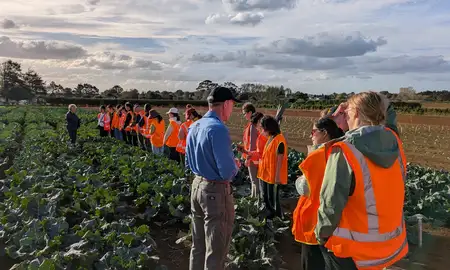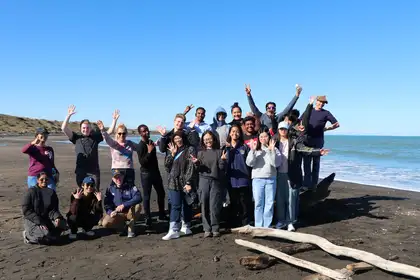
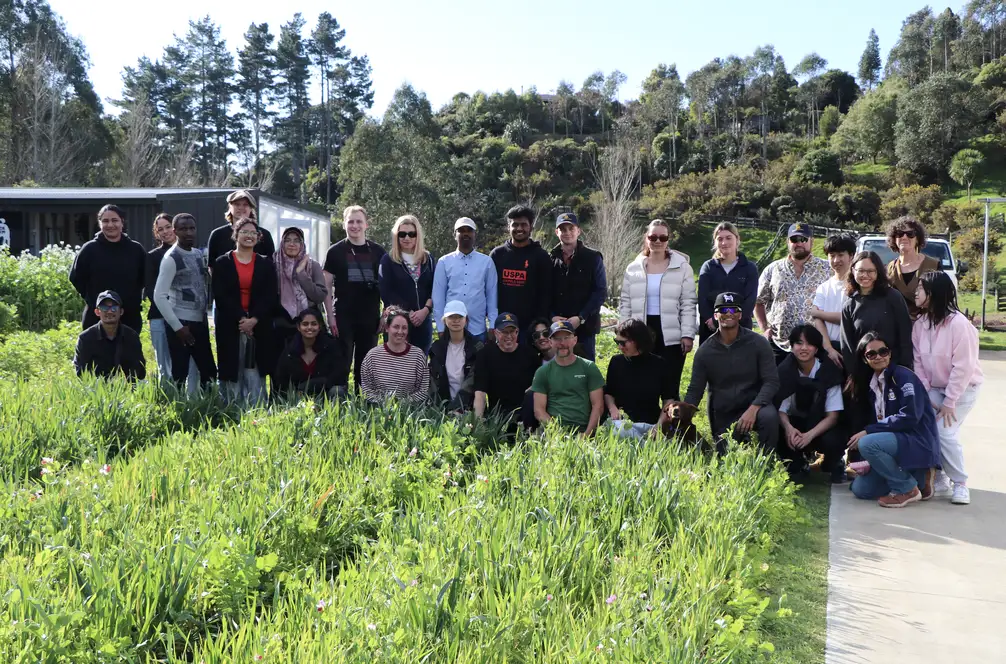
Bachelor of Agriculture Science and Agribusiness students exploring agricultural and food production systems in Taranaki.
Visiting New Zealand’s fruit bowl
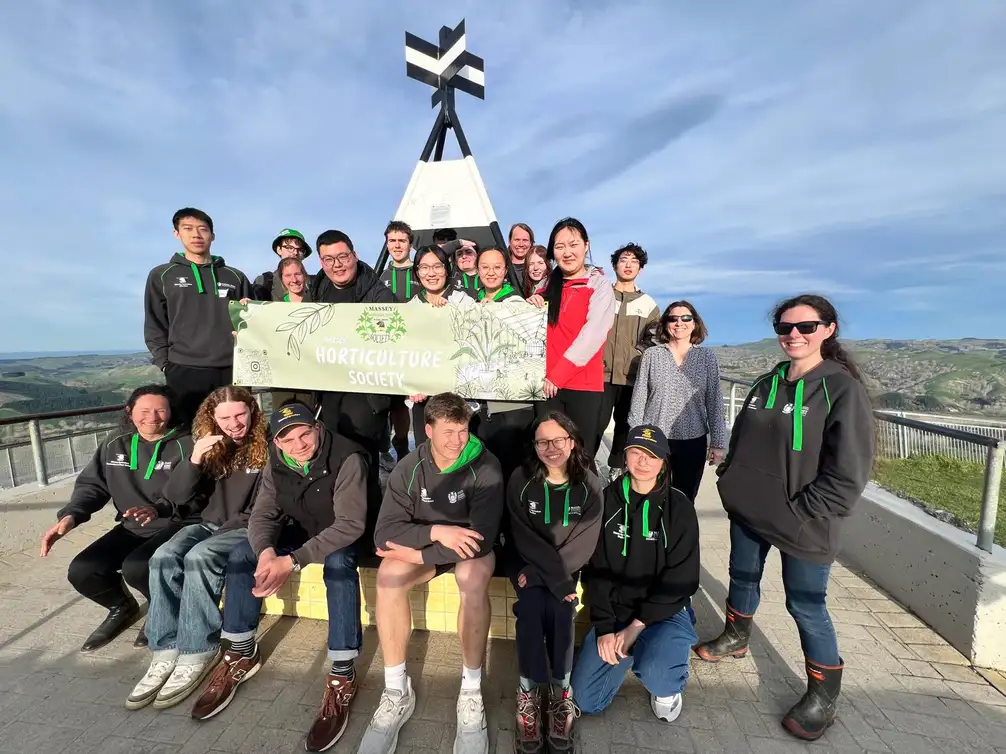
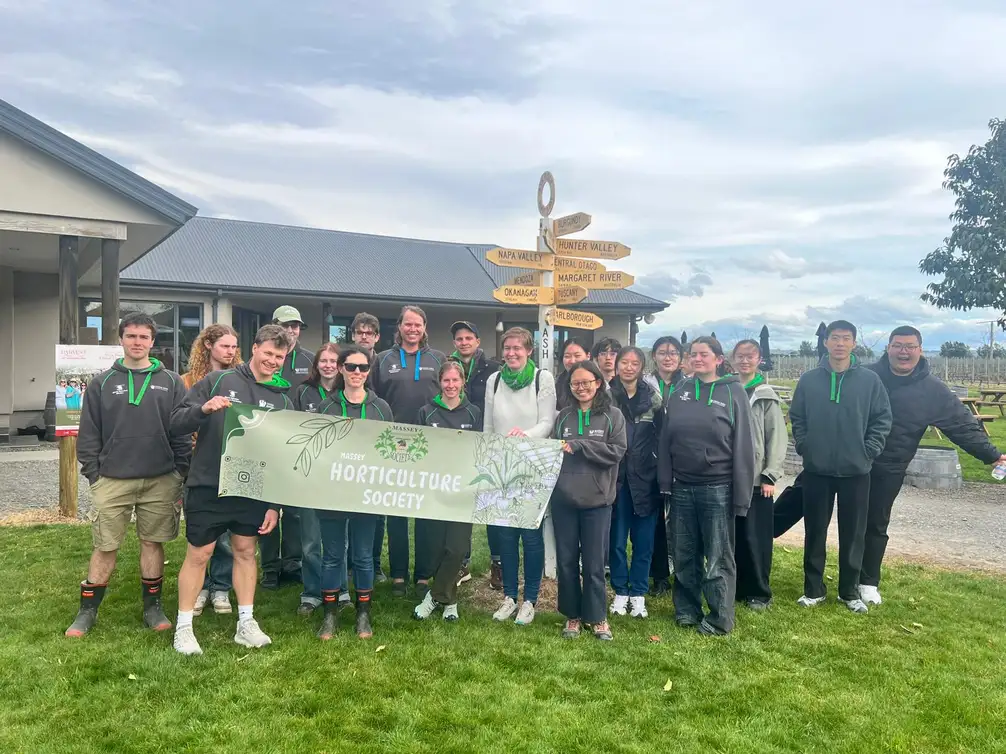
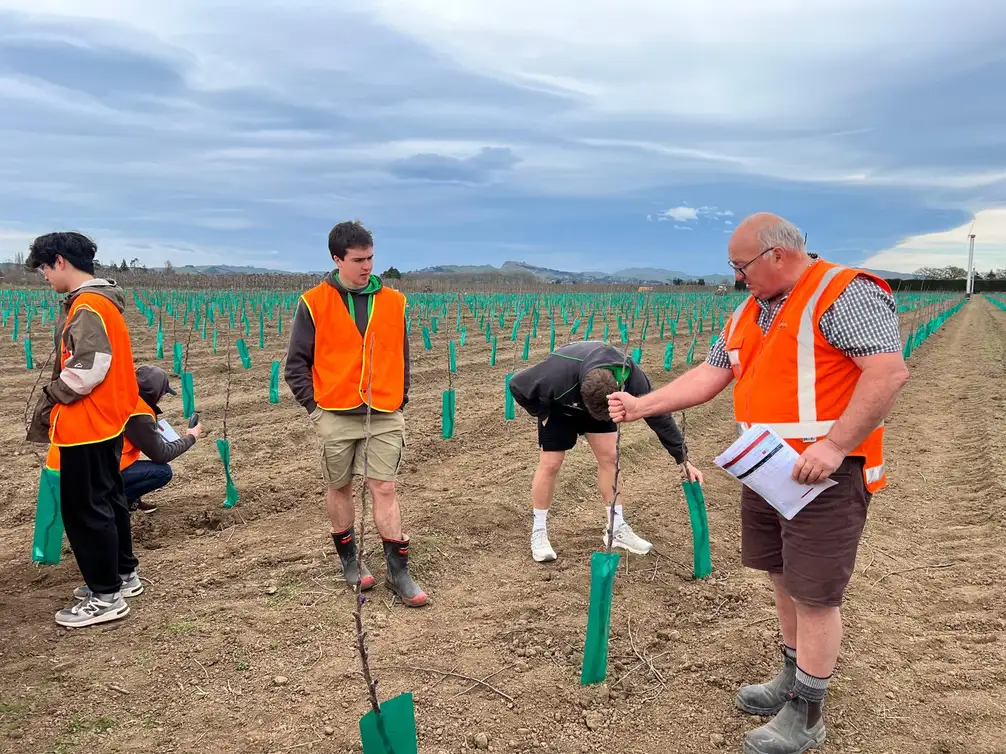
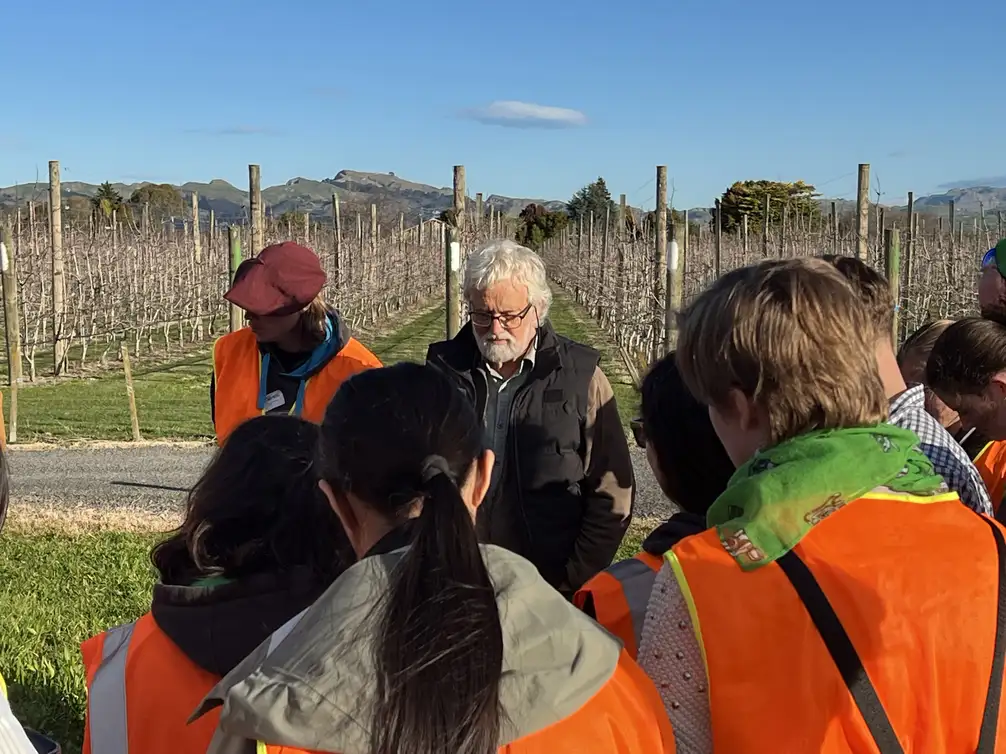
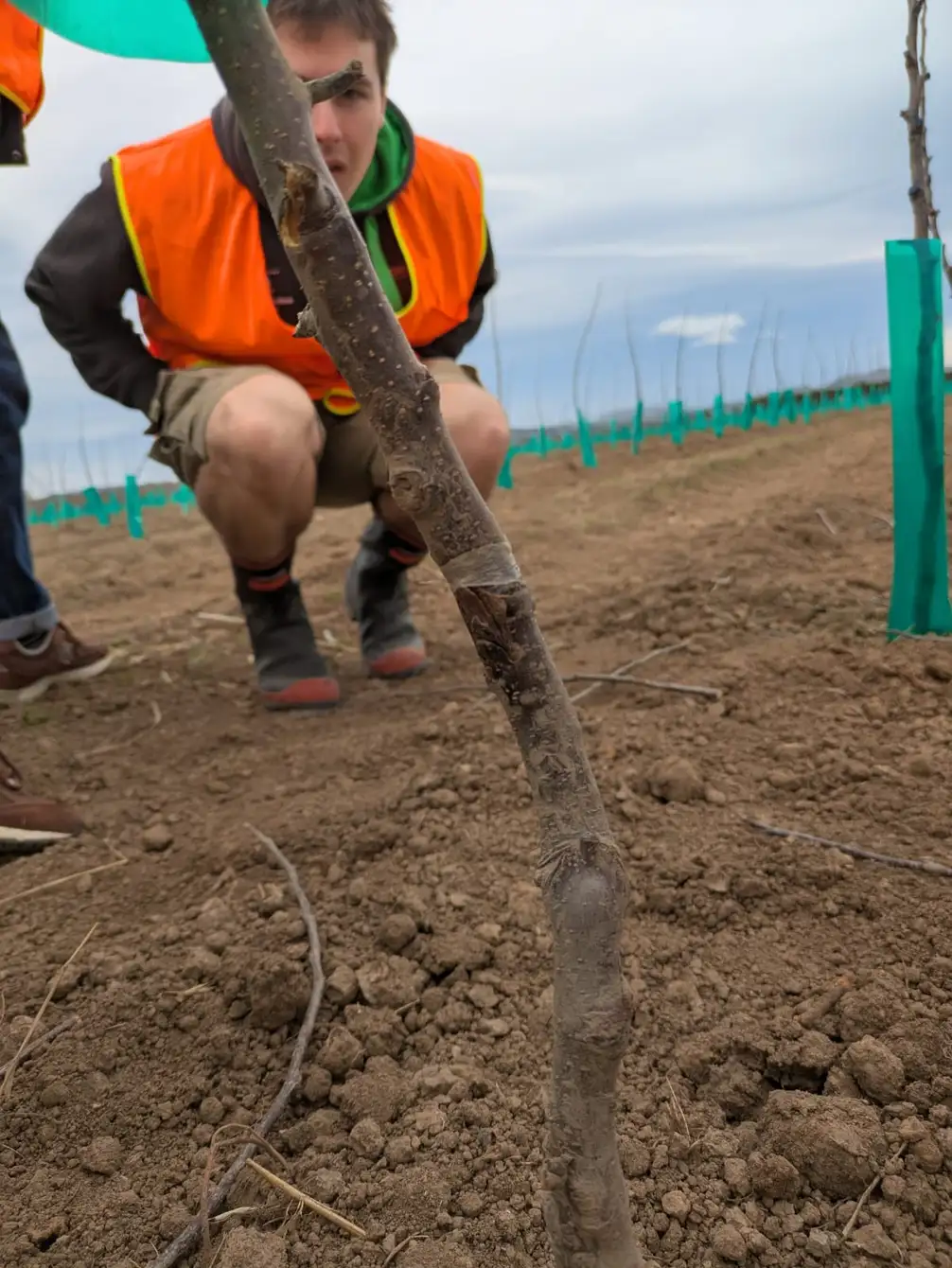
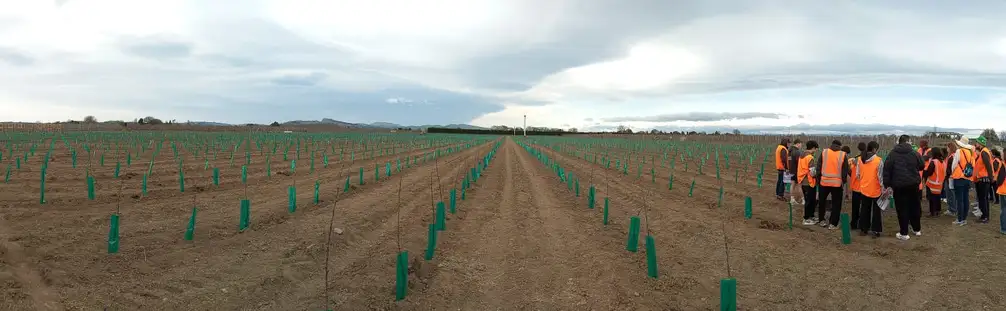
Horticulture and plant science students spent two days exploring the heart of Aotearoa New Zealand’s horticulture industry, gaining insights into orchards, vineyards and sustainable cropping systems while building professional connections.
Nestled behind the Ruahine Ranges, Hawke’s Bay’s dry, temperate climate and sea breeze make it the country’s largest fruit-producing region. With a horticultural history dating back to 1851, the region remains a hub of innovation, tourism and fruit production.
The trip began at Bioeconomy Science Institute’s Plant & Food Research in Havelock North, where students learnt about apple breeding, phenotyping techniques and sustainable pest management. They toured orchards, greenhouses and entomology labs before visiting Apatu Farms, Korokipo Vineyard and the LandWise Research Centre.
Day two included a hands-on look at commercial operations at Mr Apple’s Blythe orchard and packhouse, including seeing a robotic harvester at work, an organic vineyard at Ash Ridge Wines (complete with a bit of wine tasting!) and a scenic stop at Te Mata Peak.
First-year Horticultural and Plant Systems student Milla Phipps described the trip as an awesome experience.
“It was great to meet so many leaders passionate about the horticultural sector. As a distance student, the human connection and engagement was also invaluable.”
Bachelor of Horticultural Science programme leader Dr Svetla Sofkova-Bobcheva says the region is the perfect place for budding horticulture enthusiasts to see the dynamic industry in action and meet the people they’ll be working alongside to continue the legacy into the future.
Agriculture and agribusiness students explore Taranaki
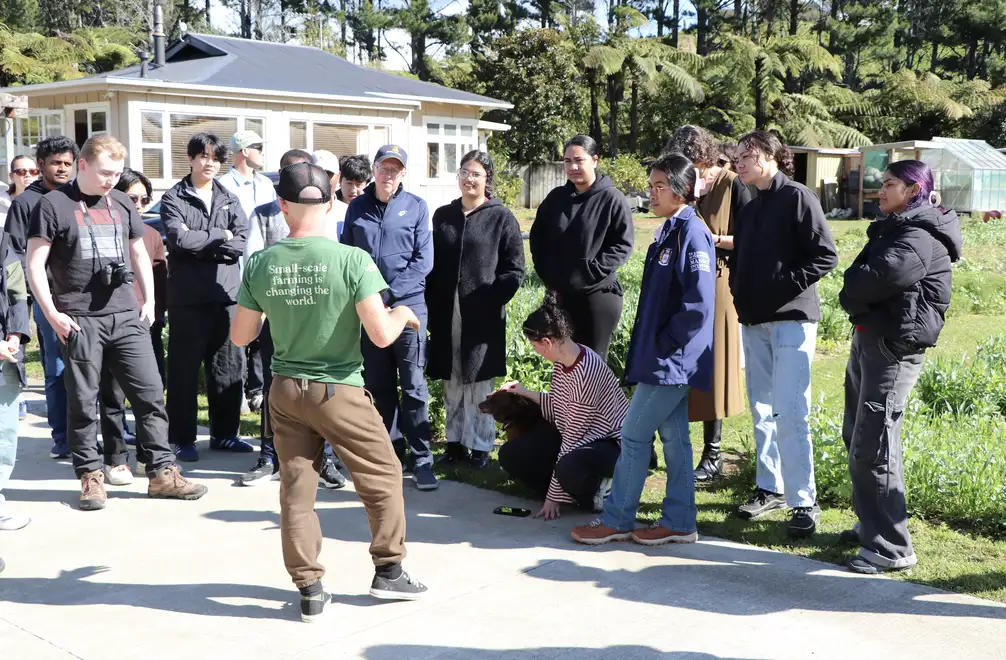
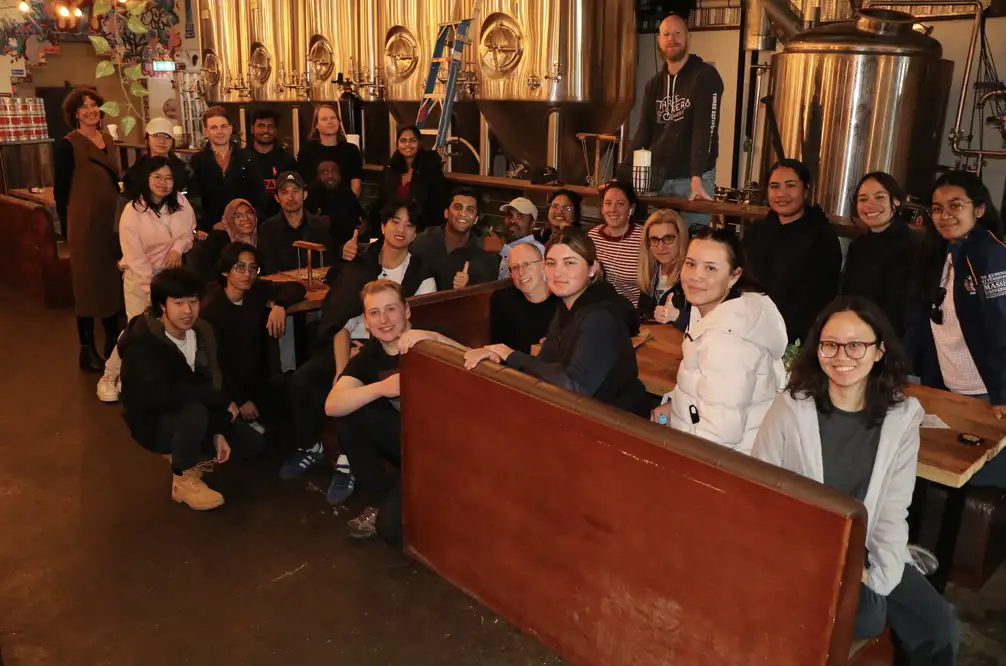
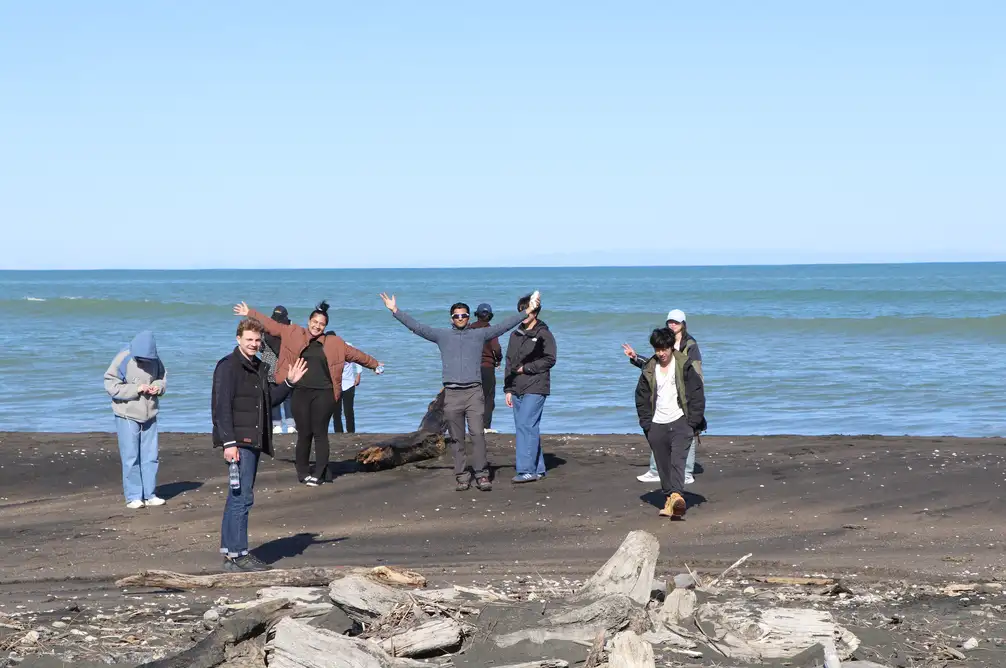
Bachelor of Agriculture Science and Agribusiness students spent three days in Taranaki, exploring agricultural and food production systems from farm to product.
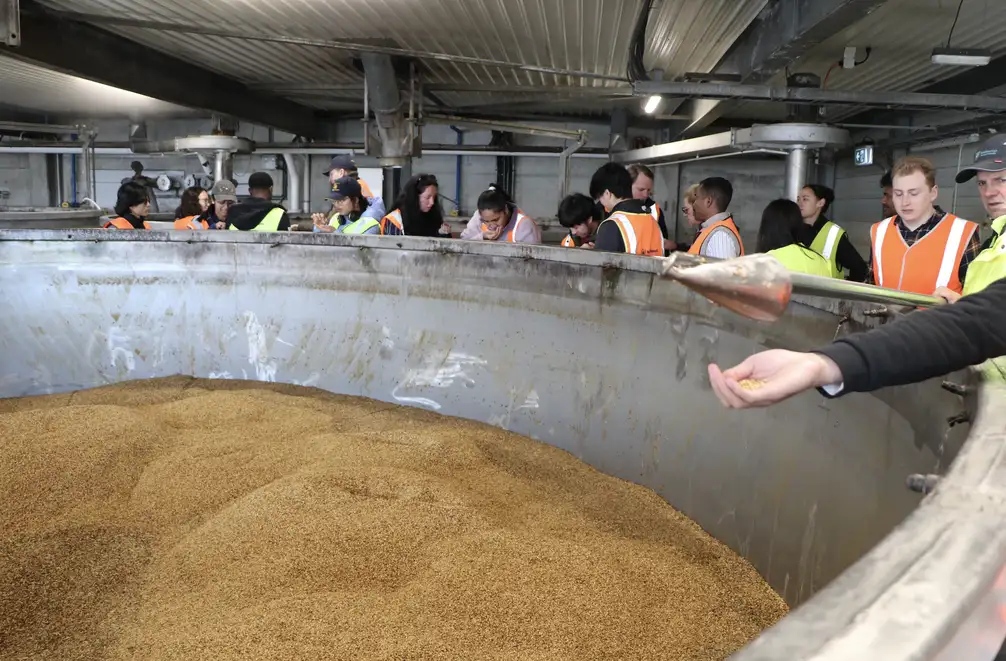
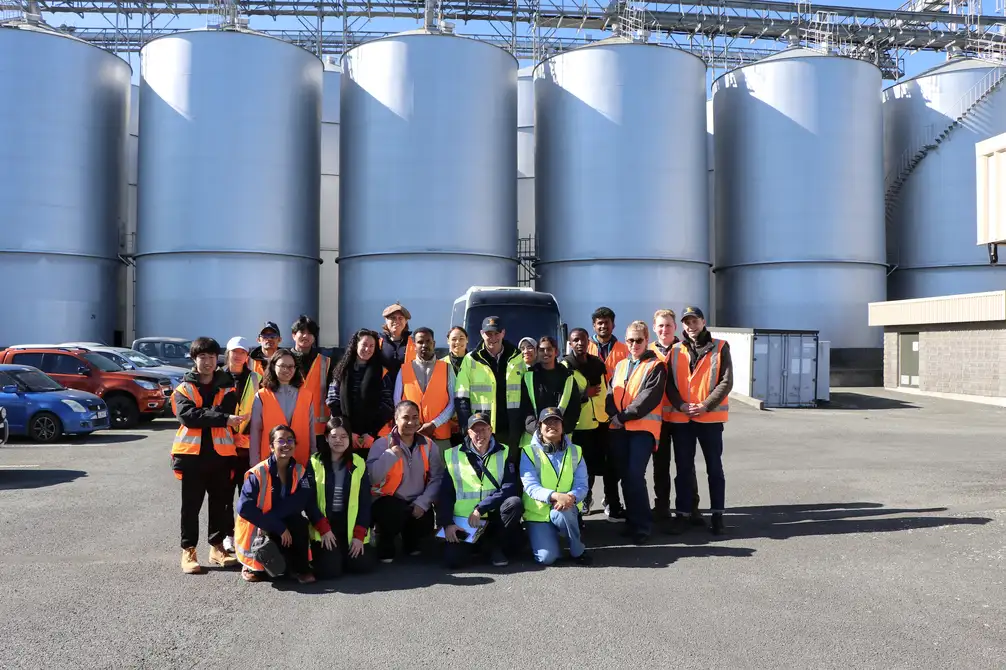
The journey began with a tour of Malteurop, where students learned how barley becomes high-quality malt for brewing and food production. Dairy Trust Taranaki showcased high-quality research and solutions in agriculture, highlighting the integration of farm management and environmental stewardship.
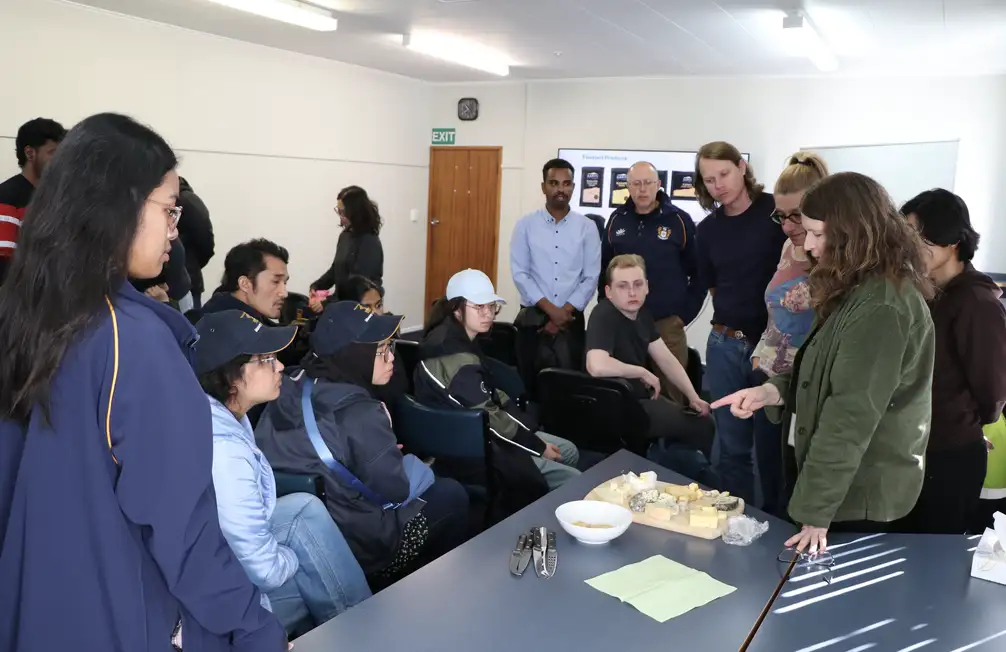
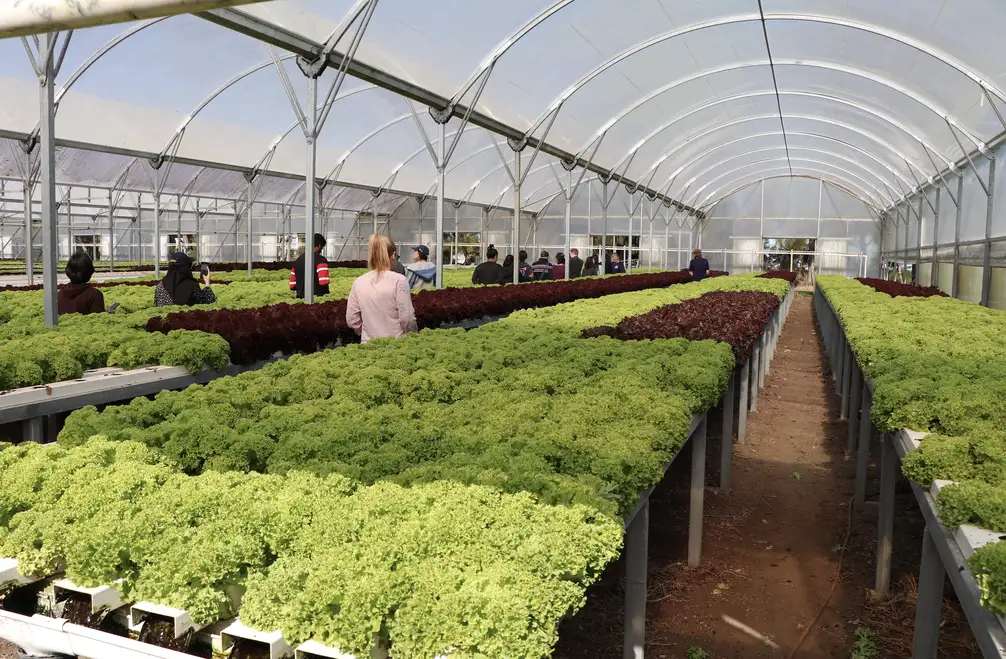
Day two included visits to Venture Taranaki, sustainable crop growers on Roebuck Farm and small-scale craft brewery The Three Sisters, illustrating connections between crop production and food processing. The final day explored large-scale dairy processing at Fonterra in Eltham and hydroponic lettuce production at Salad Brothers, which involves growing fresh greens all year using nutrient-packed water rather than soil.
The trip gave students a deeper understanding of New Zealand’s agricultural value chain, alongside getting to explore the region, meet new people and broaden their perspective in the agriculture and agribusiness space.
“The trip was incredibly informative and was an amazing opportunity to see first-hand how New Zealand farmers are innovating and succeeding,” Abdiwali Hire says.
Bachelor of Agribusiness programme leader Associate Professor Elena Garnevska says the students gained a great understanding about how raw materials are transforming to high value products.
Close-up on animal nutrition
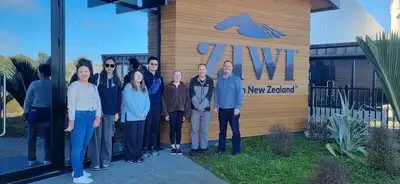
Animal Science students had the opportunity to visit Ziwi’s factory in Awatoto, Napier to see pet food development and manufacturing in action. They gained firsthand insight into the science, technology and innovation that go into producing high-quality nutrition for pets.
“These experiences are invaluable for our students,” Associate Professor in Companion Animal Science David Thomas says.
“As the only degree in New Zealand dedicated entirely to animal science, applying hands-on learning where we can for areas across nutrition and growth, genetics and breeding, welfare and equine science is important to help students connect what they learn in lectures and labs to real world-applications.”
The practical learning continued the following week with a visit to Wellington Zoo to explore animal nutrition, welfare and health in a wildlife setting.
Environmental students explore storm impacts on the East Coast
Professor of Physical Geography Ian Fuller and Senior Lecturer Stuart Mead led Earth and Environmental students on a field trip to the East Coast to investigate the impacts of recent storms and gain firsthand experience in disaster-affected landscapes. The group visited areas severely affected by Cyclone Gabrielle in Hawke’s Bay and Tairāwhiti, witnessing the effects of floods, landslides and erosion, and how the landscape has responded to these extreme events.
Students learned about flood hazard mitigation strategies in Wairoa and connected with Gisborne District Council staff and landowners directly affected by the cyclone. They also engaged with industry professionals from Tonkin & Taylor, who shared insights from post-disaster investigations and demonstrated how scientific research informs practical recovery, planning and resilience-building.
The trip sparked discussions about other natural hazards in the region – including earthquakes and tsunami risks, helping students understand the broader context of hazard management in Aotearoa.
“Seeing the scale of these events firsthand gives our students a perspective that can’t be captured in the classroom. It’s a powerful reminder of how humans interact with natural systems and the importance of evidence-based approaches to safeguard our environment and communities,” Professor Fuller explains.
Exploring Aotearoa’s geological wonders in the Central Plateau
Earth and Environmental Science students also explored the Central Plateau with Professor of Volcanology Gert Lube, gaining hands-on experience with the geological features and natural processes that shape Aotearoa’s unique landscapes.
The trip allowed students to connect classroom theory with real-world observation, deepening their understanding of Earth systems and the ways human activity influences the environment. It also allowed them to meet with experts from Geosciences New Zealand and encouraged them to think critically about contemporary environmental challenges, preparing them to approach future solutions with knowledge, creativity and cultural awareness.
“The Central Plateau is one of the most active volcanic regions on the planet, so being able to study these landscapes in person gives students a unique perspective on Aotearoa’s natural forces and the responsibility we have to understand and respect them,” Professor Lube explains.
Ready to learn by doing?
Our students are out in the field learning, exploring and shaping the future of Aotearoa’s land, animals and environments. Join them and turn your curiosity into hands-on experience, real-world impact and a career that matters.
Learn more about studying in the School of Agriculture and Environment.
Related news
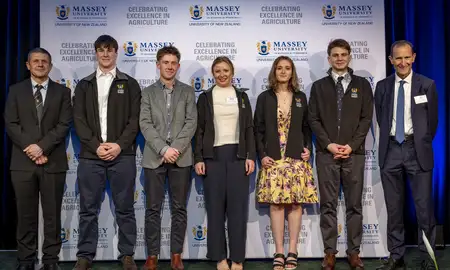
Celebrating rising stars at the 2025 Agriculture, Horticulture and Environmental Science Awards
The future of Aotearoa New Zealand’s primary industries was in the spotlight at the 32nd annual Agriculture, Horticulture and Environmental Science Awards in Manawatū last Friday.
Propagating success with updated degree offering new pathways for horticulture careers
Te Kunenga ki Pūrehuroa Massey University’s Bachelor of Horticultural and Plant Systems has been introduced as an updated qualification designed to help students harness the power of plants, shape the future of sustainable plant-based food systems and meet the needs of Aotearoa New Zealand’s thriving horticultural industries.
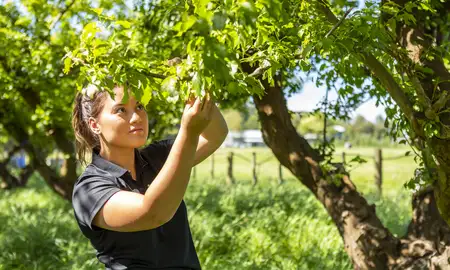
Sprouting success: Students hit the road to gain firsthand insight into horticulture industry
A group of horticulture students took their learning beyond the classroom in April, travelling across the North Island to connect directly with New Zealand’s horticultural industry.