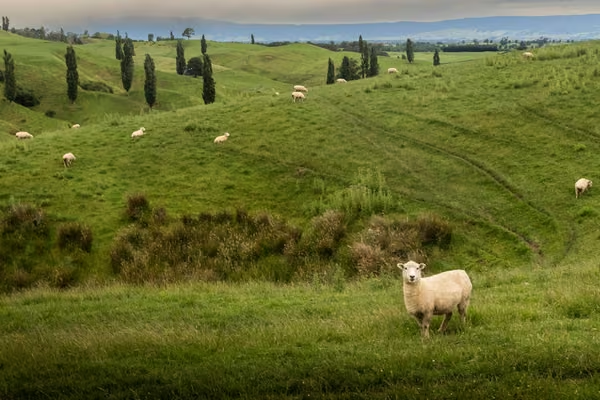
Hill country farms – often steep, harder-to-manage land – have traditionally relied heavily on sheep, but that balance is changing.
Beef cow numbers are starting to recover across the country. This reflects a mix of better prices for farmers, ongoing labour shortages and the practical benefits cattle bring to pasture management and parasite control in sheep farming. For many farmers, cattle are an appealing option because they can simplify operations without reducing overall returns.
The recent Te Kunenga ki Pūrehuroa Massey University study examined the performance of a range of typical hill country farming systems in the North Island to understand what drives profitability. A key finding revealed that bigger cows are not necessarily better.
Emeritus Professor Steve Morris says heavier cows eat more feed but don’t always produce enough extra value to justify the cost.
“Moderate-sized cows, around 500 kilograms, are more profitable because they consume less feed to maintain themselves through the year and they produce calves that are efficient relative to their size,” he explains.
The research shows farm profitability depends heavily on how well cows perform each year, with the two critical factors being how many calves are raised and how heavy those calves are when they’re ready to be sold. Even small improvements made a difference, with modelling showing that increasing the number of calves raised from 84 to 90 per 100 cows significantly lifted farm income.
Heavier calves also earn more, making good pasture and animal management essential.
The study also highlighted the benefits of crossbreeding, particularly using Angus and dairy-origin (Friesian) cattle.
“Crossbreed cows can be cheaper to source, produce heavier calves and deliver better overall returns in many systems. In some cases, their offspring when mated to Angus bulls can also qualify for premium beef programmes, adding further value,” Emeritus Professor Morris says.
Another key finding was the impact of changing the mix of animals on a farm. Systems with more cattle and fewer sheep tended to be more profitable. Emeritus Professor Morris says shifting toward cattle improved returns and brought additional benefits, including reduced workload, less reliance on infrastructure such as woolsheds, improved pasture quality and helping reduce parasite control in sheep.
“While sheep remain an important part of many farms, rebalancing the mix could improve overall performance.”
The underlying message of the research showed that despite the different system options, success comes down to fundamentals. Profitable farms consistently raise a calf from most cows every year, grow calves well before sale and maintain good animal health and low losses.
“While top-performing farms are already achieving high results, many hill country properties still have room to improve. You need to get the basics right, regardless of seasonal conditions or the system.”
Read more in the Country Wide article ‘Cows return to hill country’ by Tony Leggett.
Related news
Is New Zealand’s grazing system still fit for a warming climate?
The science underpinning Aotearoa New Zealand’s dairy, beef and sheep grazing systems was largely established from the 1950s onward, but new analysis shows that the climate those systems were built for has shifted significantly.
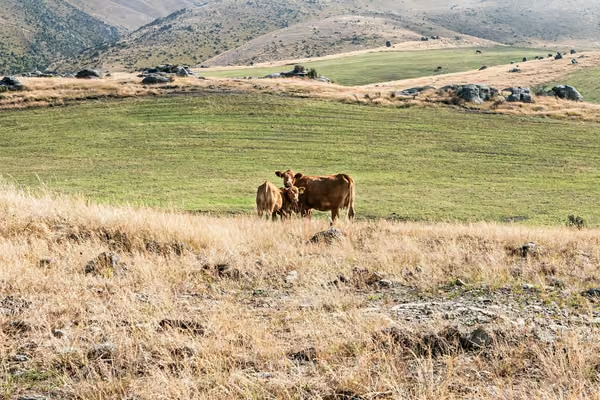
Increasing lamb weaning weights linked to emissions efficiency and improved profitability
New research suggests sheep and beef farmers could improve both profitability and emissions efficiency by increasing lamb weaning weights, with only marginal changes in total greenhouse gas emissions.
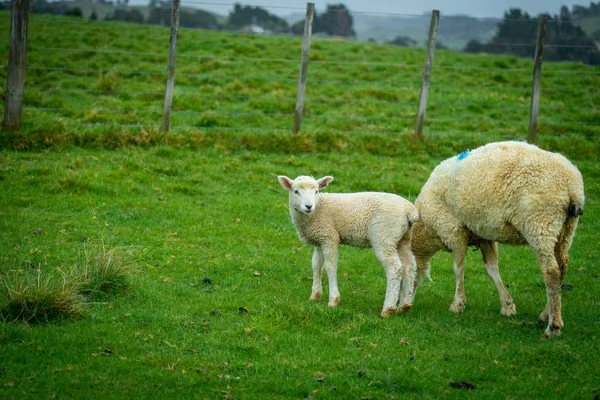
Research finds New Zealand farmers largely getting phosphorus fertiliser balance right
New research suggests Aotearoa New Zealand farmers are broadly matching phosphorus fertiliser use to the needs of their soils, helping maintain relatively stable nutrient levels across the country’s agricultural land.