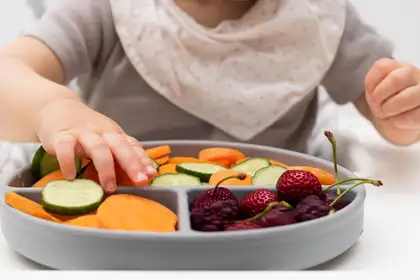
The study found that certain foods, including berries and black beans, promote the growth of beneficial gut bacteria and the production of short-chain fatty acids.
The study, led by Riddet Institute PhD fellow Vitor Geniselli da Silva, examined how different foods interact with gut bacteria using baby faecal samples. It found that berries and black beans promote the growth of beneficial bacteria and the production of short-chain fatty acids, both linked to better gut health.
The research, conducted by a team including Professor Warren McNabb, Professor Nicole Roy, Professor Clare Wall, Dr Jane Mullaney, Dr Nick Smith and Mr Callum Tatton evaluated 14 individual foods, including infant formula, meats, fruits, vegetables and legumes, along with various food-infant formula combinations to reflect real-life infant feeding patterns. The goal was to understand how these foods affect babies’ gut bacteria and the organic acids they produce in controlled laboratory conditions.
Among the key findings were:
- Berries (blackcurrants, strawberries and raspberries), when tested individually, increased the production of acetate and propionate — short-chain fatty acids associated with gut health. They also boosted the presence of Parabacteroides, a bacterial genus known to support gut function
- Black beans combined with infant formula increased the production of butyrate and the growth of Clostridium sensu stricto 1, both of which contribute to a balanced gut microbiota.

Riddet Institute PhD fellow Vitor Geniselli da Silva.
These changes in microbial function and composition indicate a transition from the infant gut microbiota to the adult one, which is more stable. Therefore, these foods may help establish beneficial gut microbiota from early on, contributing to promoting human health.
“These findings suggest that certain everyday foods, alone or in combination with infant formula, can positively influence the development of gut bacteria in babies. This could play a key role in early nutrition and diet recommendations," Vitor says.
While the study was conducted in a controlled laboratory model and does not fully replicate the complexity of the human body, it lays the groundwork for future clinical trials. Researchers emphasise that more studies are needed to confirm these results in real-world conditions.
Professor McNabb says this research opens exciting possibilities for infant nutrition.
“If future studies confirm these benefits, they may be able to guide parents and healthcare professionals on how to optimise gut health from infancy.”
Findings have been published in the journal Food and Function and can be accessed in full here.
Related news
HRC Explorer Grant awarded for innovative infant feeding research
Emerging researcher Dr Ying Jin from the School of Health Sciences has been awarded a Health Research Council (HRC) Explorer Grant for her research into feeding vulnerable infants with donor human milk.

Vegetables-first approach shows promise for developing babies’ taste preference
New research shows providing vegetables as an infant’s first food is an effective strategy for improving intake and may help children to develop a preference for vegetables.

Developing healthy eating habits early on
A new study is investigating how exposing babies to a variety of fruit and vegetables when they first move to solids, could help form better eating habits in the future.