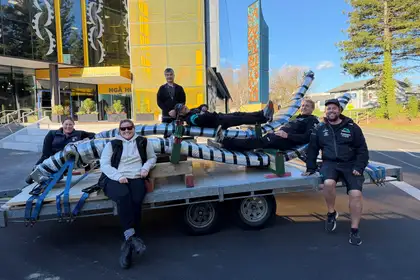
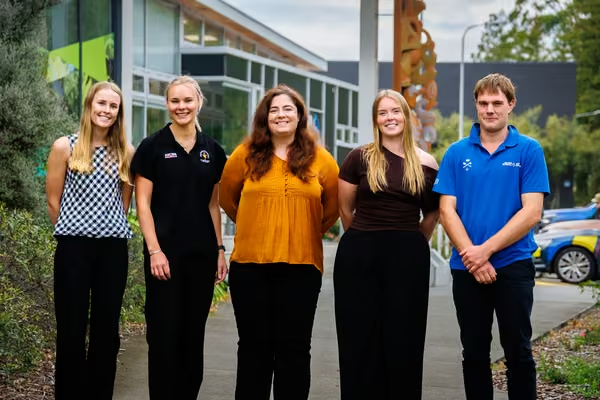
Left to right: Sarah Palmer, Alaina Tessier, Colin Sue, Carl Humphreys, Patrick Londeen and Chris Hickey.
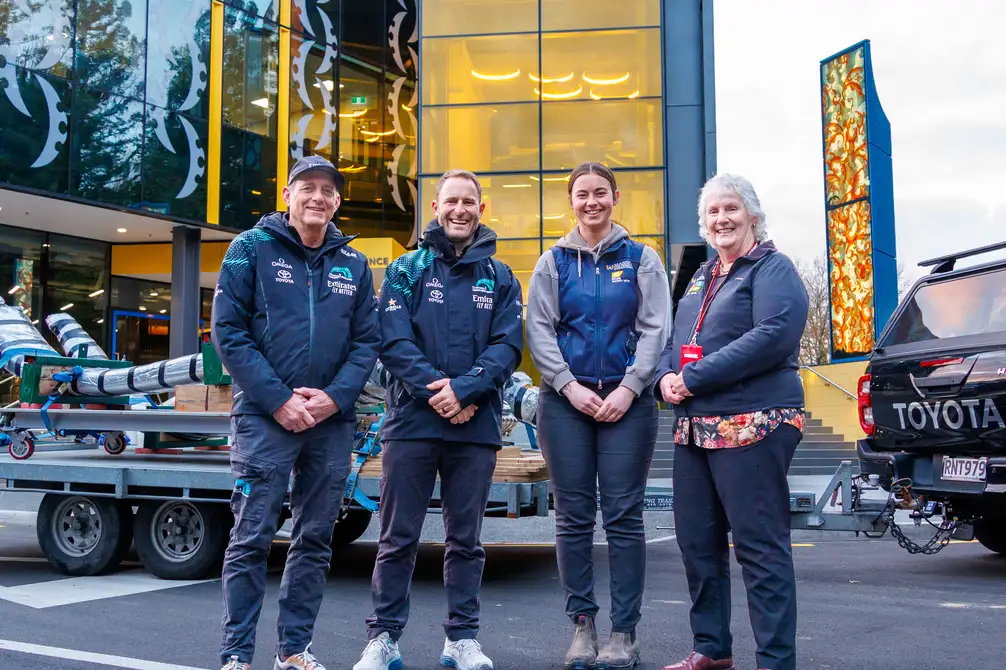
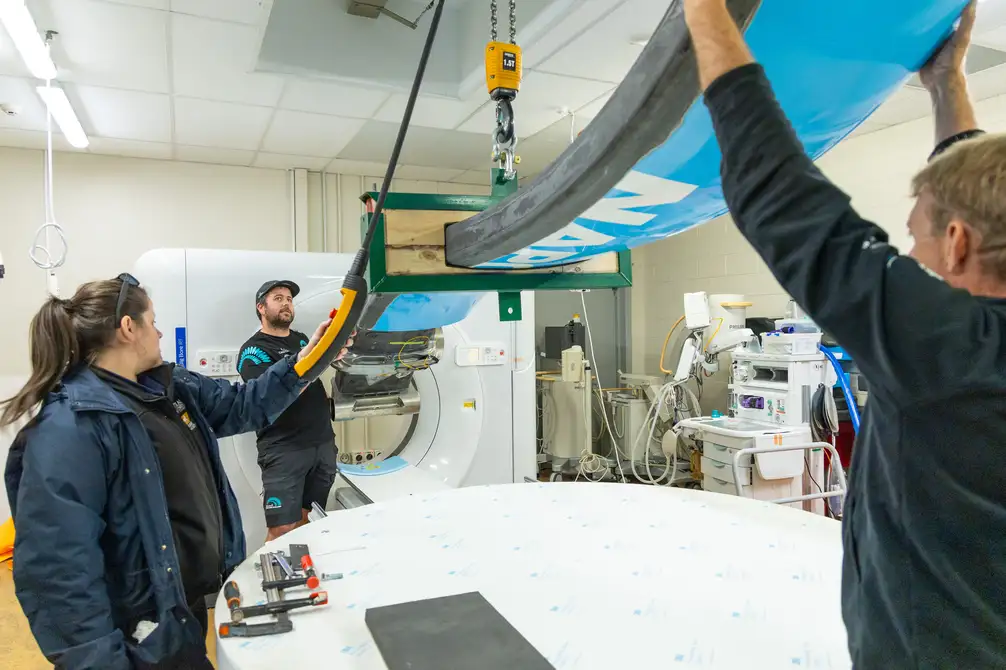
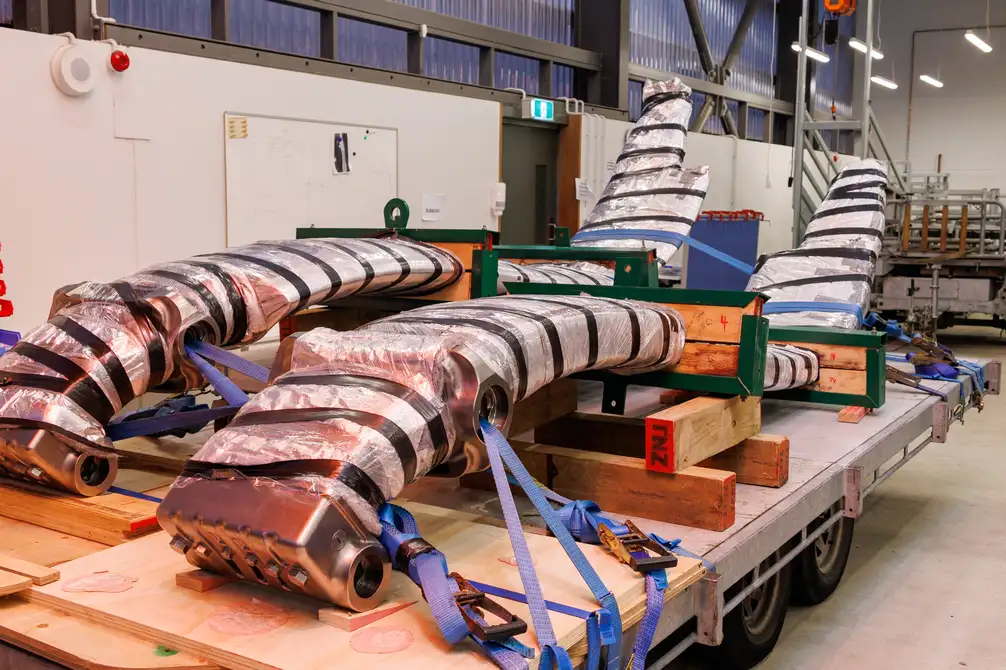
The massive carbon fibre components – each weighing around 450 kilograms and 4.5 metres long – were transported from Auckland to Tawhārau Ora School of Veterinary Science for detailed imaging, making them some of the most unconventional ‘patients’ ever admitted to the teaching hospital.
The scans formed part of Emirates Team New Zealand’s routine inspections, allowing engineers to perform an internal health check of the foil arms.
The foil arms are a critical part of Emirates Team New Zealand’s AC75 foiling monohull yacht Taihoro. Acting as the structural connection between the yacht's hull and its underwater hydrofoil wings, they enable the vessel to lift clear of the water and effectively ‘fly’ above the surface. The yacht’s name, gifted by Ngāti Whātua, translates as “to move swiftly as the sea between both sky and earth”.
Emirates Team New Zealand Materials and Process Engineer Dr Chris Hickey first approached Veterinary Teaching Hospital Director Dr Jane Langton Burnell to explore whether the university’s facilities could accommodate the scans. Extensive discussions followed as both teams worked through the practical challenges of imaging an object far larger – and a very different shape – than the scanner would normally encounter.
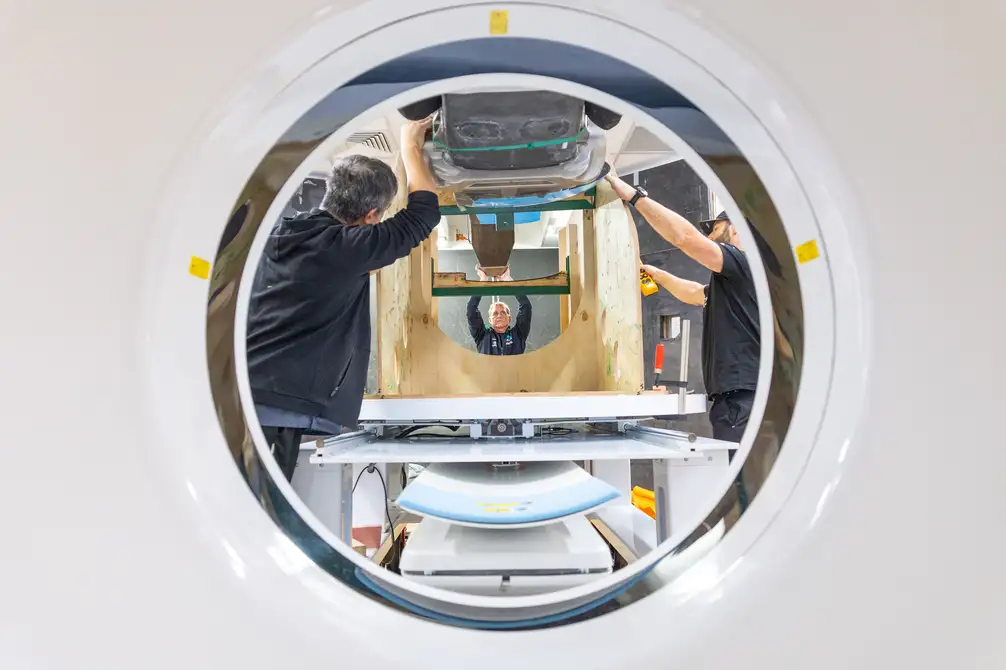
However, Massey’s large bore CT machine proved uniquely suited to the task. While most standard CT scanners would not be able to accommodate objects of this size, the machine’s wide opening allowed the foil arms to pass through for imaging. Combined with the hospital’s equine table and overhead gantry system, it provided a capability that, until now, was not available anywhere else in Aotearoa New Zealand.
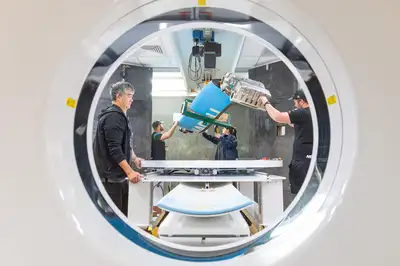
“The foil arm weighs about the same as a horse, but it’s much longer,” Dr Langton Burnell says.
“The table could support the weight, the gantry allowed us to safely position the arm, and the scanner had an opening large enough for it to pass through. Without those features, it wouldn’t be possible,” Dr Hickey explains.
Veterinary Radiographer Colin Sue played a key role throughout the two-day operation, drawing on his expertise in CT imaging, while members of the Equine Hospital team assisted with the lifting and positioning of the foil arms using the gantry system.
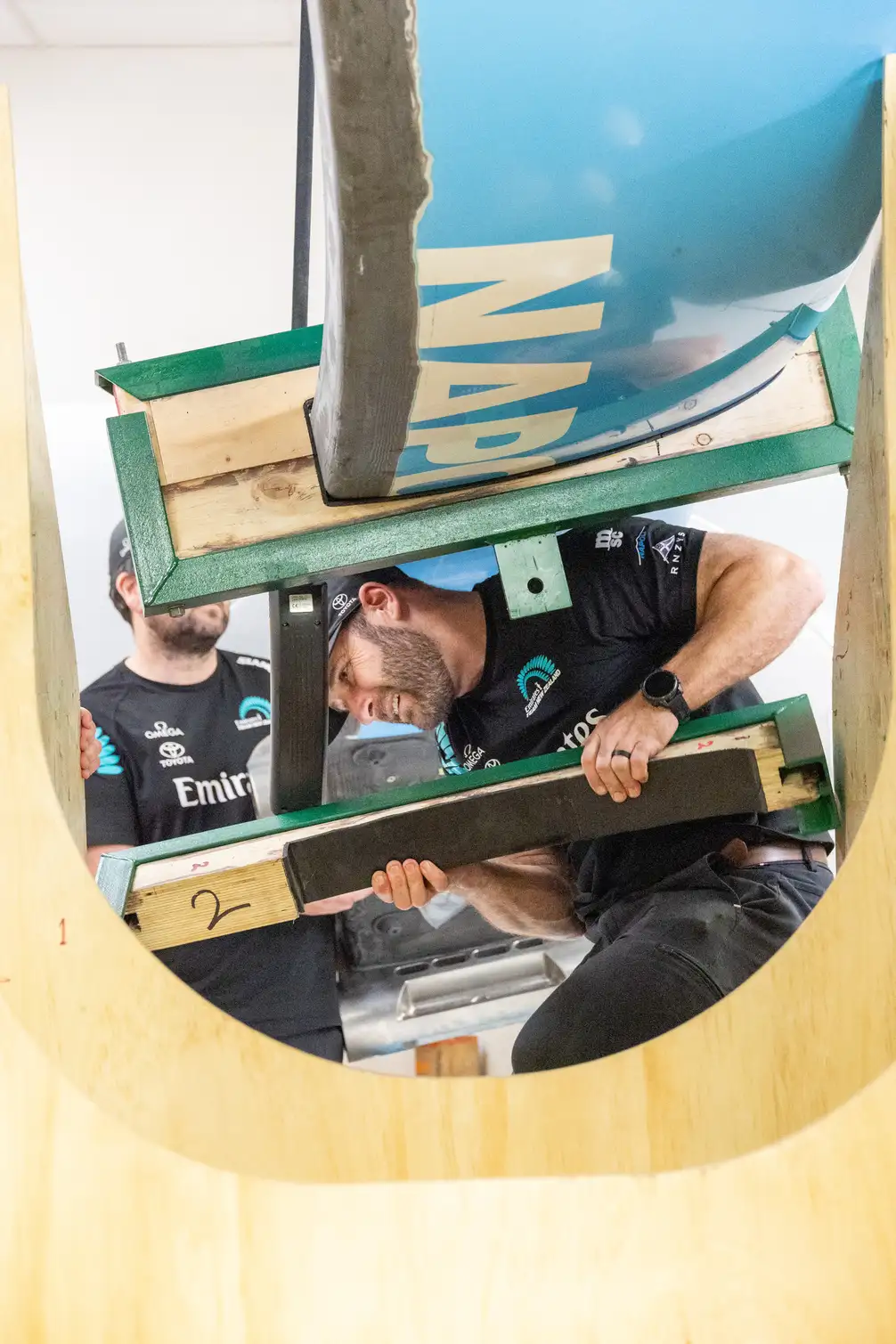
Before scanning began, Emirates Team New Zealand created a detailed three-dimensional computer model to map exactly how each arm would move through the scanner, or, as Dr Hickey puts it, ‘how to thread the needle’.
Each stage required careful planning. The foil arm had to be positioned at a precise angle, one section scanned, then repositioned for the next section to be imaged. Due to the shape of the foil arm, for some positions, the arm needed to be rotated before being fed back into the CT.
The team had undertaken an initial scan several months earlier, bringing a spare foil arm to Massey while the yacht’s operational foil arms remained in use. Even with that previous experience, the scanning process remained an intricate operation, requiring careful manoeuvring and repeated repositioning.
The foil arms are manufactured in Italy, where specialised facilities capable of performing this type of imaging have been established.
“Up until now, there hasn’t been anywhere in New Zealand to do this level of scanning. We’d scan smaller parts in human machines, such as the rudder, but the foil arms had to be done overseas. The team at Massey approached the challenge with enthusiasm and professionalism from day one. Their support has helped us better understand these complex structures and continue pushing performance forward,” Dr Hickey says.
Dr Langton Burnell says the project highlights the versatility of Massey’s veterinary imaging facilities and the expertise of the staff who operate them.
“While the hospital is best known for caring for animal patients and training our next generation of veterinarians, it is exciting to see that our technology and specialised infrastructure can support collaborations beyond veterinary medicine.”
Related news
Funding boost supports veterinary students on the path to rural practice
Following Tāwharau Ora School of Veterinary Science’s successful application to the Merck, Sharp and Dohme (MSD) Global Impact Fund, five veterinary students have received scholarships worth over NZ$8,000 each to support costs associated with their final year of training.
Veteran Police dog Teo on the road to recovery and a well-earned retirement
Two months out from her official retirement, Teo was injured in the line of duty, but thanks to a community of helpers and the specialist care provided by Massey Vets, she’s now well on her way to a comfortable retirement.
Putting her veterinary calling into action
Bachelor of Veterinary Science student Emma Fisher-Friedman’s journey to vet school has come full circle: from curious Open Day visitor to vet student panellist in just a year.