
The Kākā Pod egg incubator can be carried on the front of a backpack
When Te Kunenga ki Pūrehuroa Massey University student Nero Asher discovered how fragile kākāpō eggs are and the ruggedness of the places they are laid, he decided to design a safer way to transport them.
In his final year of a Bachelor of Industrial Design with Honours at Ngā Pae Māhutonga – The Wellington School of Design, Nero created the ‘Kākā Pod’, which has just been awarded a coveted Red Dot Design Award.
What appears to be a simple egg incubator in a cylinder in fact employs a suspension-based system in which the egg is held between two flexible elastic material pads. These pads absorb and dampen impact forces, significantly reducing the risk of physical trauma to the egg – even when attached to a backpack.
The Kākā Pod is chargeable via USB port to enable up to three and a half hours of environmental control while the egg is being transported. It can also be used for eggs from other native bird species.
Massey News asked Nero to tell us the story behind his award-winning design.
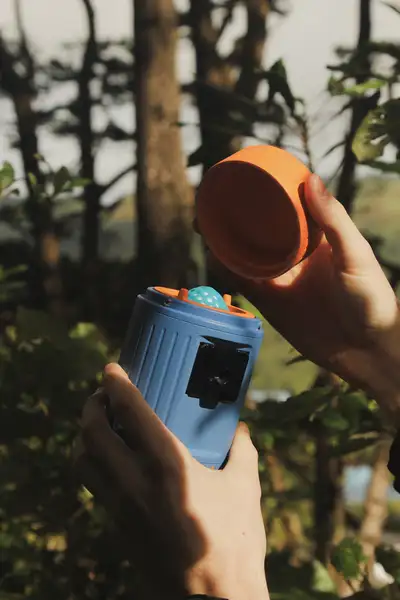
The Kākā Pod designed by Nero Asher.
How did you get the idea for the Kākā Pod?
“I started the Kākā Pod during my Honours year in Industrial Design because I wanted to work on something that made a real difference. I talked with experts in the Kākāpō Recovery Programme and Massey University lecturers who had volunteered on Whenua Hou, one of the islands where DOC manages kākāpō recovery. Through those conversations, I learned how fragile kākāpō eggs are and how risky transport can be. I saw a gap in how they were being carried and designed a solution.”
How are the eggs currently transported?
“Rangers carry eggs in polystyrene boxes stuffed with cotton balls for insulation, but these aren’t built for New Zealand’s rugged backcountry. They either hold them in their hands or fit them awkwardly into packs. The eggs face risks from bumps, knocks and uneven heating during long walks.”
You did some work with the Department of Conservation Te Papa Atawhai. Where were you based and what did you do? How did this inspire the Kākā Pod?
“I was based in Wellington with DOC’s electronics team, where I worked on projects that combined design and wildlife conservation. One of my main tasks was developing casings for the kākāpō TX trackers. The engineers designed and coded the circuit boards, while I moulded housings that kept moisture out. Because only a small number were needed, I built them in-house rather than outsourcing production.
“I also helped design RFID (radio-frequency identification) readers for bats, which tracked movement in and out of tree roosts using tags, which are inserted just under the skin on the bats’ backs. Another project focused on little blue penguins and the diving petrel, involved building specialised designed scales that could withstand sea spray, sand and rain to measure feeding behaviour.
“That experience showed me how design can solve practical problems for conservation. It directly inspired me to apply the same thinking to the challenge of safely transporting kākāpō eggs.”
How did you test the robustness of the pod?
“I built prototypes with silicone pads that suspend the egg inside. Then I ran drop and motion tests using surrogate eggs. These tests showed how well the pod absorbed impact and kept airflow even around the egg.”
Will it work for other species?
“Yes. The system adapts to other birds where eggs need transport. It started with kākāpō, but it can scale to other conservation programmes.”
Is the prototype used in the wild today?
“Not yet. It’s still a prototype. The next step is field trials with DOC rangers.”
How did it feel winning the Red Dot Award?
“It felt surreal. The award gave the project international recognition and showed how design supports conservation. More importantly, it brought visibility to the work happening in Aotearoa.”
What are you up to now that you have graduated?
“I’m working as a design engineer in Amsterdam for a film equipment company. Before and during university I worked in the film industry as a lighting/grip technician, and now my two worlds – design and film – have come together under one roof.”
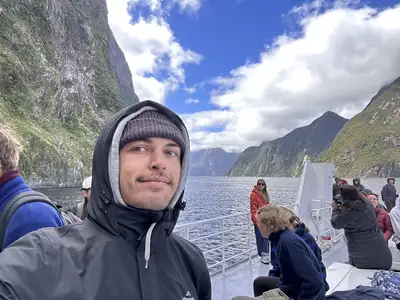
Nero Asher during research into Kākāpō recovery.
Interested in studying industrial design at Massey?
Related news
Designing for impact: Massey graduates win big at Red Dot Awards
Honours graduates from Te Kunenga ki Pūrehuroa Massey University’s Visual Communication Design programme have won six Red Dot Design Awards - one of the most respected global competitions celebrating excellence in design.

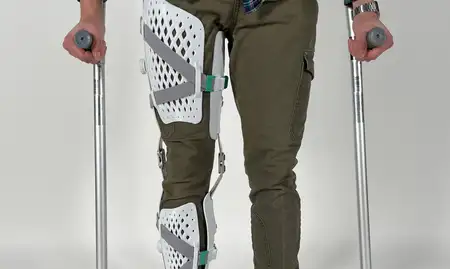
Student designs game-changing device for people with lower limb impairments
George Philp's Leg-Up is a custom-fit orthotic device that enhances mobility and independence for people with lower limb impairments.
Massey ranked in the top three in Red Dot Design Ranking for 10th consecutive year
Te Kunenga ki Pūrehuroa Massey University has taken second place in the 2024 Red Dot Design Ranking for the Asia and Pacific region, making it the 10th consecutive year the university has placed in the top three.