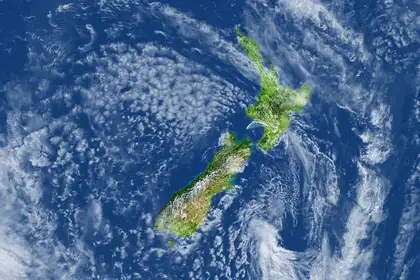
In response to shifting demands in the global workforce, as highlighted by the World Economic Forum Future of Jobs Report and the QS World Future Skills Index, Te Kunenga ki Pūrehuroa Massey University is introducing a new science major. This major will allow students to explore popular subject areas from across the sciences. The Bachelor of Science in Sustainable Climate Systems addresses the complex challenges of our time and is the first major of its kind in Aotearoa New Zealand.
The challenges facing our planet are urgent and complex. While reducing environmental impact and advancing the United Nations Sustainability Development Goals (SDGs) is essential, the world also needs new thought leaders who can collect evidence, explore diverse perspectives, challenge conclusions and provide expertise towards solving our most complex problems.
As a global community, we must adapt to the growing impacts of climate change, including rising temperatures and sea levels, extreme weather events and warming oceans. These changes affect all aspects of the systems our existence depends on, from the natural world to our energy systems and everything in between, including food production, agriculture and the materials we use. The challenges they present for humans to solve will have far-reaching consequences for our health, societies, economies and businesses.
Meaningful inventions and creative scientific advances to deal with complex problems occur more easily when disciplines intersect to solve them. Solutions are rarely found in isolation within chemistry, physics or biology alone, but through collaboration across scientific disciplines - including mathematicians, computer scientists, food scientists, agriculturalists, biologists, chemists, statisticians, engineers and others. By working together, scientists, technologists and innovators can solve the problems of our time, driving a shift in how science serves society.
This new major prepares students to explore sustainability and climate action, entrepreneurship, fundamental scientific concepts, civic leadership and global engagement through a highly cross-disciplinary approach. Students can design their own study pathway, mixing and matching scientific disciplines to suit their interests. Central to the major is systems thinking – a holistic approach that views complex challenges as interconnected systems rather than isolated parts, equipping students to address problems using evidence-based, logical and innovative solutions.
Head of School of Food Technology and Natural Sciences Professor Jamie Quinton and Head of Chemistry Professor Mark Waterland co-designed the degree with the training needs of the next generation of scientists in mind.
“We’ve designed this qualification for the STEM workforce of the future. Our graduates won’t just stand by as the impacts of climate change become more prevalent. They will be the forearmed change makers, the policy developers and the pioneers who are able to see the complexity of grand challenges, while also suggesting sustainable ways to tackle them.”
“Science can sometimes compartmentalise problems, but real innovation happens through collaboration. The biggest problems of our age require us all to work together.”
“This new major allows students to explore different perspectives within science and complements Massey’s traditional strengths in both fundamental and applied sciences. It offers a flexible pathway for curious minds to forge their own unique, meaningful science career,” Professor Quinton says.
The Sustainable Climate Systems major introduces students to the fundamentals of science, data and evidence in their first year. From year two, students will engage with core topics in at least two scientific areas before selecting a more focused programme. In the final year, learning comes together through a project where each student brings their unique skillset to a multi-disciplinary team to develop real-world solutions to complex problems.
“Massey’s Bachelor of Science has a common foundational year across all majors. It provides a strong platform for specialised study, while also allowing students the freedom to explore different areas of science if they are unsure of their preferred direction. For problems like climate change, when the world is living in the experiment, it’s difficult to see meaningful trends. Our students will understand the complexity and complementarity of science, leaving Massey University with modern skills to decipher the largest puzzles of our era,” Professor Waterland says.
Massey’s Bachelor of Science is a flexible qualification that combines the excitement of scientific discovery with a strong foundation for a wide range of careers, and provides an adaptable base from which to develop a chosen career.
Learn about the Bachelor of Science.
Related news
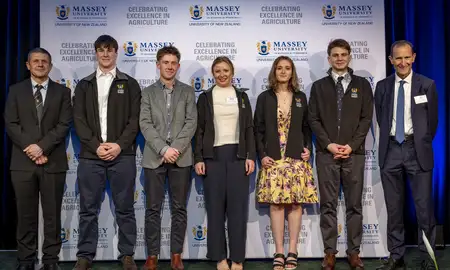
Celebrating rising stars at the 2025 Agriculture, Horticulture and Environmental Science Awards
The future of Aotearoa New Zealand’s primary industries was in the spotlight at the 32nd annual Agriculture, Horticulture and Environmental Science Awards in Manawatū last Friday.
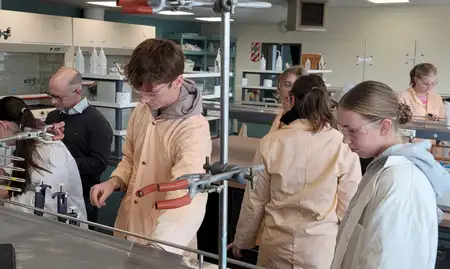
STEM & Health Experience Day 2024 a huge success!
Earlier this month, potential students immersed themselves in the world of science and discovery on the Manawatū campus.
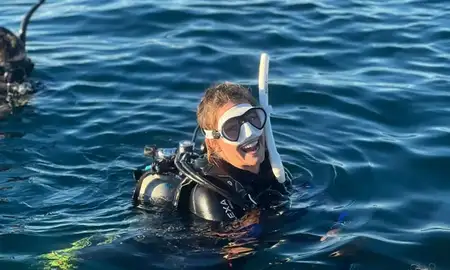
Exploring the depths of sustainability from reef to research
Inspired by her dad’s love for diving, Kaiya Elmes pursued a Bachelor of Science in Environmental Science to deepen her commitment to environmental sustainability.