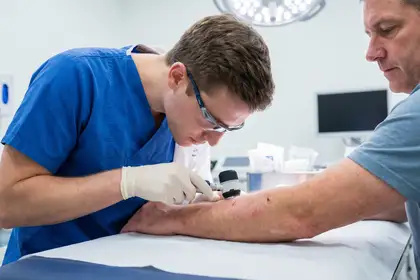
Image credit: Vecteezy.
The latest melanoma mortality report from Te Kunenga ki Pūrehuroa Massey University's Environmental Health Intelligence New Zealand (EHINZ) reveals that in 2020–21, melanoma death rates for men aged 65 and over were at least double those of women in the same age group.
The findings highlight a persistent and concerning gender disparity in one of New Zealand’s most serious cancers.
Despite overall improvements in melanoma outcomes over time, the data shows men continue to experience disproportionately higher mortality rates. In 2021 alone, 333 people died from melanoma in New Zealand, with the disease accounting for nearly two-thirds of all skin cancer deaths.
EHINZ’s Senior Intelligence Analyst Dr Mui Nguyen says the message is clear: melanoma is deadlier for men, particularly as they age.
“Men are consistently overrepresented in melanoma deaths, and the difference becomes even more pronounced in older age groups. This suggests there are preventable factors at play, particularly around early detection and timely treatment.”
Melanoma is one of the most preventable cancers, with more than 90 per cent of cases linked to UV exposure. However, it is also highly treatable when found early.
Dr Nguyen explains that melanoma risk isn’t seasonal—it can develop anytime, not just in summer.
The EHINZ report shows that while overall mortality rates have declined since their peak in 2011, the gender gap has remained a stubborn feature of melanoma outcomes in New Zealand.
Dr Nguyen says targeted action is needed to close that gap.
“We need to reach men earlier and more effectively by encouraging regular skin checks, increasing awareness of melanoma warning signs, and removing barriers to seeking medical advice.”
New Zealand continues to have some of the highest melanoma rates in the world, making early detection and prevention critical public health priorities.
The findings reinforce calls for more tailored public health messaging and interventions aimed at men, particularly those in higher-risk older age groups.
EHINZ is a national public health research unit established at Massey University in 2009, which provides information and intelligence on how the environment affects the health of Aotearoa New Zealand’s population. The team conducts research into the effects of environmental factors on both human and animal populations.
Related news
Who gets to see a Doctor? Data shows mobility barriers limit GP access
Surveillance data published by Environmental Health Intelligence New Zealand (EHINZ) has revealed that lack of transport remains a significant barrier to accessing General Practitioner (GP) services.
Decrease in melanoma mortality rates coincide with new treatment options
Monitoring by Environmental Health Intelligence New Zealand (EHINZ), a unit within Massey’s Research Centre for Hauora and Health, has found a recent sharp decline in melanoma mortality rates in New Zealand.