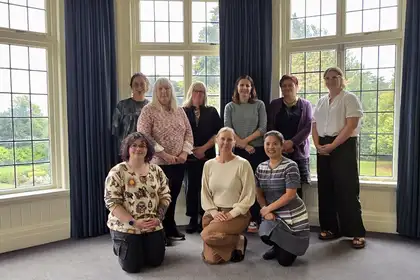
From back left: Professor Lisa Te Morenga, Jacquie Nutt, Cara Hafner, Associate Professor Linda Murray, Carmen Timu-Parata and Megan Hooper-Smith. From front left: Leah Baddeley, Louise Wedgwood, Ying Jin
The project focused on informed consent processes for pasteurised donor human milk (PDHM), which is used when a mother’s own milk is unavailable or limited. The work brought together clinicians, lactation consultants, milk bank coordinators, Māori health experts and international collaborator to develop a more consistent and culturally grounded approach to care.
Dr Jin says the project was driven by a need to better support whānau during an already overwhelming time.
“Feeding conversations are often happening at a time when whānau are already overwhelmed. It’s not just about what information is provided, but when and how those conversations take place.”
The Activation Project builds on Dr Jin’s earlier research which found many parents were being asked to make important feeding decisions shortly after childbirth, often while exhausted or caring for a sick or struggling baby. The study highlighted how inconsistent information and time pressure could make informed consent difficult.
One of the key outcomes of the HRC project is the development of an evidence-based national draft guideline to support informed consent for donor human milk in Aotearoa.
Dr Jin says the project’s multidisciplinary approach was essential to ensuring the work reflected both clinical realities and the lived experiences of whānau.
“Supporting feeding decisions isn’t just about giving information. It’s about building trust and making sure whānau can make choices that align with their values.”
The project also strengthened research capability and collaboration, supporting student achievement and establishing a sustainable national and international research network. For example, Master of Public Health student Hina Humayun completed her degree with first-class honours through her involvement in the project and through Dr Jin's recognition of research excellence, which led to Dr Jin receiving the College of Health Research Medal. The team worked closely with internationally recognised human milk and lactation expert Professor Diane L Spatz. This network provides a sustainable platform for future large-scale research and funding applications.
Kaupapa Māori approaches were embedded throughout the project, helping ensure the work aligned with Te Tiriti o Waitangi principles and supported culturally safe and responsive care.
Dr Jin says the completion of the activation project provides a strong platform for future research and system-wide change.
“The goal is a system where all whānau have the information and support they need to make confident feeding decisions, and where all pēpi can access the best possible start in life.”
Related news
The first year of solid food could influence your infant’s health for life
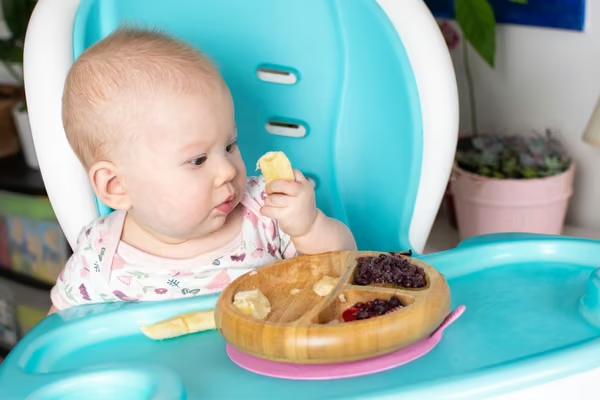
New research suggests berries and black beans have potential to feed good gut bacteria in babies during weaning, ultimately leading to better health later in life.
Could everyday foods shape a healthier gut in babies? New research says yes
New research has identified common foods that could play a key role in shaping a baby’s gut microbiome, with potential long-term health benefits.