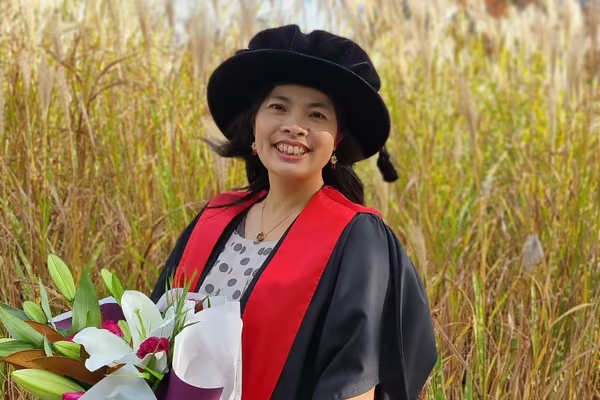
Dr Ying Jin
Dr Jin, an early career researcher from Te Kunenga ki Pūrehuroa Massey University, has been awarded $150,000 in funding for the two-year project, REST-Māmā: Restoring circadian sleep through technology-enhanced midwifery, which aims to support mothers during the critical weeks after birth by combining wearable technology with personalised, midwife-led care.
The early postpartum period is one of the most vulnerable times for new mothers. Severe sleep disruption and disrupted circadian rhythms are common and can increase the risk of postpartum anxiety and depression, placing strain on women, their whānau and the health system.
Dr Jin says, "The funding is incredibly valuable because it allows us to explore a complex new approach to supporting mothers during one of the most vulnerable periods of their lives."
"The weeks after birth are often marked by severe sleep disruption, which can increase the risk of anxiety, depression and poor wellbeing for both māmā and their whānau. Despite this, postnatal care has limited tools to objectively identify sleep problems or provide personalised support."
The project will use wearable devices to measure sleep patterns in the weeks after birth. Midwives will work alongside women, their whānau and an artificial intelligence (AI) consultation tool to co-design personalised sleep strategies tailored to each mother's needs, with the aim of detecting early symptoms of postpartum anxiety and depression before they escalate.
"By using wearable technology alongside midwife-led care, we hope to identify early warning signs and co-design a personalised sleep plan that better supports māmā's recovery and mental wellbeing. The findings will provide important preliminary evidence for developing more equitable and personalised postnatal care."
The project builds on Dr Jin's broader research programme focused on improving maternal and infant health through innovative, person-centred approaches.
"As project lead, I am excited to bring together an outstanding multidisciplinary team to explore new ways of supporting māmā during the critical weeks after birth," Dr Jin says.
The research team includes expertise from multiple disciplines including midwifery (Megan Hooper-Smith), sleep science (Professor Leigh Signal), maternal mental health (Associate Professor Linda Murray), environmental health and sleep environments (Associate Professor Wyatt Page) and Māori health (Carmen Timu-Parata). The first stage of the project will involve working alongside māmā, whānau and maternity services to co-design an evidence-based and culturally responsive model of care.
If successful, the project could transform postnatal care by giving midwives new tools to identify sleep-related challenges earlier and deliver more personalised support for mothers and their families.
"My hope is that this research will help midwives identify when māmā need extra support and provide personalised care that improves wellbeing before small problems become more serious. By bringing together expertise from across disciplines, we have an exciting opportunity to rethink how postnatal care is delivered for māmā and their whānau in Aotearoa New Zealand."
Related news
Nurturing connections and growing impact in donor milk research
A multidisciplinary research team led by Te Kunenga ki Pūrehuroa Massey University Senior Lecturer Dr Ying Jin has completed a major Health Research Council (HRC) Health Delivery Activation Project aimed at improving how whānau are supported to make decisions about donor human milk in hospitals across Aotearoa.
Protecting human milk as a life-saving medical intervention
National data tells us how many healthy, full-term babies are exclusively breastfed when they leave hospitals, but for those who are cared for in neonatal intensive care units (NICUs), the picture is far less clear.

Helping vulnerable mothers and babies access timely help when needed
The aim of Dr Ying Jin’s latest research, funded by the Health Research Council (HRC), is to develop a clinical guideline for health practitioners, so they can help mothers access donor human milk in a timely manner.