“Doing this research, it’s healing and life giving. We're just doing what we're obligated and responsible to do. If you're going to be a kaitiaki Māori, you have to leave your whenua in better shape for the next generations.” – Professor Huhana Smith
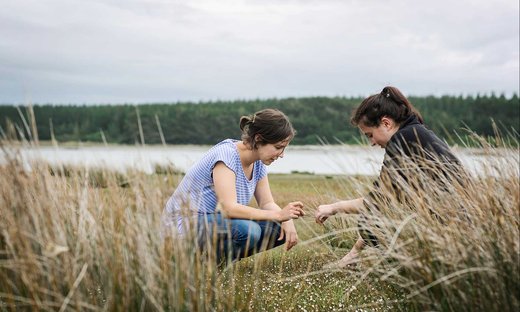
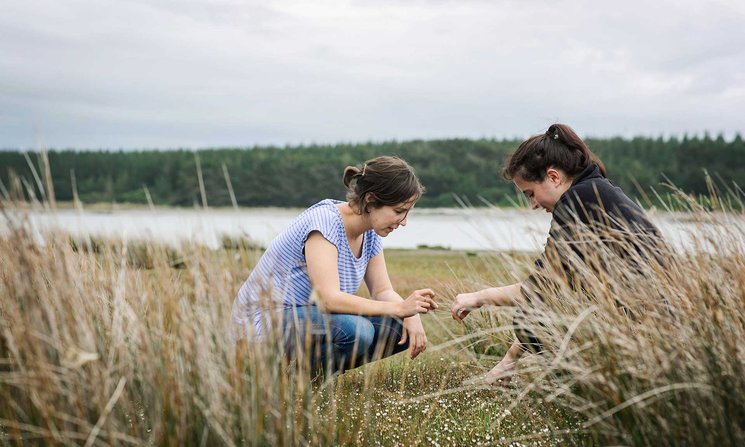
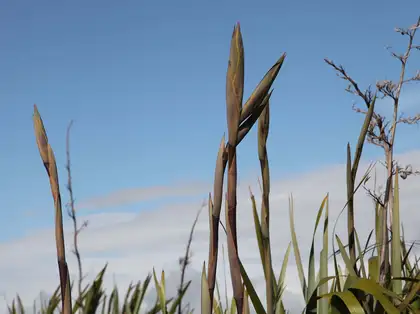
Between the shadow of the Tararua Ranges and the dunes of the Horowhenua Coast, Te Hākari – Te Hakiri wetland is thriving once more. The pheasant calls and the frogs croak in the late afternoon sun. Several tui are raiding the harakeke flowers and a mātātā bird hides in the mānuka bush nearby. The sound of waves murmurs in the background. This is Ngāti Tukorehe whenua, with the main marae at Kuku, just south of Levin. It is the ancestral home of Professor Huhana Smith and her whānau. Land that is in the hopeful process of being restored to its natural state. As a visual artist, curator and environmentalist, Huhana’s vision is to reconnect people to their whenua.
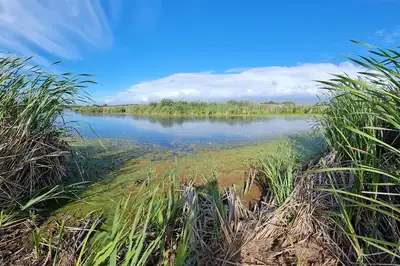
Te Hākari – Te Hakiri wetland on a summer afternoon
Photographer: John Waldon
Like many places in Aotearoa, pollution and environmental degradation have become an issue for Ngāti Tukorehe. The coast and beach are eroding, and flooding has increased. Shellfish were contaminated with E-coli and unable to be eaten. The water quality was poor and deoxygenated. Invasive species choked native plants, invaded wetlands and clogged waterways, leading to fewer eels and whitebait.
The research
Professor Smith’s research at Kuku has been a long-term effort – a nearly 30-year labour of love that builds on previous iwi mahi intent on bringing back mauri to their whenua and based in Mātauranga Māori kaupapa. By the mid-1990s, she was already involved in coastal wetland and freshwater projects. With her partner Richard, they bought just over 6 hectares of land behind the old Kuku dairy factory in 2006. Huhana recalls that the site consisted of flat farmland, a stream the District Council used as a drain and 5 box thorn trees. “The first thing we did was stop the Horowhenua District Council from bringing a digger in every November to dig the stream, which they called a drain. The whenua and the water were in really poor condition. There were dead cows in the stream systems. We wanted to do something for us on our purchase. That's what started it all. Now we have a 19-year-old forest growing around the stream”.
One early research project was a 2004 terrestrial ecosystems project partnering with Ngāti Raukawa ki te Tonga (a confederation of various iwi and hapū), which led to many others. From 2006 to 2009, Smith led an MBIE-funded project looking at which ecosystem services would be beneficial to iwi. The rohe was surveyed and mapped with technology to prioritise which restoration initiatives were the most urgent.
Smith partnered with Dr Aroha Spinks and Moira Poutama on the MBIE-funded Manaaki Taha Moana (MTM) project from 2009 to 2015, progressing previous research to enhance coastal ecosystems for iwi. They determined the extent of critically affected coastal ecosystems and what was needed to reinvigorate freshwater systems and marine areas between Hōkio and Waitohu streams. The project produced 6 detailed case studies which identified sources of poor water quality, investigated the health of shellfish and whitebait, analysed how to rehabilitate pā harakeke and use these plantations healers for whenua and awa, expanded wetlands via kawenata, surveyed the Kuku Ōhau estuary frontage, and activated rehabilitation opportunities for Lake Waiorongomai, north of Ōtaki.
”Every project builds on what we need to see within whenua, so if you put all the research together, the projects actually all feed into each other.” – Professor Huhana Smith
From 2015 to 2024, Smith and her team were involved in 3 Deep South National Science Challenge projects. The projects covered:
- climate change and coastal Māori communities
- risk management planning for climate change impacts on Māori coastal ecosystems and economies
- climate change transition activities that could enhance taonga species such as harakeke and īnanga (whitebait).
The power of interdisciplinary inclusion
One of the noticeable features of Smith’s research is the diversity of her collaborators, from creatives to freshwater scientists, textile artists and marine biologists, filmmakers and landscape architects, rangatahi and elders. This transdisciplinary mixture has led to impacts that reach beyond the academy, such as art exhibitions in a disused dairy shed on Tahamata Incorporation farm at Kuku and at Ngāmotu – New Plymouth’s Govett-Brewster art gallery, and using the hemp/wool weed mat on the banks of the Waikōkopu stream as art installations.
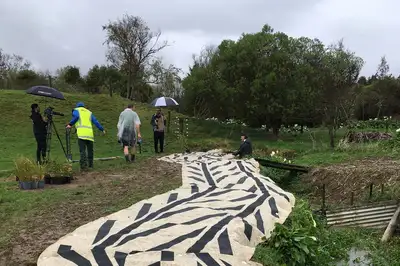
Biochar art
Photographers: Huhana Smith and Maija Stephens
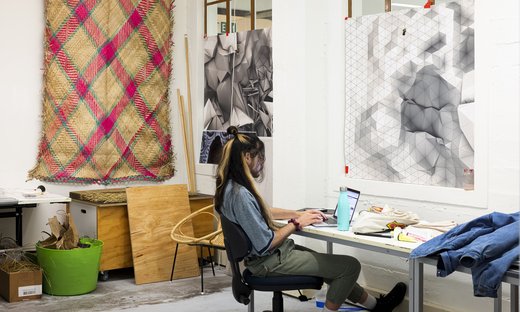
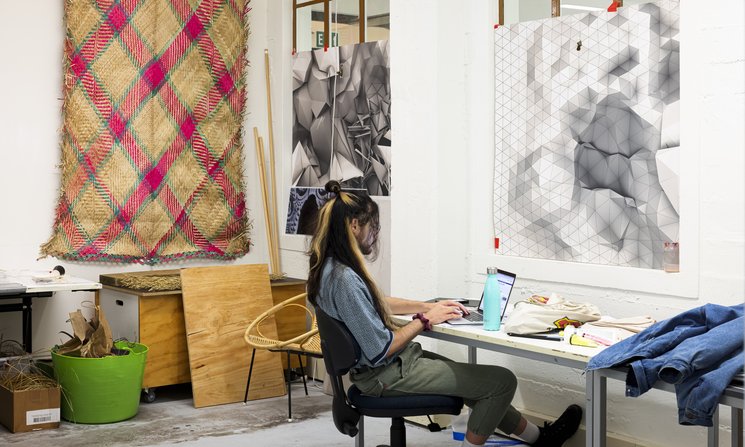
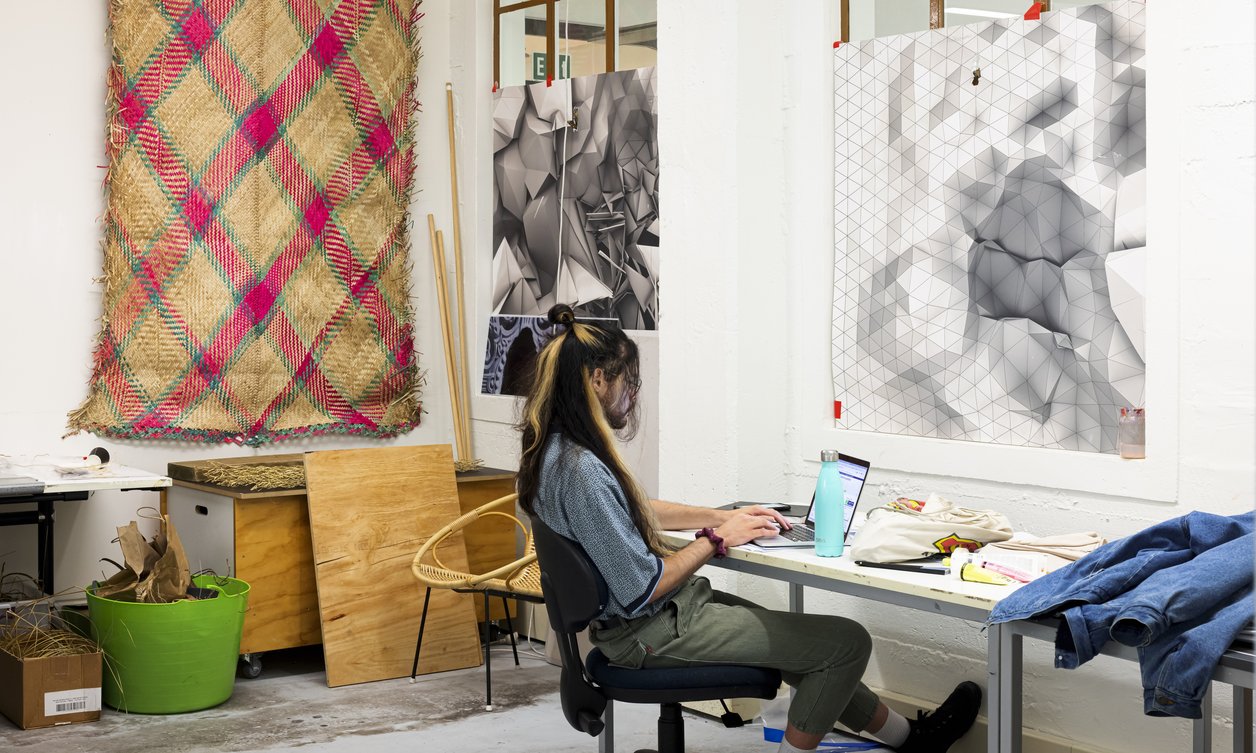
Massey Senior Lecturer Angela Kilford (Te Whanau A Kai, Ngāti Porou, Ngāti Kahungunu) got involved in Huhana’s research through their joint interest in harakeke. “I reached out to Huhana as I was keen to expand the natural dye research we were doing at Massey and I wanted to work with an iwi to optimise our plant dyes. We went up to Kuku and cleaned up a harakeke bush and ripped out a whole lot of blackberry. Then we fed it to Huhana’s goats!”
For Briar Moffatt (Ngāti Tukorehe), a Rongoā Māori practitioner, her official participation began in 2022. “The team were looking for a Weaver and a Ngati Tukorehe representative and Huhana reached out to see if I was interested. Since then I have proudly been involved in several planting days, Pa Harakeke clean up in our wetland area, hosting noho for my whanaunga alongside my Research whanau down at our Pā and have learned so much more about Harakeke and Dye work. It really has connected my passions as a Weaver and a Healer, and I’m very grateful for that.” Briar went on to present at academic symposiums with Angela Kilford as part of the harakeke team.
Dr Aroha Spinks (Ngāti Raukawa, Ngāti Tukorehe, Tainui) is a freshwater scientist. She earned an iwi environment certificate from a marae-based course Huhana facilitated, which led to Aroha being invited to be a PhD student on the Manaaki Taha Moana project. “The MTM project was starting up, and she said ‘we need a scientist involved, can you come and help’ so that’s how I got inducted to all the mahi she’s been doing.”
Fellow researchers noted that one of the benefits of being part of Huhana’s projects is what they have learnt from her – things like perseverance, positivity, how to do fieldwork in difficult situations, cultivating a long-term mentality, balancing relationships, helping others, and a collaborative approach to doing research.
”I’ve learned from Huhana to be a brave woman, about wahine stepping up. She’s a good mentor and has always encouraged me not to be afraid to step into spaces that I probably didn’t think I belonged in, just to give things a try.” – Angela Kilford
Walking the Whenua – Kaupapa Māori methods and approaches
Central to the projects has been the use of kaupapa Māori methodologies and approaches. For Smith, this means being out on the whenua itself. She calls this ‘hīkoi methodology’, which means taking researchers, scientists and district council representatives outside to ‘walk and talk the whenua’ with local iwi. “The whole idea was to look and sense and feel what kind of condition the whenua and the water were in, and most of the time it was in really poor condition. You have to know the whakapapa of the place”. These research sites are best experienced through the body and the senses. Walking is a form of embodied learning.
Iwi and whānau are now leading the research and training young people in research methods that combine Mātauranga Māori and Western science to get the best of both worlds. Briar appreciated this approach and how it honours the iwi involvement in the research. “What I love is that they always made sure it was a Tukorehe project with Tukorehe in the middle. They're not just telling us what they found out at the end of having studied us or our land or our plants. It's flattened the assumption that they knew everything. They opened it up and let us come in and co-create with them.”
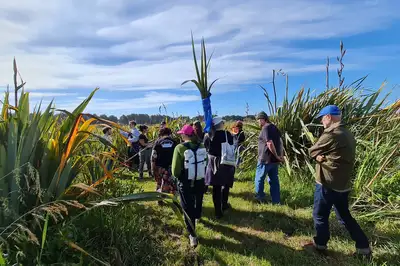
Angela Kilford harvests harakeke with a team of College of Creative Arts staff
Photographer: John Waldon
Overall impacts
Smith’s collaborative research has contributed to rejuvenated relationships as iwi return to and reconnect themselves and their children with their ancestral lands. There is an increased presence of native birds such as the endangered mātātā, and more eels in streams. Pā harakeke (flax bushes) are regenerating. Lower nitrates in streams are leading to a cleaner water table. There is a revitalisation of traditional healing practices. Agricultural production is being fortified against the onslaught of climate change. There are plans to extend the wetland restoration project down the coast and connect Kuku and Ōtaki with natural solutions emerging from a Te Taiao-centric focus.
”It’s exciting because it’s [the iwi farm] gone beyond a business unit that makes money to one that has cultural and environmental success and a positive impact.” – Aroha Spinks
Huhana notes that the research “changed the mindset that the wetland was a problem. It’s now seen as a resource for other projects, our wetland has fed the harakeke, and the Massey textiles department has become key leaders in the whole harakeke sustainable fabric industry”. Angela reflected that the projects helped to reconnect whānau with the basics of working with harakeke, thus reinvigorating practical skills and building an economic base for developing new services and products, such as natural dyes.
Dr Spinks observed that the projects have inspired other iwi to get on board with caring for their local whenua and strengthened connections New Zealand wide with other iwi and hapū, “People are bringing their kids back to raise them on their whenua. More Māori are becoming involved in doing the mahi on the land to bring it back to nature.”
When asked what advice she would give to researchers who wanted to impact communities, Huhana says, “Have a big picture vision. Go blue skies in the beginning. Just imagine you had all the resources in the world. My biggest thing is that you have to be action-orientated and working with your hands from the onset. You've also got to have gathered all the right brains together. Because we need co-intelligence and collectivity.”
UN Sustainable Development Goals
Professor Huhana Smith
Discover more about Professor Huhana Smith's academic and research expertise.
Professor Huhana Smith
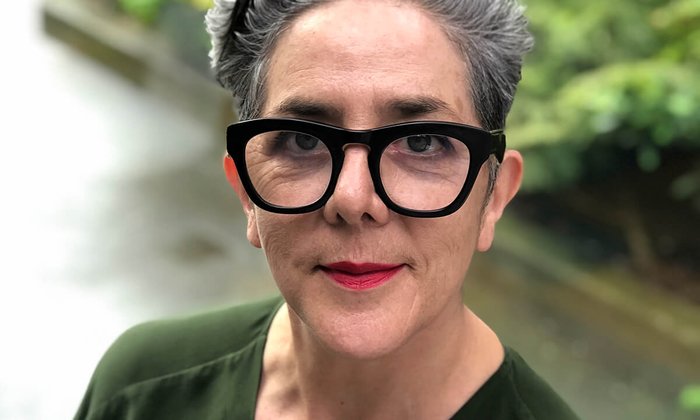
Huhana is a visual artist, curator and researcher who engages in major environmental, trans-disciplinary, kaupapa Māori and action-research projects. She fuses creative arts, mātauranga Māori and scientific methods to actively address climate change concerns and explore complex environmental issues and accessible solutions for Iwi/hapū and wider communities, particularly in Horowhenua-Kāpiti.
Research funder

Ministry of Business, Innovation & Employment (MBIE)
Related content