Overview
The School of Built Environment focuses on human-made environments and their impact on society. We examine innovative ways in which the built environment can improve quality of life and community wellbeing, from rural villages to mega-cities.
We have an international outlook on teaching, learning, practice and research, particularly in digital built environments. We work closely with industry to ensure our qualifications include latest developments.
The expertise of our people, combined with our local, national and international partnerships, ensures our teaching and research serve the needs of communities, industry and government to improve the built environment.
Te Tiriti o Waitangi at Massey
We are deeply committed to being a Tiriti-led university, demonstrating authentic leadership in contemporary Aotearoa New Zealand as we uphold te Tiriti o Waitangi, the founding document of our nation, and its principles through our practice. We embrace this not just as an obligation but as a real opportunity for the nation and its people.
Te Tiriti o Waitangi ki Te Kunenga ki Pūrehuroa – The Treaty of Waitangi at Massey
Study with us
Choose from a range of qualifications in construction and the built environment, including our Master of Construction with a shorter 120-credit option for students with relevant experience or qualifications.
Explore by area of interest
Explore qualifications in construction and the built environment.
Study construction & the built environment
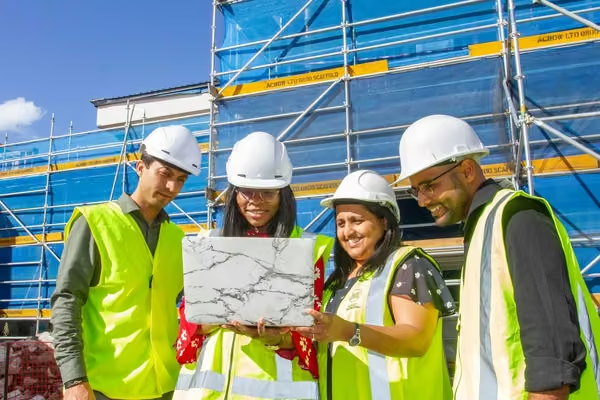
Get hands-on with commercial experience and practical assignments on the tools. Explore digital tech transforming the industry. Then graduate work-ready.
Our people
Our people make us who we are. Meet our Head of School.
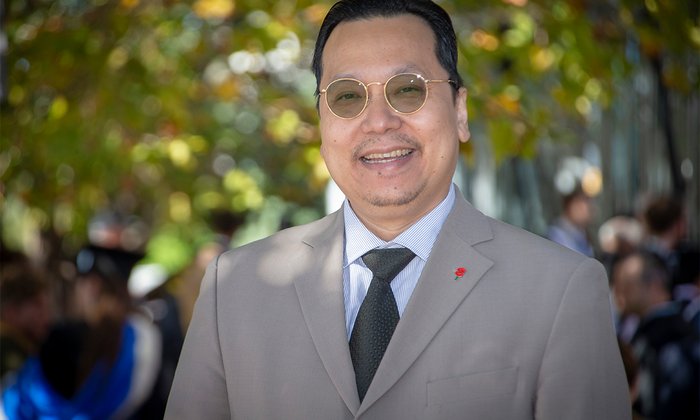
Professor Monty Sutrisna
Monty Sutrisna is Professor of Construction and Project Management, with practical experience as a leader in the construction industry in the UK, Australia and Indonesia. Monty champions close collaboration between academia and industry. Research interests include construction IT and artificial intelligence, construction contracts, and productivity.
Research
Our researchers work closely with government, industry, professional bodies and communities to address current and emerging challenges in the built environment.
Our research supports more sustainable, productive, inclusive, resilient and technologically enabled futures for Aotearoa New Zealand and the wider international built environment sector.
Research is organised around 3 connected themes that reflect the major challenges and opportunities facing the built environment.
Across these themes, our staff and research students:
- generate new knowledge
- develop practical tools
- inform policy and industry practice
- contribute to national and international research networks.
Many research projects bring together expertise from across these research areas, reflecting the interdisciplinary nature of built environment research.
CanConstructNZ
CanConstructNZ was a major research project led by Massey University to better understand the capacity and capability of New Zealand's construction sector.
Funded by the Ministry of Business, Innovation and Employment (MBIE), the project brought together researchers and industry partners to develop an online platform that helps government agencies and construction businesses plan future projects, identify risks and make informed decisions.
Technology
Technology
Theme lead: Professor Ruggiero Lovreglio
The Technology theme focuses on how digital innovation, advanced materials, modern methods of construction and automation can improve the way built environment projects are designed, delivered, operated and maintained. This research supports a more productive, efficient, innovative and future-ready built environment sector.
Key research areas
- Digitalisation and Building Information Modelling
- Extended reality, reality capture and gamification
- Artificial intelligence, generative AI and Industry 4.0
- Modern methods of construction and off-site construction
- Design for Manufacturing and Assembly
- Automation in construction and the built environment
- Future material technologies
- Technology-enabled decision-making, training and simulation
Management
Management
Theme lead: Professor James Rotimi
The Management theme focuses on the people, systems, assets, contracts and economic processes that shape the performance of the built environment. This research supports better decision-making, more inclusive workplaces, improved asset performance and more efficient project delivery across the sector.
Key research areas
- People in construction and workforce capability
- Skills development, equity and inclusion
- Health, safety and wellbeing in the built environment
- Built environment accessibility and community wellbeing
- Facilities and asset management
- Indoor environmental quality and occupant comfort
- Post-occupancy evaluation and building performance
- Construction contracts and procurement
- Cost management, whole-life costing and construction economics
- Construction insolvency, disputes and contract administration
Sustainability
Sustainability
Theme lead: Associate Professor Niluka Domingo
The Sustainability theme focuses on the built environment's role in addressing climate change, reducing emissions, improving resource efficiency and strengthening community resilience. This research supports the transition to a low-carbon, climate-resilient and resource-efficient built environment.
Key research areas
- Low-carbon and zero-carbon built environments
- Waste management and circular economy practices
- Renewable energy storage and sustainable energy futures
- Life-cycle assessment and greenhouse gas emissions
- Energy equity and resource-efficient design
- Disaster resilience and climate change adaptation
- Flood risk management and urban resilience
- Disaster recovery and reconstruction
- Resilient housing and climate-adaptive communities
Consultancy
We often carry out research for partners outside Massey or work with partners on certain topics or as part of long-term relationships. Our consultancy makes the most of expertise from within the school and around the university, offering fresh thinking.
Accreditations and rankings

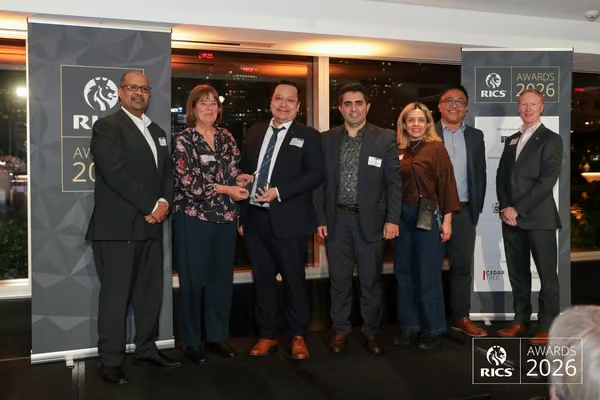
Royal Institution of Chartered Surveyors (RICS)
Massey's Bachelor of Construction is accredited by the Royal Institution of Chartered Surveyors. This global professional body promotes and enforces international standards in the valuation, management and development of land, real estate, construction and infrastructure.

New Zealand Institute of Quantity Surveyors (NZIQS)
The quantity surveying specialisations in the Bachelor of Construction and Master of Construction are accredited by the New Zealand Institute of Quantity Surveyors for graduate membership.

Pacific Association of Quantity Surveyors (PAQS)
The Bachelor of Construction (Quantity Surveying major) is accredited by the Pacific Association of Quantity Surveyors (PAQS).
IESANZ accreditation
Massey's Graduate Certificate in Science and Technology (Lighting) is accredited by Illuminating Engineering Society of Australia and New Zealand (IESANZ). Completing this qualification provides academic requirements for membership.
QS Ranking - Architecture & Built Environment
Massey architecture and built environment is ranked in the world's top 150 universities by Quacquarelli Symonds (QS).
Graduate stories
“My employer encouraged me to further my study in construction. I chose Massey’s Master of Construction as it allowed me to study via distance and block courses while I worked, making for a manageable workload.”

“My study experience at Massey was a great mixture of enjoyment and challenge. It gave me a broad introduction to the processes and knowledge required to be successful in the construction industry.”

“Studying at Massey allowed me to both work and study full time. I am now much more advanced in my career than those of similar ages who either just studied or just worked.”

Services
Massey offer services for the public, as well as research or training for staff, students and businesses.
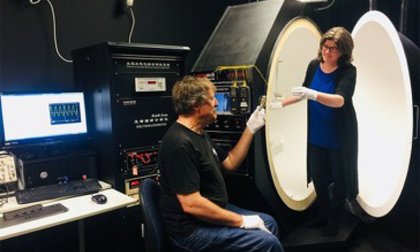
Photometric Laboratory
This state-of-the-art lighting laboratory includes specialist equipment to measure:
- colour rending and colour temperature
- dominant wavelength
- luminosity
- power, and more.
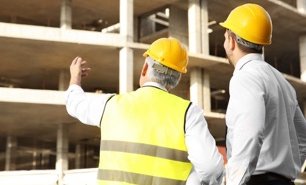
Professional services to industry
Our academic staff can offer advice and services relevant to construction and the built environment. Examples include:
- advising the Ministry of Education
- arbitration
- drafting or reviewing construction contracts.
Contact the School of Built Environment
School of Built Environment – Auckland campus
- sbe-admin@massey.ac.nz
- Location
Physical address
Quad A, 3rd floor
Albany campus
Massey University
East Precinct Albany Expressway,
SH17
Albany
Auckland 0632Use our Auckland campus maps or find us on Google Maps.
Looking for a staff member? Visit our staff directory or use Expertise search.
Related news