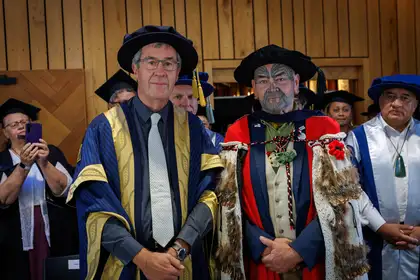
Chancellor Alistair Davis with Mr Rāwiri Wright.
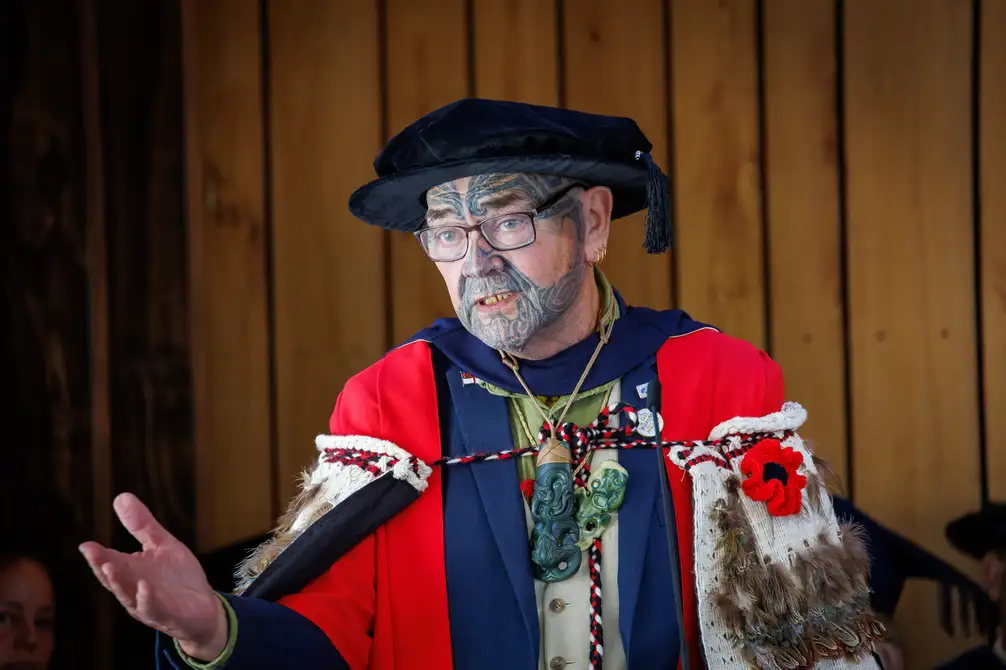
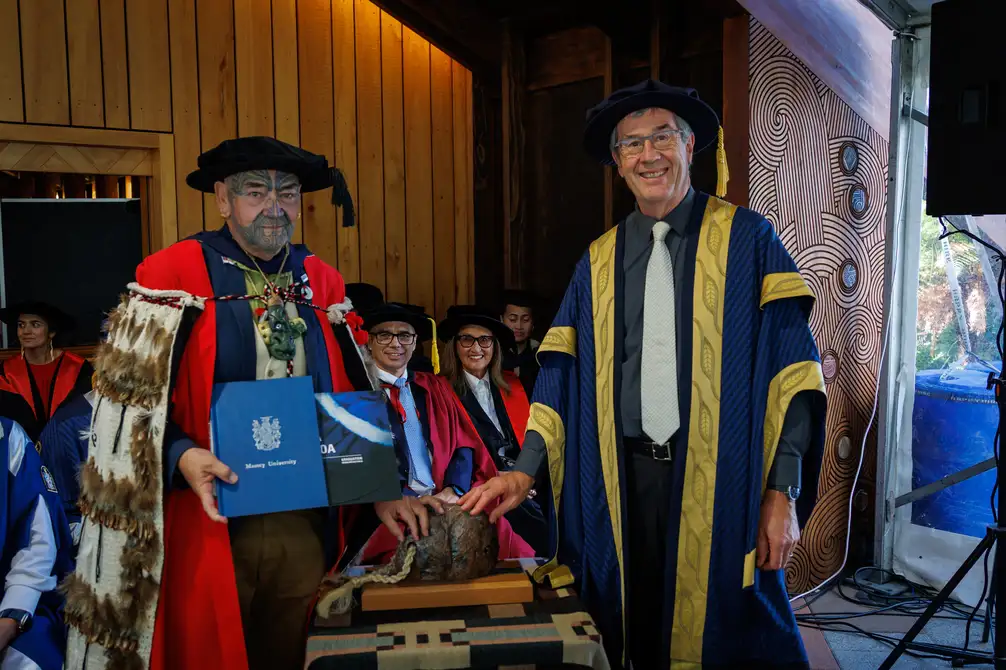
Renowned Māori education leader Rāwiri Wright, Te Arawa, Ngāti Raukawa, Ngāti Kahungunu, has been awarded an Honorary Doctorate of Education in recognition of his extraordinary, decades-long contribution to Māori education, cultural revitalisation and educational equity in Aotearoa New Zealand.
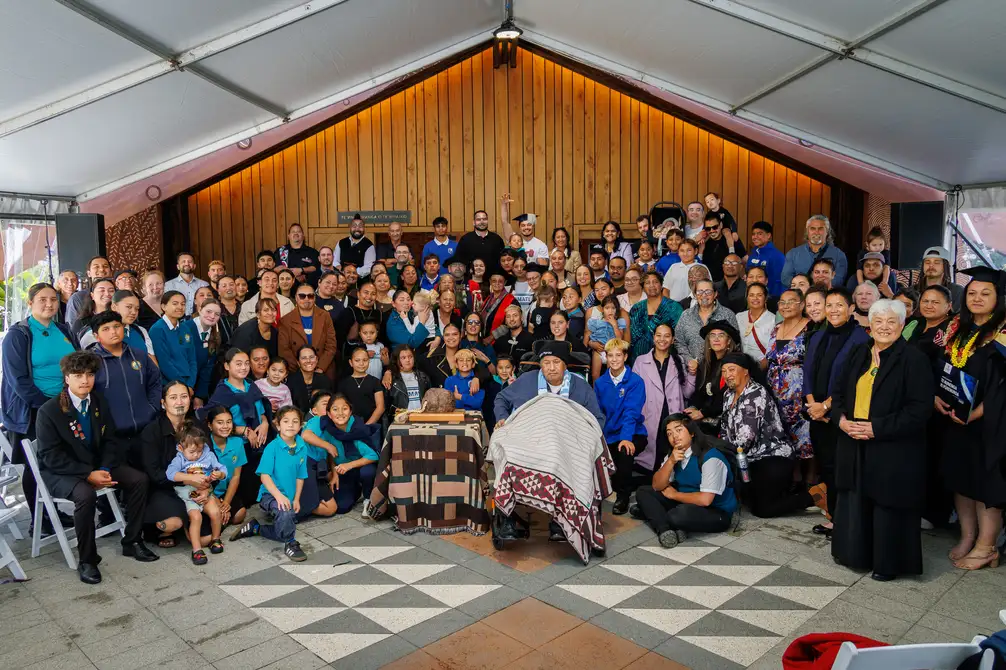
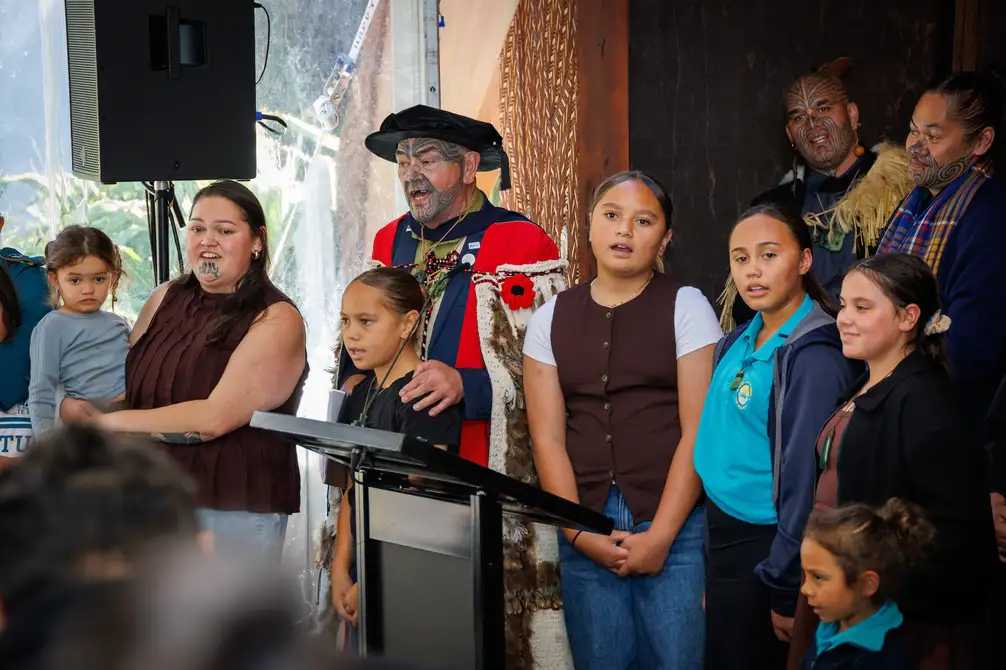
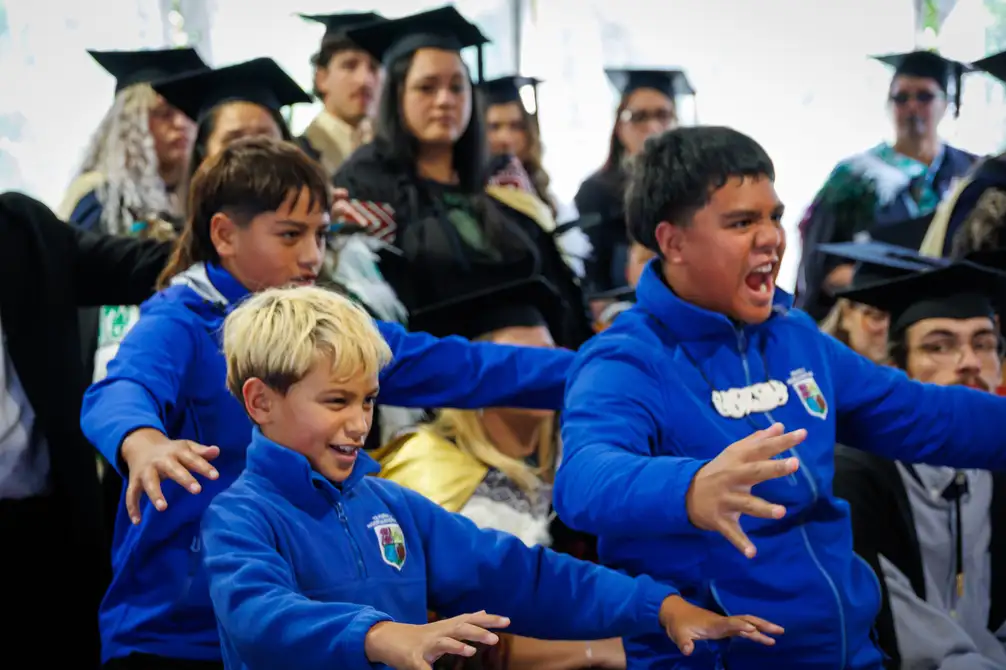
Surrounded by his friends and whānau, including seven of his eight tamariki, Mr Wright received the honour at Te Kunenga ki Pūrehuroa Massey University’s Whakapōtaetanga Māori graduation ceremony in Wellington on Tuesday.
Mr Wright’s life and work have been guided by a steadfast commitment to ensuring Māori children and whānau can access education that affirms identity, language and cultural integrity.
“I’m accepting this award on behalf of all those people who went before us, all the tamariki I’ve had anything to do with, the kaiako and the whānau,” Mr Wright says.
Professor Huia Jahnke, who has worked closely with Mr Wright at Massey’s Te Putahi-a-Toi School of Māori Knowledge since 2010, says his contribution have been crucial to the success of students.
“The outstanding quality and personal contributions of Mr Wright’s involvement at Massey have led to a substantial increase in teacher supply for the kura kaupapa Māori sector, as well as a high level of excellence achieved by the graduate teachers of the programmes.”
His leadership spans teaching, journalism, governance and national advocacy, which has been instrumental in shaping the kura kaupapa Māori movement (Maori-language immersion schools) and the wider education landscape.
Grounded in whakapapa and education
Mr Wright trained as a teacher, completing his Teacher’s Certificate and Diploma of Teaching at the University of Auckland in 1981 and 1983 respectively, at a time when Māori representation in the profession was limited. From the earliest stages of his career, he challenged the assimilationist legacy of education policy, advocating instead for kaupapa Māori approaches that centre Māori values, language and worldviews.
While teaching, Mr Wright’s classroom experiences revealed both the immense potential of Māori learners and the systemic barriers they faced. These insights became the foundation for a lifelong commitment to transforming education so it could better serve Māori aspirations and futures.
A powerful Māori voice in public discourse
Alongside his work in education, Mr Wright established himself as a respected journalist and commentator, contributing to iwi newspapers, periodicals and national publications. His writing provided an influential Māori voice in public debate, offering intellectual rigour and sharp cultural analysis at a time when Māori perspectives were often marginalised or misunderstood.
Through his journalism, Mr Wright challenged dominant narratives on education, politics and social justice, holding institutions to account and advancing conversations around Te Tiriti o Waitangi, equity and biculturalism. His work helped shape public understanding and created space for Māori perspectives within mainstream discourse.
Contribution to Te Kunenga ki Pūrehuroa Massey University
The Honorary Doctorate also recognises Mr Wright’s significant contribution to Massey University, particularly his leadership in the development of kaupapa Māori immersion initial teacher education programmes. He played a central role in the design and delivery of Te Aho Tātairangi and Te Aho Paerewa, offered through Te Pūtahi a Toi School of Māori Studies in partnership with Te Rūnanga Nui o Ngā Kura Kaupapa Māori.
These programmes are the only immersion te reo Māori teacher education programmes delivered within a university setting and have made a lasting impact on the kura kaupapa Māori sector. Since 2010, they have contributed substantially to addressing teacher supply, with graduates achieving high levels of excellence and many progressing into principal and senior leadership roles.
Mr Wright’s deep understanding of kura kaupapa Māori pedagogy and culturally grounded teaching practice was fundamental to the success of these programmes. He continues to serve as an adjunct lecturer at Massey while holding multiple leadership roles, including as Tumuaki (Principal) of Te Kura Kaupapa Māori o Ngā Mokopuna in Wellington.
National leadership in kura kaupapa Māori
Mr Wright’s most significant and enduring impact has been through his leadership in kura kaupapa Māori education. As co‑chair of Te Rūnanga Nui o Ngā Kura Kaupapa Māori o Aotearoa, he has been a tireless advocate for Māori authority in education and for the realisation of tino rangatiratanga and mana Māori motuhake.
Being brave is imperative on this journey as Mr Wright explains that kura kaupapa is the minority of the minority.
“We have to be brave, be passionate, be resilient and we have to support each other to continue to do what we do every day for the tamariki in the hope that there is a better tomorrow on the horizon.”
Mr Wright has led engagement with government agencies, ministers and parliamentary select committees, consistently articulating the needs and aspirations of kura kaupapa Māori while safeguarding their autonomy. He has argued that Māori-medium education is not a privilege, but a right.
“It’s essential to the survival and flourishing of te reo Māori and Māori culture.”
His advocacy has helped secure resources, policy recognition and protections that have strengthened the kura kaupapa Māori sector nationally. Today, thousands of Māori children grow up learning primarily through te reo Māori, benefiting from educational pathways that affirm identity, language and culture.
A legacy of transformative leadership
Mr Wright’s influence reaches far beyond individual institutions. To Māori communities, he is a trusted and principled leader. To policymakers, he is a respected and formidable advocate. To the wider public, he remains a voice of conscience, committed to justice, equity and cultural integrity.
His work exemplifies scholarship in its broadest sense. The creation, application and sharing of knowledge for the advancement of communities and future generations.
Reflecting on his life’s work, Mr Wright said:
“There is no gain without pain, there is no freedom without struggle and the greatest growth always follows a period of resistance. Me tauranga ātete tātou ka tika!”
Massey University honorary doctorates are awarded to individuals of distinction who have made a significant contribution to the university, the nation, or the public.
Related news
Bali Haque receives Honorary Doctorate in Education
Bali Haque has been presented with an Honorary Doctorate in Education (honoris causa) in recognition of his outstanding service and longstanding contribution to education.
Governor-General recognised for her service to health
Her Excellency, the Right Honourable Professor Dame Cynthia (Cindy) Kiro GNZM QSO, has received an Honorary Doctorate in Health in recognition of her outstanding achievements in academia and contributions to the services of Aotearoa New Zealand.
Good Treaty partners? Te reo and Māori education 50 years after the petition
The latest episode of Conversations that Count – Ngā Kōrero Whai Take examines the role of education in revitalising te reo Māori.