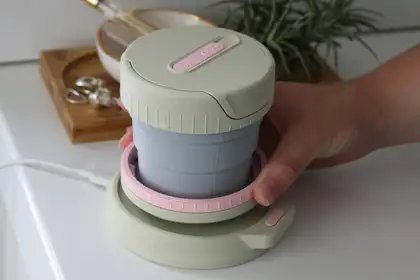
Sophie West’s Arla Gen II product demonstration.
Sophie graduated with a Master of Design this year and her product idea won several awards, including Gold at the 2024 Best Design Awards.
However, winning the James Dyson Award was the first award to recognise her design on a global scale.
She says she was speechless when she found out her product came out on top.
Her product will soon be judged among other international winners. The top 20 winners will be announced on 14 October, while the top prize will be announced on 4 November.

Sophie West, designer of Arla Gen II and winner of James Dyson Award.
Sophie’s menstrual cup steriliser, named Arla Gen II, was designed to address a gap in the period products market.
“It came about through talking with friends and family and first-hand experience with using menstrual cups and the frustration that came with not having an easy way to clean them," Sophie says.
While it was important to draw on her own first-hand experience, she also wanted to gather feedback from other menstrual cup users.
She discovered many users would boil their menstrual cup in a pot in the kitchen, which not everyone was comfortable doing in a flat situation or considered unsanitary to do so where meals are cooked. Other users would sterilise their cup infrequently or not at all due to the hassle involved.
Sophie says that not sterilising the product can increase the risk of harmful bacteria. She wanted to reduce those risks and improve the user experience so more users would want to sterilise their menstrual cups.
She began designing the first version of the product in her honours year, but discovered parts of the design needed improvement. This was what she decided to do as part of her master’s project.
The first version of the product was two separate items, including a home steriliser with ultraviolet lights and an ultra-sonic cleaner, along with a collapsible, shaker cup for travel.
Her aim for the end product was for it to be simple, compact and easy to use.
“It needed to be one product that did everything for users. Size was also a big thing because it needed to easily fit into small storage spaces,” she explains.
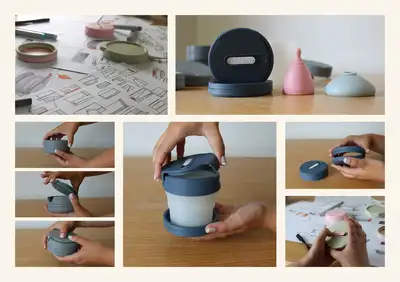
Development of Area Gen II.
Her final product, Arla Gen II, retains the collapsible shaker cup concept from her original design, while the rest of the product has been redesigned.
As a user of menstrual cups herself, she wanted to help remove the barriers to encourage more women to use them.
She says the waste reduction is a huge benefit of using menstrual cups or discs.
“500,000 tonnes of period waste is created globally every year. That’s an insane amount of waste. So to switch to a menstrual cup, you go through one maybe every five years so you’re reducing your waste significantly.”
Sophie explains that it’s a common misconception that menstrual cups are unsafe and that the key to safe use is sterilisation.
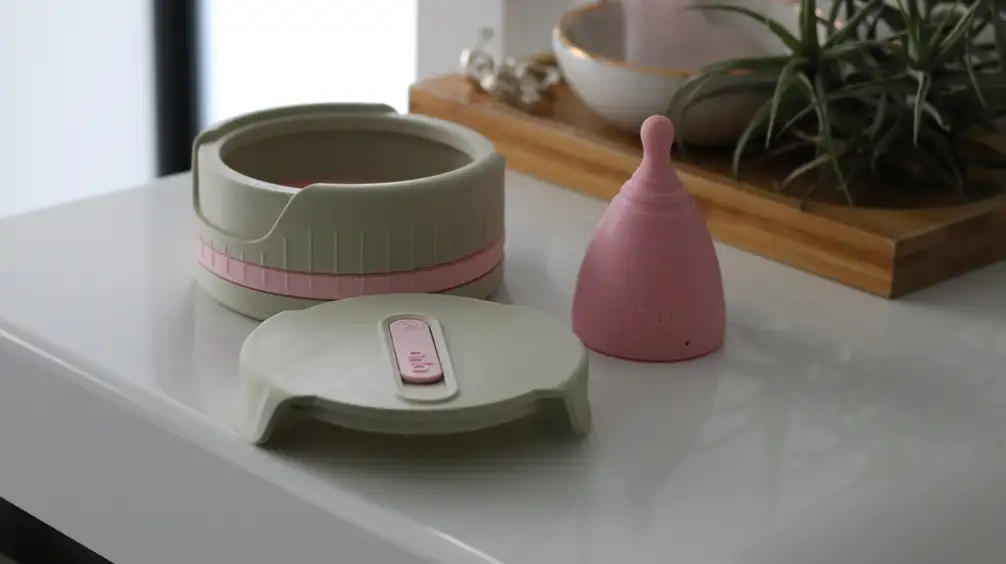
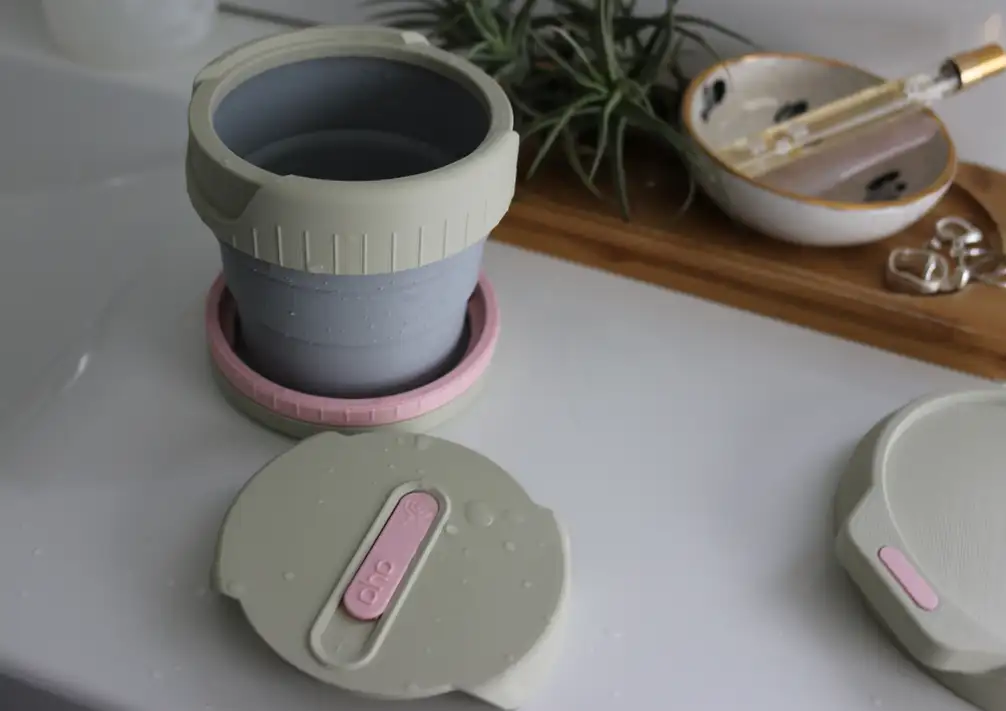
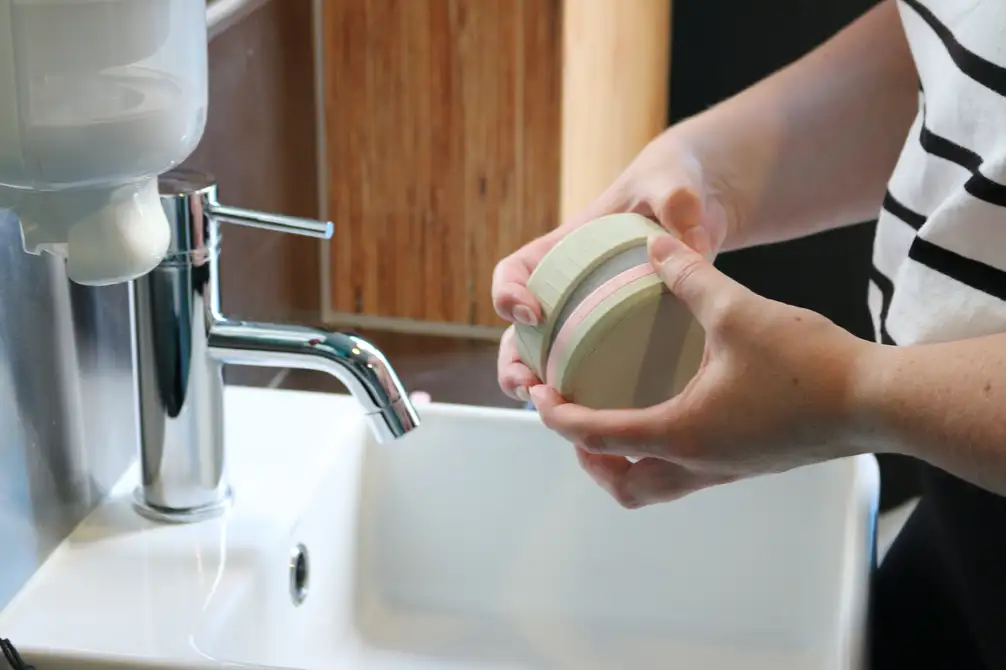
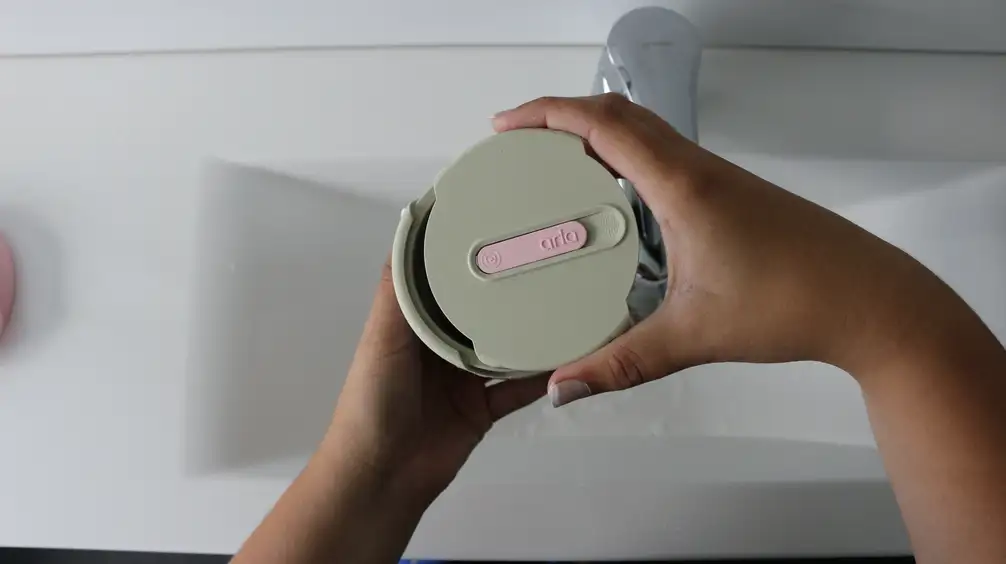
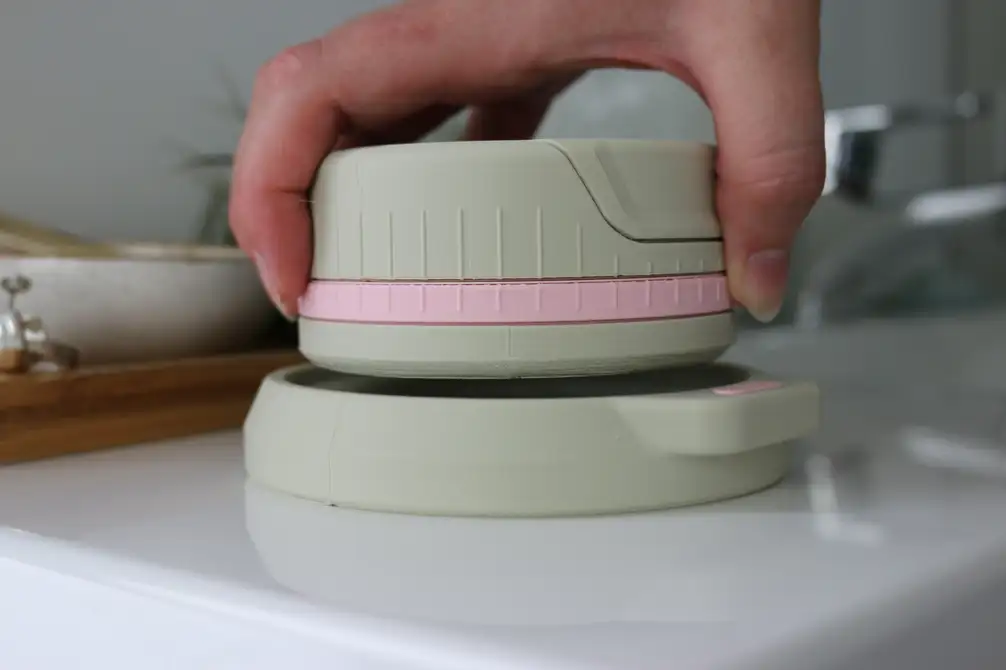
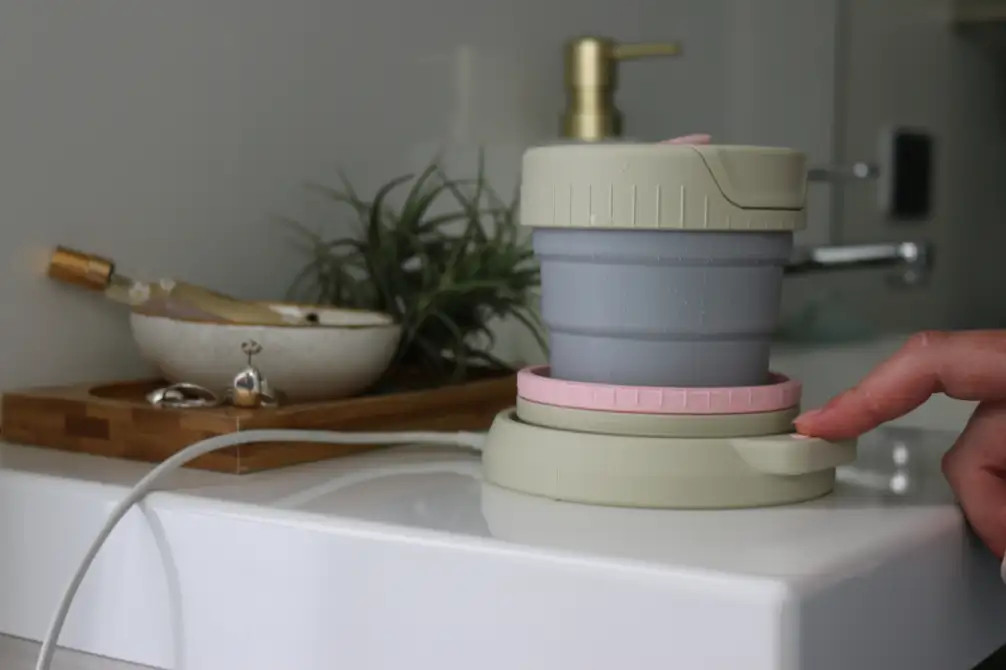
“I definitely see a benefit to the use of menstrual cups, but you can't control how people clean them, so having a product like this means people are more likely to keep them clean and sterilised.”
She’s glad she decided to refine the original design of Arla, resulting in a compact, user-friendly steriliser she can be proud of.
“You push those boundaries of what the product could be, so you've explored every avenue that you could go down because you never know, you might find something that you hadn't even thought about if you didn't," she reflects.
Sophie is currently working in the industrial design industry and would like to continue creating products for women’s health in the future as it’s an area that she’s passionate about.
“I think women’s health is an important area for design because there are still so many everyday experiences that aren’t adequately addressed by the products and systems around us. Designing for women’s health means listening to lived experiences and recognising the challenges faced, rather than accepting them as something simply to put up with.”
Related news
Massey expertise powers community-led research into period product safety and menstrual health
A research initiative investigating the safety and sustainability of period products is drawing on expertise developed at Te Kunenga ki Pūrehuroa Massey University to tackle a longstanding challenge in healthcare: the lack of research into menstrual health.
Partnership to provide tauira better access to period products
A collaborative effort is underway to help reduce mental and physical health impacts faced by tauira when trying to access safe and hygienic menstrual products.

Female university staff report mental health challenges during work from home periods
A survey of women staff in University of the South Pacific (USP) campuses found that while some women enjoyed the COVID-19 work from home periods, over half reported that their mental health had been affected.